
Blood Transfusion in India
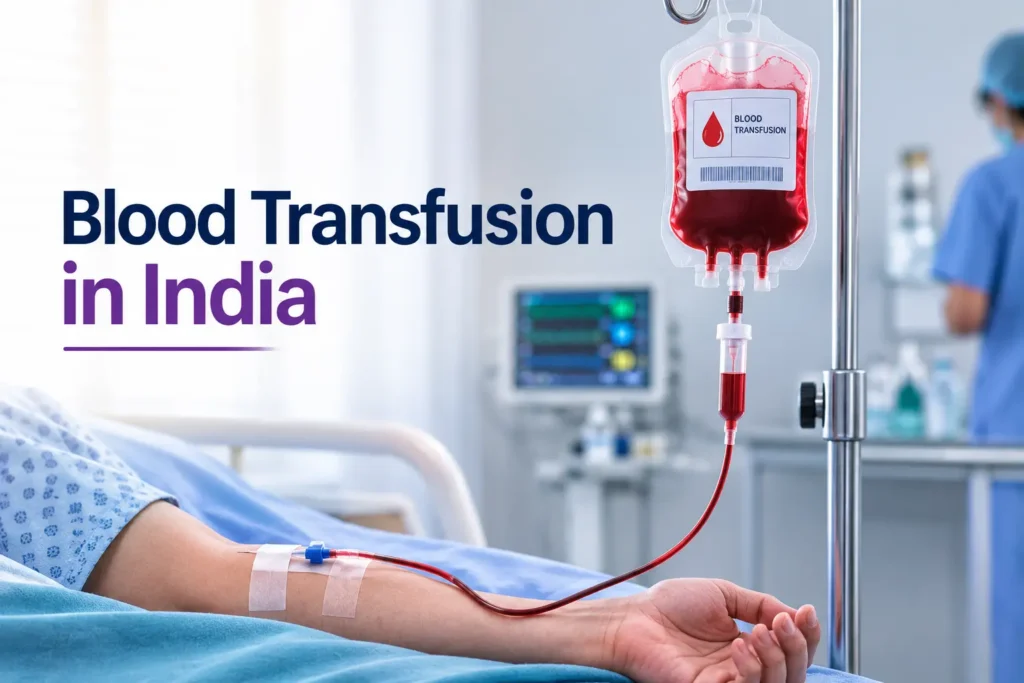
Your body needs blood as its main mode of transportation. Your blood will carry oxygen around your body and help you to fight against infections, among other things that keep your body healthy. If your body’s blood quantity falls drastically due to massive blood loss, injuries, or heavy surgeries, your body will find it difficult.
Blood transfusion is a medical process of replenishing the important blood elements. In today’s world, Blood Transfusion in India uses highly stringent safety standards. The process of testing and screening the blood type is highly meticulous and safe for patients throughout the whole process.
Get Free Consultation Now
What Is Blood Transfusion?
Blood transfusion is a medical technique that involves administering specific blood parts directly into your body via veins in order to restore lost blood or replenish deficient parts. Based on what you need, doctors can give you a transfusion using red blood cells to increase oxygen transportation, platelets for clotting, or plasma to maintain balance in the composition of your blood and to assist with clotting.
When Is Blood Transfusion Needed
Transfusion is advised when blood counts reach harmful levels or when it is impossible for the body to maintain these levels independently. The procedure is required in case of anemia, excessive bleeding during surgical procedures, trauma, or due to the impact of cancer treatments on blood cell production. The need for transfusion is determined strictly by the results of blood tests and other clinical signs.
Different Types of Blood Transfusions Explained
The kind of transfusion one may have depends on which part of the blood is lacking in one’s body:
- RBC Transfusion: It is given to increase oxygen delivery in situations of severe anemia and/or blood loss.
- Platelet Transfusion: It is given if there are very few platelets in the body to prevent bleeding.
- Plasma Transfusion: It gives clotting factors that are required to keep the blood stable and to prevent bleeding.
- Whole Blood Transfusion: It is performed if someone has lost too much blood.
Conditions That May Require Blood Transfusion
Several different medical situations can require blood transfusion:
- Severe Anemia: Dangerously low hemoglobin that cannot be corrected quickly enough with supplements alone.
- Thalassemia: A genetic blood disorder requiring regular red blood cell transfusions.
- Surgical Support: Replacing blood lost during major operations.
- Trauma: Emergency treatment after accidents with significant blood loss.
- Internal Bleeding: Treating bleeding in the digestive tract, brain, or other organs.
- Blood Disorders: Conditions like leukemia or aplastic anemia where the bone marrow cannot produce adequate blood cells.
Blood Matching and Safety Checks Before Transfusion
Safety is the most important aspect in the whole process of blood donation to make sure that your body does not react negatively to the donated blood. The safety procedures carried out before the transfusion include:
- Blood Grouping: Identification of your ABO group and Rh factor.
- Cross-matching: This checks whether the donated blood matches your blood.
- Screening: Tests for infectious diseases in the donated blood, including HIV, Hepatitis B&C, syphilis, and malaria.
Due to the stringent safety standards, Blood Transfusion in India is a very safe and reliable process.
Blood Transfusion Procedure Explained
The procedure is a careful, monitored process that happens in a hospital or clinic setting. A thin intravenous (IV) line is placed into a vein in your arm, and the blood is slowly infused into your bloodstream to avoid overloading your circulatory system. A typical red blood cell transfusion takes 2–4 hours. Throughout the process, the medical team monitors your vital signs (blood pressure, heart rate, temperature, oxygen levels) to ensure you are tolerating the transfusion properly without adverse reactions.
Risks and Complications of Blood Transfusion
Although the current standards have significantly reduced the occurrence of major risks, some may arise:
- Mild Risks: Fever or shivering as the body adjusts to the process; usually minor and can be treated easily.
- Allergic Risks: Itching or skin rash, which can be easily managed using antihistamines.
- Fluid Overload (TACO – Transfusion-Associated Circulatory Overload): Shortness of breath due to administration of blood too fast; relatively more common in people with kidney or heart conditions.
- Transfusion Risks: Very uncommon and major risks if there is any incompatibility between donor and recipient blood, leading to hemolysis or destruction of red blood cells.
- Transmission of Infections: Uncommon and extremely rare; associated with very low risks owing to the current screening process for blood transfusion.
- Iron Overload: Occurs in patients who need frequent and prolonged transfusions, for instance, those with thalassemia.
Your doctors have taken every possible precaution to ensure that such risks do not arise.
Recovery and Monitoring After Transfusion
Once the transfusion process has ended, medical personnel keep a close eye on you to ensure stability. Most people will notice an immediate increase in their energy levels along with a decrease in weakness caused by oxygen deficiency. Further blood tests should be performed to confirm that the appropriate hemoglobin, platelet, or clotting factor levels have been reached. The amount of time that you might need to be monitored will depend on your health and individual risks.
The Importance of Blood Transfusion at the Right Time
If you receive a transfusion in time, this procedure can literally save your life as it prevents any organ damage or stabilizes vital processes. The fact is that because of restored oxygen supply, your heart, brain, and other organs are less likely to experience complications.
Conclusion
A blood transfusion is a vital medical procedure used to replace lost blood or restore deficient blood components. With the rigorous safety standards and careful testing used today, Blood Transfusion in India is a reliable and safe way to support recovery and prevent life-threatening complications. Proper monitoring and timely intervention ensure patients can recover with restored blood levels and improved health.
Frequently Asked Questions
How long does a blood transfusion take?
A typical red blood cell transfusion takes 2–4 hours. Platelet or plasma transfusions are usually faster, taking 30 minutes to 2 hours. The rate is carefully controlled to prevent complications.
Will I feel different immediately after a blood transfusion?
Many patients notice improved energy, less shortness of breath, and reduced weakness within hours to a day as oxygen delivery improves. Full benefits may take a few days.
Can I get infected from a blood transfusion?
The risk is extremely low. All donated blood in India undergoes mandatory screening for HIV, Hepatitis B and C, syphilis, and malaria. Modern testing has made infection transmission very rare.
What happens if I receive the wrong blood type?
This is extremely rare due to strict cross-matching protocols. If it occurs, it can cause a serious transfusion reaction with fever, chills, back pain, difficulty breathing, and kidney damage. Immediate medical treatment is required.
How often can someone receive blood transfusions?
Frequency depends on the underlying condition. Patients with thalassemia or severe aplastic anemia may need transfusions every few weeks, while others may only need one transfusion during surgery or trauma.
Can I donate blood after receiving a transfusion?
Usually, you must wait at least 12 months after receiving a blood transfusion before you can donate blood, to minimize any potential infection risk to recipients.
Medically Reviewed
This page on Surrogacy in India has been medically reviewed by Dr. Rashid Ali, MBBS, a Delhi Medical Council–registered practitioner (Registration No. DMC/R/36289), to ensure it reflects accurate, current, and evidence-based medical information.
At Medicsaz, every treatment page is checked by a licensed doctor before publication, not written by a marketing team alone. Dr. Rashid Ali review covers the accuracy of procedures, terminology, and claims described on this page, so patients researching Surrogacy in India can rely on what they read here to make informed decisions.
Last medically reviewed: 09/09/2026
You can independently verify Dr. Rashid Ali’s registration on the Delhi Medical Council’s official website using Registration No. DMC/R/36289, or read more about his role as Medicsaz’s medical reviewer on his reviewer profile page.
Medically Reviewed
This page on Blood Transfusion in India has been medically reviewed by Dr. Rashid Ali, MBBS, a Delhi Medical Council–registered practitioner (Registration No. DMC/R/36289), to ensure it reflects accurate, current, and evidence-based medical information.
At Medicsaz, every treatment page is checked by a licensed doctor before publication, not written by a marketing team alone. Dr. Rashid Ali review covers the accuracy of procedures, terminology, and claims described on this page, so patients researching Blood Transfusion in India can rely on what they read here to make informed decisions.
Last medically reviewed: 09/09/2026
You can independently verify Dr. Rashid Ali’s registration on the Delhi Medical Council’s official website using Registration No. DMC/R/36289, or read more about his role as Medicsaz’s medical reviewer on his reviewer profile page.