
Myomectomy in India
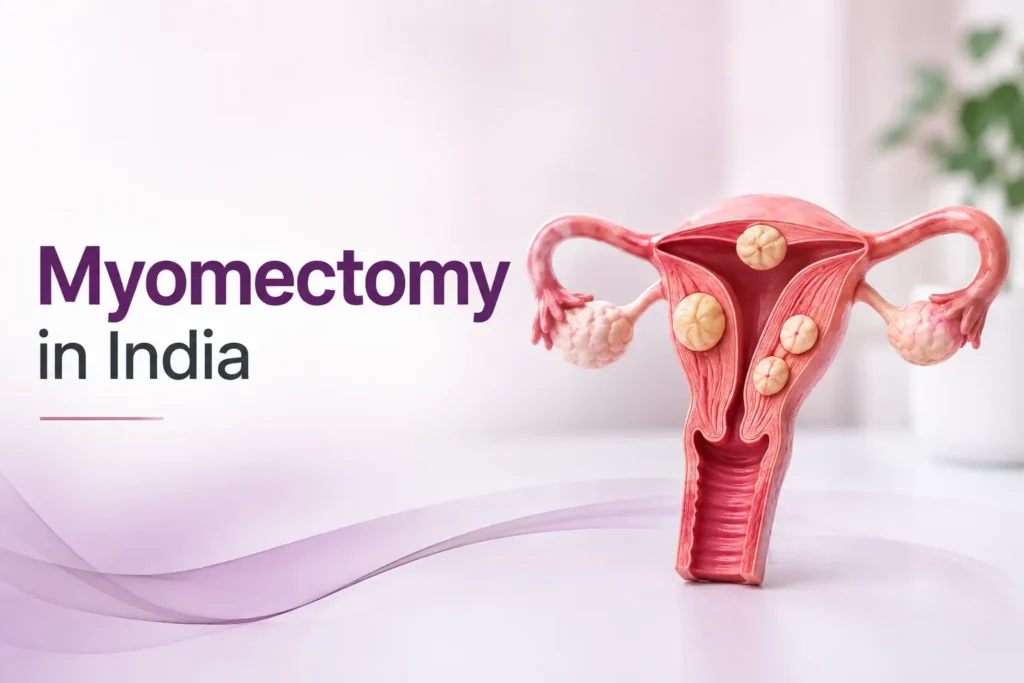
Fibroids may cause some ladies to have extreme pressure in the pelvic region, heavy bleeding during menstruation, or constant fatigue. All of these symptoms may interfere with the individual’s life. Many ladies suffer from these symptoms, and yet do not know that it is because of benign growths within the wall of the uterus called fibroids. These can be quite huge, pressing on the bladder or bowels and making conception difficult.
There is no need for hysterectomy in such cases since there is an alternative way to preserve the fertility of the woman through myomectomy. Myomectomy in India connects you with specialists who use advanced imaging and precise surgical techniques to remove fibroids while preserving reproductive function.
Get Free Consultation Now
What Is Myomectomy?
It is a process in which fibroids are removed from the uterus but not the entire uterus, whereas hysterectomy is the removal of the whole uterus. Myomectomy is very different from hysterectomy since only the fibroid tissues are removed by this process. It is very important from the point of view of any woman who wishes to conceive in the future.
Symptoms of Uterine Fibroids That May Need Surgery
Fibroids can cause a range of disruptive symptoms depending on their size and location. It may be time to see a gynecologist for evaluation if you’re experiencing any of the following:
- Prolonged menstrual periods lasting more than seven days, often leading to exhaustion.
- Persistent bloating or abdominal swelling.
- Frequent urination, caused by fibroids pressing on the bladder.
- Constipation, when larger fibroids press on the bowel.
- Pain during sex, related to the position of the fibroids.
Types of Myomectomy Procedures in India
Several methods of myomectomy can be adopted according to the size, number, and site of the fibroids:
Abdominal Myomectomy
An approach that uses abdominal surgery by making a horizontal incision and is commonly employed when the fibroids are abnormally large or very deep.
Laparoscopic Myomectomy
A method where fibroids are removed through incisions by using cameras and special surgical instruments in minimally invasive surgery.
Robotic Assisted Myomectomy
A procedure done using a robot, which provides a better three-dimensional view and accuracy in surgeries.
Hysteroscopic Myomectomy
A method that requires the insertion of a camera through the vagina for removal of fibroids found within the cavity of the uterus without any incision. Selecting modern myomectomy in India ensures your surgical approach is customized to your personal diagnosis.
Tests and Evaluation Before Myomectomy
Before surgery, a thorough evaluation helps map the exact size and location of the fibroids:
- Transvaginal Ultrasound: Provides detailed imaging of the fibroids and surrounding tissue.
- Pelvic MRI: Offers a clearer picture for complex cases or when planning a more involved surgical approach.
This thorough pre-operative process ensures your myomectomy in India is guided by accurate, individual information.
Myomectomy Procedure Explained Step by Step
The procedure follows a careful, structured sequence while you’re under general anesthesia:
- Anesthesia Delivery: You’re given anesthesia to ensure you remain asleep and comfortable throughout the procedure.
- Uterine Access: The surgeon accesses the uterus through small incisions or a single larger incision, depending on the technique used.
- Fibroid Removal: The fibroids are carefully separated and removed from the surrounding healthy uterine tissue.
- Uterine Wall Repair: The uterine wall is repaired in layers to support proper healing.
- Incision Closure: The surgical site is checked for bleeding before the incisions are closed.
Benefits of Myomectomy for Fertility and Pregnancy
Removing fibroids can meaningfully improve comfort and support future fertility for many women. It can make it easier for a pregnancy to develop without the crowding effect of large fibroids, and it typically leads to lighter, more predictable periods as the uterus heals over the following weeks to months, which can help improve energy levels affected by heavy blood loss.
Risks and Complications of Myomectomy
In relation to all surgeries on the uterus, it is crucial to be aware of possible risks before undergoing this procedure and the way they influence your future pregnancy:
- Hemorrhage: A common risk during the removal of fibroids through the operation.
- Infection: A common risk when undergoing any kind of surgery.
- Adhesions: Scars that form as a result of an operation, and therefore many specialists opt for methods to prevent adhesions to avoid the complication.
- The Risk of Uterine Rupture During Further Pregnancies: Although it is not very high (about 0.5 to 1.5%), it is still a possibility because such a condition occurs during pregnancy if a myomectomy was performed with deeper incisions into the uterus. For that reason, many specialists advise planned caesarean delivery to those who plan to have children after this procedure.
- The Recurrence of Fibroids: Despite the removal of the existing fibroids, there is always a risk of their reappearance. Statistics claim that 25 to 50% of women will have to repeat surgery in a period of 5 years after the initial one.
Life After Myomectomy: What to Expect
Once the initial healing phase is complete, many women notice lighter, more predictable periods and improved energy levels, since heavy monthly blood loss is no longer a factor. Many women go on to have successful pregnancies after myomectomy, though as noted above, delivery planning, often involving a planned cesarean, is an important conversation to have with your obstetrician given the healed uterine scar.
Myomectomy in India Cost
Myomectomy in India typically costs around $1,500 to $7,000, depending on the type and complexity of the surgery. Hysteroscopic myomectomy is generally more affordable, while laparoscopic, open, robotic, and complex procedures may cost more.
The exact cost depends on the size, number and location of fibroids, surgical approach, surgeon, hospital, preoperative investigations, anesthesia, hospital stay, and postoperative care. More complex cases, robotic surgery, or additional procedures may increase the overall cost. These figures are general estimates, not fixed quotes. Medicsaz can provide a personalized estimate after a partner gynecologist reviews the patient’s medical records and treatment requirements.
How Medicsaz Supports Your Myomectomy in India Journey
Medicsaz connects international patients with vetted partner hospitals and experienced gynecologists for Myomectomy in India. The team assists with medical record review, hospital and specialist matching, treatment and cost estimates, travel and visa support, accommodation, and coordination throughout the patient’s treatment journey.
For patients exploring Myomectomy in India, Medicsaz can help identify an appropriate specialist and surgical approach based on the patient’s medical records, while providing guidance on expected costs and the overall treatment process.
Conclusion
Uterine fibroids can cause heavy bleeding and fatigue, often disrupting family planning. A myomectomy can effectively remove these growths while preserving the uterus and supporting future fertility.
Choosing a myomectomy in India provides access to experienced specialists and advanced technology at accessible prices. By addressing symptoms early, understanding the risks involved, particularly around future pregnancy, and following recovery guidance closely, many patients are able to protect their fertility and find lasting relief from their symptoms.
Frequently Asked Questions
Can I have a natural (vaginal) delivery after a myomectomy?
It depends on the extent of the surgery. Many doctors recommend a planned cesarean delivery rather than vaginal birth after myomectomy, since there’s a small but real risk (roughly 0.5 to 1.5%) of uterine rupture during labor, particularly if the surgery involved cutting deep into the uterine muscle.
Will my fibroids come back after a myomectomy?
It’s possible. Myomectomy removes existing fibroids, but it doesn’t prevent new ones from forming. Studies show recurrence in roughly 25 to 50% of patients within five years.
How soon after a myomectomy can I try to get pregnant?
This varies based on the type and extent of surgery, but doctors often recommend waiting several months to allow the uterus to fully heal before attempting pregnancy. Your surgeon can give you a specific timeline based on your procedure.
Which type of myomectomy is best for preserving fertility?
This depends on the size, number, and location of your fibroids. Hysteroscopic myomectomy is typically the least invasive option for fibroids inside the uterine cavity, while laparoscopic, robotic, or abdominal approaches may be needed for larger or deeper fibroids.
Will my periods improve right away after myomectomy?
Improvement is usually gradual rather than immediate, with periods typically becoming lighter and more predictable over the weeks to months following surgery as the uterus heals.
Is myomectomy a permanent solution to fibroids?
It removes existing fibroids, but since new ones can develop over time, it’s not guaranteed to be a permanent solution for everyone. Your gynecologist can advise on monitoring and next steps based on your individual risk factors.
Medically Reviewed
This page on Myomectomy in India has been medically reviewed by Dr. Rashid Ali, MBBS, a Delhi Medical Council–registered practitioner (Registration No. DMC/R/36289), to ensure it reflects accurate, current, and evidence-based medical information.
At Medicsaz, every treatment page is checked by a licensed doctor before publication, not written by a marketing team alone. Dr. Rashid Ali review covers the accuracy of procedures, terminology, and claims described on this page, so patients researching Myomectomy in India can rely on what they read here to make informed decisions.
Last medically reviewed: 09/09/2026
You can independently verify Dr. Rashid Ali’s registration on the Delhi Medical Council’s official website using Registration No. DMC/R/36289, or read more about his role as Medicsaz’s medical reviewer on his reviewer profile page.