
Hysterectomy Treatment in India
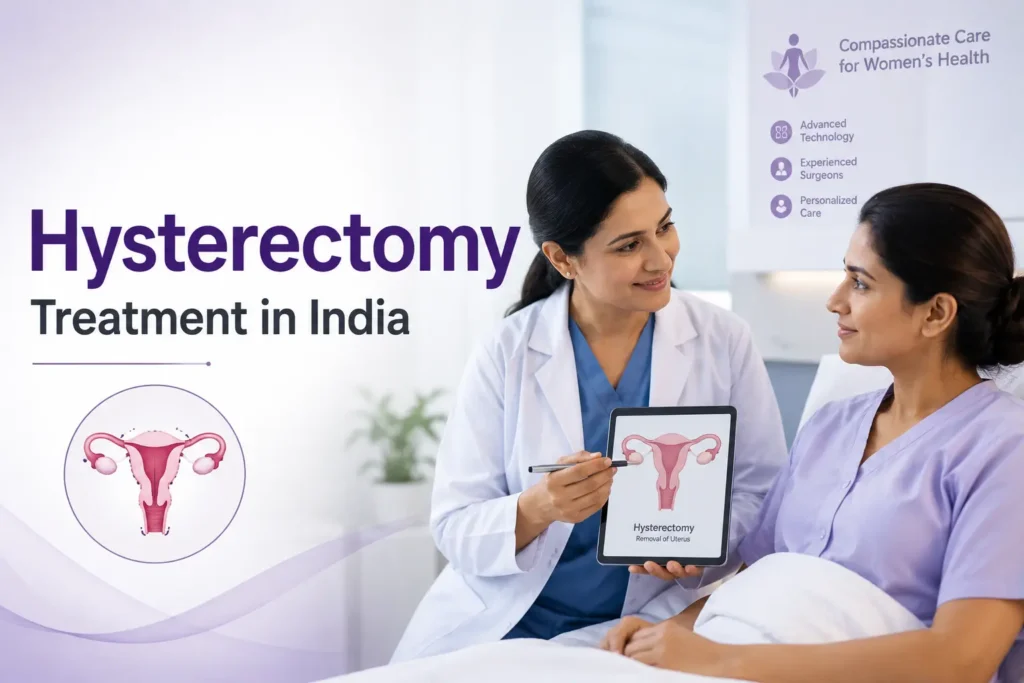
The truth is that many women suffer from some gynecological disorders that impact their health and lifestyle adversely. There may be cases when issues like menorrhagia, large fibroids, severe pelvic pain, and some cancers cannot be cured using medicines or other more conservative approaches. In these cases, specialists suggest carrying out a hysterectomy.
Hysterectomies are the most commonly performed gynecological operations nowadays. Due to the development of medical science, there appeared less traumatic methods allowing patients to heal quickly. Hysterectomy treatment in India provides access to skilled doctors working in modern hospitals that offer personalized care and support throughout recovery.
Get Free Consultation Now
What Is a Hysterectomy?
It is the surgical procedure of uterus removal performed to treat serious conditions for which other methods have failed. When the surgery is done, you will stop menstruating because there is nothing left to shed. However, menopause will only come when your ovaries are removed in addition to the uterus. This means that this particular surgery alone does not bring menopause, nor will it affect the hormone balance or its timing if the ovaries are not going to be removed.
When Is Hysterectomy Performed
Hysterectomy surgery is commonly used for treating the following conditions:
- Uterine fibroids: noncancerous growths developing inside the walls of the uterus and leading to heavy bleeding and pelvic pressure.
- Endometriosis: the presence of uterine tissue growing outside the uterus, causing pain. You should understand that the endometrial tissue could appear not only in the uterus, but also on your ovaries and bowels.
- Adenomyosis: uterine lining growing into the uterine muscles, often resulting in pain and heavy bleeding.
Thus, the procedure can help you to relieve all these troubles. Specialists working in India perform this procedure in case of various diagnoses.
Types of Hysterectomy Procedures in India
- Total Hysterectomy: Procedure for the total removal of the uterus and the cervix.
- Partial (Sub-total) Hysterectomy: Procedure for the removal of the body of the uterus only, without removing the cervix.
- Radical Hysterectomy: A procedure of a more radical nature to cure some types of cancers, which involves the removal of the uterus, cervix, and the supportive structures.
- Hysterectomy with Removal of Ovaries & Fallopian Tubes: An additional operation to remove the ovaries and fallopian tubes is an extensive surgery done to eliminate future risks of cancer and ovarian disorders. It results in early onset of menopause; hence, it should be considered carefully. Selecting hysterectomy treatment in India ensures your surgical approach is matched to your specific diagnosis and health profile.
Tests and Evaluation Before Hysterectomy Surgery
Before surgery, doctors run a thorough evaluation to confirm the diagnosis and check overall health:
- Pelvic Ultrasound: Used to assess the size and condition of the uterus and surrounding structures.
- Pap Smear: Screens for abnormal cervical cells.
- Pre-Anesthesia Blood Tests: Confirm overall health and surgical readiness.
This thorough evaluation ensures your planned hysterectomy in India is safe and guided by accurate medical information.
Minimally Invasive Hysterectomy Options in India
Modern surgical approaches help patients avoid large incisions and return to daily activities more quickly. Specialists use specialized cameras and instruments to perform the procedure with less disruption to surrounding tissue, offering the following benefits:
- Smaller Scars: Small incisions that heal quickly with minimal visible marks.
- Reduced Pain: Less tissue disruption typically means less reliance on strong pain medication during recovery.
- Less Blood Loss: Precise surgical techniques help reduce bleeding during the operation.
Risks and Complications of Hysterectomy
All surgical interventions entail certain risks, and the following should be discussed with your surgeon:
- Bleeding: Excessive bleeding that occurs either during the procedure or afterwards.
- Infection: This complication can happen either at the site of the incision or inside the pelvis.
- Blood clots: A risk factor connected with limited movement following surgery.
- Organ injury: During a relatively small number of surgeries, injury may happen to the bladder, ureter, or bowels. The probability of this risk increases with laparoscopy, and is greater if there is an issue like endometriosis; it is, however, normally fixed during the procedure itself when this problem occurs.
- Menopause due to surgery: This happens when a woman’s ovaries are removed along with the uterus, and she immediately goes through the menopausal stage of her life cycle.
Hysterectomy Treatment in India Cost
Hysterectomy Treatment in India typically costs around $2,000 to $6,500, depending on the type and complexity of the surgery. Laparoscopic and vaginal hysterectomy are generally more affordable, while robotic or complex procedures may cost more.
The exact cost depends on the type of hysterectomy, underlying medical condition, surgeon, hospital, preoperative investigations, anesthesia, hospital stay, and postoperative care. Additional procedures, extensive disease, cancer-related surgery, or complications may further increase the overall cost. These figures are general estimates, not fixed quotes. Medicsaz can provide a personalized estimate after a partner gynecologist reviews the patient’s medical records and treatment requirements.
How Medicsaz Supports Your Hysterectomy Treatment in India Journey
Medicsaz connects international patients with vetted partner hospitals and experienced gynecologists for Hysterectomy Treatment in India. The team assists with medical record review, hospital and specialist matching, treatment and cost estimates, travel and visa support, accommodation, and coordination throughout the patient’s treatment journey.
For patients exploring Hysterectomy Treatment in India, Medicsaz can help identify an appropriate specialist and surgical approach based on the patient’s medical records, while providing guidance on expected costs and the overall treatment process.
Conclusion
This surgery offers a well-established, permanent solution for women dealing with certain pelvic conditions that haven’t responded to other treatments. Choosing modern hysterectomy treatment in India connects you with experienced surgeons, advanced hospitals, and minimally invasive options that support a smoother, safer recovery. With thorough pre-operative evaluation, an honest discussion of risks with your surgeon, and proper care during early recovery, most patients see significant, lasting relief from their symptoms.
Frequently Asked Questions
Will I go through menopause immediately after a hysterectomy?
Only if your ovaries are removed along with your uterus, if the ovaries are preserved, your periods stop, but your body continues its natural hormone cycle until menopause occurs on its own timeline.
Does a hysterectomy cure endometriosis completely?
Not always. It removes the uterus, but if endometriosis tissue is present elsewhere, such as the ovaries or bowel, additional treatment may still be needed for full symptom relief.
What are the risks of organ injury during hysterectomy?
Injury to the bladder, ureter, or bowel occurs in a small percentage of cases, somewhat more common with laparoscopic procedures and in more complex cases like endometriosis. When it happens, it’s usually identified and repaired during the same surgery.
What's the difference between total, subtotal, and radical hysterectomy?
Total hysterectomy removes the uterus and cervix; subtotal removes only the uterus and leaves the cervix; and radical hysterectomy, typically used for cancer, removes the uterus, cervix, and surrounding supportive tissue.
How long does recovery take after a minimally invasive hysterectomy?
Recovery is generally faster than with open surgery, with many patients returning to light activities within a couple of weeks, though full recovery timelines vary based on the type of procedure and individual health.
Will removing my ovaries during a hysterectomy affect my hormones?
Yes. Removing the ovaries causes immediate surgical menopause, which can bring on hormonal symptoms more suddenly than natural menopause. This is an important factor to discuss with your surgeon when deciding on the type of procedure.
Medically Reviewed
This page on Hysterectomy Treatment in India has been medically reviewed by Dr. Rashid Ali, MBBS, a Delhi Medical Council–registered practitioner (Registration No. DMC/R/36289), to ensure it reflects accurate, current, and evidence-based medical information.
At Medicsaz, every treatment page is checked by a licensed doctor before publication, not written by a marketing team alone. Dr. Rashid Ali review covers the accuracy of procedures, terminology, and claims described on this page, so patients researching Hysterectomy Treatment in India can rely on what they read here to make informed decisions.
Last medically reviewed: 09/09/2026
You can independently verify Dr. Rashid Ali’s registration on the Delhi Medical Council’s official website using Registration No. DMC/R/36289, or read more about his role as Medicsaz’s medical reviewer on his reviewer profile page.