
POSE (Primary Obesity Surgery Endolumenal) in India
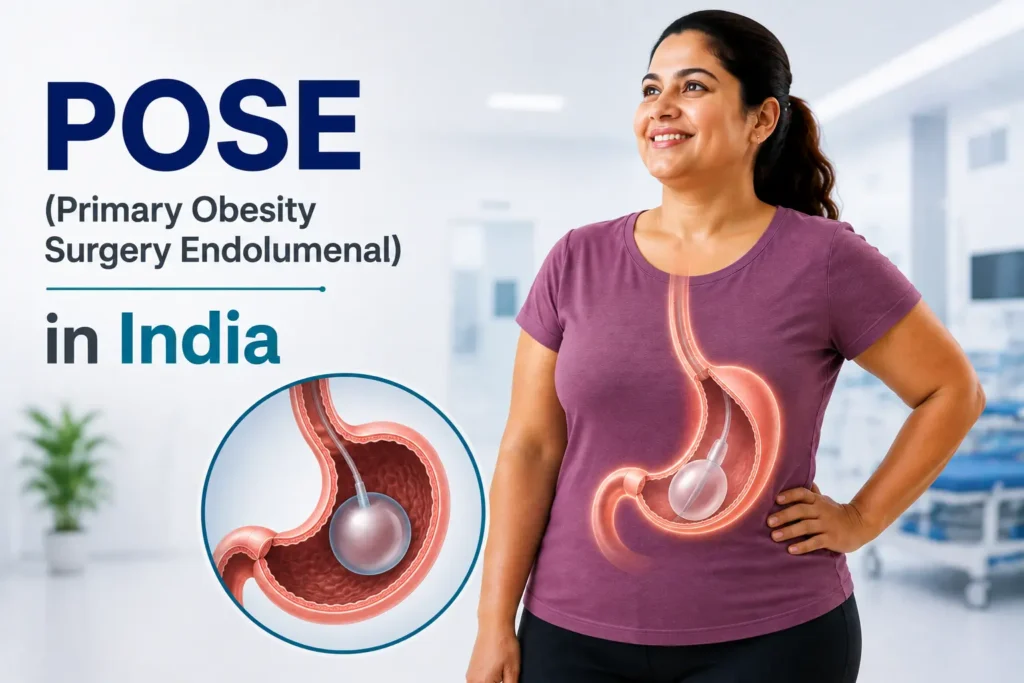
Obesity is a chronic problem that makes one vulnerable to other health complications, including diabetes and cardiovascular diseases. Although modification of one’s lifestyle plays a critical role, some people need a doctor’s help when conventional approaches fail.
The Primary Obesity Surgery Endolumenal (POSE) procedure is a minimally invasive endoscopic approach that shrinks the volume of the stomach through an approach that does not involve any cuts on the body. Through the feeling of satiety with less food consumption, POSE ensures some weight loss. POSE (Primary Obesity Surgery Endolumenal) in India is offered by specialized bariatric and gastroenterology centers as an alternative to traditional weight-loss surgery for selected patients.
Get Free Consultation Now
What is Primary Obesity Surgery Endolumenal (POSE)?
Here, the surgeon alters the shape of the stomach completely from inside the body by using an endoscope that goes inside via the mouth and esophagus, which is part of the digestive system. There is no need for any cuts to be made on the skin in this process. The surgeon uses an endoscope with a flexible camera that can cause the folding of the layers of the stomach walls and fixation with fasteners to decrease its expansion.
How POSE helps with weight loss without major surgery
Creating these internal folds changes how the stomach physically responds to food. The folds reduce the stomach’s available volume, which triggers earlier feelings of fullness after smaller amounts of food. Because the tissue is held in these folds, the stomach also expands less during meals, which naturally supports smaller portion sizes over time.
Who is a suitable candidate for POSE treatment?
Physicians usually consider POSE for individuals with a body mass index of between 30 and 40 who have a desire to go for something functional when it comes to the weight loss process, but not something surgical. It acts as an intermediate step for those individuals seeking help clinically but want to stay away from the surgical process:
- Individuals suffering from obesity or excess body weight: Patients whose weight is having an impact on their lives and who have not been able to achieve their desired results using regular diets.
- The patients whose weight has remained unchanged despite their efforts with diet and exercise.
- Individuals seeking a non-surgical bariatric procedure.
Choosing a modern POSE (Primary Obesity Surgery Endolumenal) in India connects you with gastroenterology centers that evaluate your specific anatomy and health before approving the procedure.
Health benefits of endoscopic weight-loss procedures
Weight loss achieved through POSE can help improve related health conditions over time, including high blood pressure and, in some patients, obstructive sleep apnea, though the degree of improvement is generally tied to the amount of weight lost. Studies show POSE typically results in around 13 to 16% total body weight loss at one year, which is meaningful but generally less than what’s achieved with surgical procedures like gastric sleeve or bypass. Many patients do experience worthwhile health improvements, particularly those who aren’t candidates for more invasive surgery.
Pre-procedure evaluation and eligibility assessment
Your clinical care team will conduct a thorough evaluation of your stomach lining and overall health before approving the procedure. This typically includes a diagnostic upper endoscopy, routine blood work, and a nutritional assessment. Completing these evaluations ensures your POSE (Primary Obesity Surgery Endolumenal) in India plan is based on your individual health profile rather than a one-size-fits-all approach.
Advantages of POSE over traditional bariatric surgeries
This endoscopic approach offers a notably easier recovery compared to standard bariatric surgery, since it avoids external incisions entirely. The primary advantages include:
- No external surgical incisions: The entire procedure is done through the mouth, so there are no skin scars or abdominal incisions.
- Reduced recovery time: Most patients are able to go home the same day as the procedure.
- Preservation of stomach anatomy: Keeps the natural stomach structure intact, without removing or rerouting any tissue.
Dietary guidelines after POSE treatment
Because the stomach has newly placed internal folds, your digestive system needs time to adjust to normal eating again. Most patients start with clear liquids for the first few days, then gradually progress to pureed proteins and soft foods over the following weeks. Eating slowly and chewing thoroughly is important during this period to avoid putting excess pressure on the new internal folds.
Risks and potential complications of POSE
POSE is considered safe in most cases, but, like any other endoscopic procedure, it makes sense to know about all possible complications associated with this procedure. Within 48 hours following the procedure, nausea, vomiting, and abdominal pain that resembles exercise-related muscle pain may occur as a result of the adjustment of the stomach. Gastrointestinal bleeding and even, in rare cases, gastric perforation are some of the more serious complications that may happen. It’s also possible to get inadequate results because of high-calorie liquid or soft food intake after the surgery.
POSE (Primary Obesity Surgery Endolumenal) in India Cost
POSE (Primary Obesity Surgery Endolumenal) in India typically costs around $3,000 to $7,000. The cost varies depending on the patient’s BMI and medical condition, specialist, hospital, POSE technique, pre-procedure evaluation, sedation or anesthesia, and follow-up care.
The exact cost depends on the patient’s treatment plan and individual requirements. Additional investigations, hospital or daycare charges, medications, and follow-up care may affect the final cost. These figures are general estimates, not fixed quotes. Medicsaz can provide a personalized estimate after a partner bariatric specialist reviews the patient’s medical records and treatment requirements.
How Medicsaz Supports Your POSE Journey in India
Medicsaz connects international patients with vetted partner hospitals and experienced bariatric specialists for POSE (Primary Obesity Surgery Endolumenal) in India. The team assists with medical record review, specialist and hospital matching, treatment and cost estimates, travel and visa support, accommodation, and coordination throughout the patient’s treatment journey.
For patients exploring POSE (Primary Obesity Surgery Endolumenal) in India, Medicsaz can help identify an appropriate specialist and suitable treatment approach based on the patient’s medical records, while providing guidance on expected costs and the overall treatment process.
Conclusion
POSE offers a minimally invasive, scarless option for individuals who want meaningful weight loss support while avoiding major surgery, though it’s worth understanding upfront that results are generally more modest than surgical bariatric procedures. Organizing your POSE (Primary Obesity Surgery Endolumenal) in India connects you with experienced endoscopy specialists and long-term lifestyle support. With realistic expectations, thorough pre-procedure evaluation, and careful attention to dietary guidelines during recovery, POSE can be a valuable option for the right candidate working toward better long-term health.
Frequently Asked Questions
How much weight can I realistically expect to lose with POSE?
Clinical studies show an average of around 13 to 16% total body weight loss at one year, which is meaningful but generally less than what’s achieved with surgical procedures like gastric sleeve or bypass. Your specific results will depend on factors like your starting weight, adherence to dietary guidelines, and individual response to the procedure.
Am I a good candidate for POSE?
POSE is typically considered for patients with a BMI in the range of roughly 30 to 40 who haven’t achieved lasting results through diet and exercise and who want to avoid more invasive bariatric surgery. Your care team will evaluate your specific health profile to determine if you’re a good fit.
Is POSE safer than traditional bariatric surgery?
POSE avoids external incisions and generally has a faster recovery than surgical procedures, but it still carries real risks, including a small chance of serious complications like bleeding or, rarely, perforation. Your gastroenterologist will walk you through your personal risk profile compared to other weight-loss options.
What can I eat after POSE, and for how long?
Most patients start with clear liquids for the first few days, then gradually move to pureed and soft foods over the following weeks as the stomach adjusts to its new internal folds. Your care team will give you a specific timeline based on your recovery progress.
How is POSE different from gastric sleeve or bypass surgery?
POSE is done entirely through the mouth using an endoscope, without any external incisions or removal of stomach tissue, while sleeve and bypass surgery involve actual surgical removal or rerouting of parts of the digestive tract. This makes POSE less invasive with an easier recovery, but it generally produces more modest weight loss results than surgical options.
Will my results from POSE last long-term?
Weight loss durability depends significantly on maintaining the dietary and lifestyle changes recommended after the procedure, since the internal folds support portion control but don’t replace the need for healthy eating habits. Regular follow-up with your care team can help support long-term success.
Medically Reviewed
This page on POSE (Primary Obesity Surgery Endolumenal) in India has been medically reviewed by Dr. Rashid Ali, MBBS, a Delhi Medical Council–registered practitioner (Registration No. DMC/R/36289), to ensure it reflects accurate, current, and evidence-based medical information.
At Medicsaz, every treatment page is checked by a licensed doctor before publication, not written by a marketing team alone. Dr. Rashid Ali review covers the accuracy of procedures, terminology, and claims described on this page, so patients researching POSE (Primary Obesity Surgery Endolumenal) in India can rely on what they read here to make informed decisions.
Last medically reviewed: 09/09/2026
You can independently verify Dr. Rashid Ali’s registration on the Delhi Medical Council’s official website using Registration No. DMC/R/36289, or read more about his role as Medicsaz’s medical reviewer on his reviewer profile page.