Biliopancreatic Diversion (BPD) in India
Being extremely overweight can result in severe repercussions on one’s health status, and this could even cause illnesses such as diabetes, hypertension, obstructive sleep apnea, and heart disease. While modifications in diet and behavior may assist certain individuals in losing weight, for individuals who are extremely overweight, better methods would be needed.
The biliopancreatic diversion, commonly known as BPD, is a very advanced type of bariatric surgery aimed at causing substantial loss of weight. The procedure of biliopancreatic diversion (BPD) in India is carried out in bariatric centers where expert surgeons offer full services, including proper nutrition. The reason why biliopancreatic diversion has more chances of complications compared to other bariatric surgeries is that this procedure is applied to extremely obese patients who cannot be helped with other available means.
Get Free Consultation Now
What is biliopancreatic diversion (BPD)?
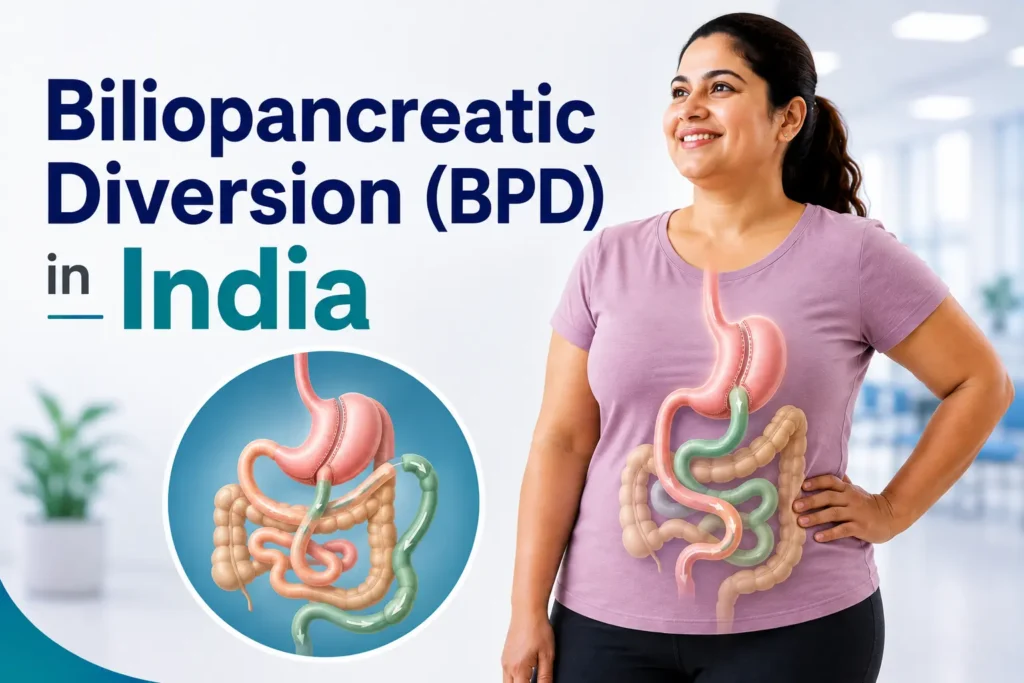
This surgery works by significantly reducing the size of the stomach and rerouting the small intestine. The surgeon removes a large section of the stomach to limit meal portions to a small fraction of what they used to be. The small intestine is then rearranged so that food bypasses the main areas where nutrients are normally absorbed, resulting in significant weight loss.
How BPD surgery supports significant weight loss
- Reduced stomach capacity: The surgeon removes a large portion of the stomach using surgical stapling instruments. This creates a feeling of fullness after eating just a small amount of food.
- Reduced calorie absorption: The reconstructed digestive path leaves only a short segment of the small intestine active for absorbing fats and sugars. This means a significant portion of the calories in food pass through the body without being absorbed.
- Metabolic improvements: Rerouting the digestive system triggers changes in gut hormones that can reduce appetite and improve how the body processes blood sugar, which is why many patients see meaningful improvement in type 2 diabetes.
Who is an ideal candidate for BPD surgery?
It is done only on those people who are at health risk owing to their being extremely obese, and where regular diets, exercise, and other less intrusive surgeries have not succeeded enough:
- People who are severely obese: This refers to people who have a lot of extra body weight which poses a threat to their health.
- People having a very high body mass index (BMI): Those people whose BMI is very high than normal.
- People with medical problems associated with obesity: People with high blood sugar and problems breathing while sleeping.
Choosing biliopancreatic diversion (BPD) in India connects you with experienced surgical teams who evaluate your overall health before approving this procedure.
Health conditions that may improve after BPD
Significant weight loss following this procedure can improve related health conditions relatively quickly. Getting weight under control helps reverse some of the metabolic effects of obesity. Many patients experience meaningful health improvements after biliopancreatic diversion (BPD) in India, though as noted below, this comes with a higher risk profile than other bariatric procedures.
Preoperative assessment before BPD surgery
Your bariatric team will run thorough diagnostic checks on your lungs, heart, and metabolic blood markers before surgery. You’ll typically undergo complete physical checks, blood tests to assess liver health, and detailed nutritional screening. Completing these checks ensures your biliopancreatic diversion (BPD) in India is planned around accurate information about your health.
Benefits of BPD compared to other bariatric surgeries
This surgery has been known to provide excellent outcomes for patients with extreme obesity; however, there are pros and cons of making a comparison of the different surgeries:
- A lot of weight loss: Is likely to offer the maximum weight loss in any bariatric surgery.
- A good cure for obesity: Works quite effectively in very obese patients where other less risky procedures won’t work.
- Has very good metabolic benefits: Known to offer significant improvement, and even remission, from type 2 diabetes.
However, BPD/DBD carries a much higher risk of complications and death than any other bariatric surgery, such as gastric bypass, sleeve gastrectomy, and gastric banding; hence, it is much more rarely done around the world.
Nutritional management after BPD surgery
Because this surgery intentionally limits food absorption, a significant lifestyle overhaul is required. Daily meals need to focus heavily on high-protein foods to protect muscle mass. Taking high-potency vitamin and mineral supplements every day is mandatory, not optional, since skipping supplementation can lead to serious and sometimes severe nutritional deficiencies.
Risks and potential complications of BPD
Every major anatomical restructuring carries risks that you must review thoroughly with your bariatric surgeon before the procedure:
- Nutritional deficiencies: A meaningful risk of low fat-soluble vitamins (A, D, E, K) and other nutrients, since the shortened intestine skips key absorption areas.
- Protein deficiency: Can lead to muscle weakness or swelling if daily protein targets aren’t consistently met. In severe, uncontrolled cases, this can require reversal surgery.
- Bowel-related complications: Frequent loose stools, bloating, or ulcers along the staple lines are relatively common.
This procedure carries a higher overall complication and mortality rate than other bariatric surgeries, which is an important factor to weigh against its greater weight loss potential.
Recovery and long-term lifestyle changes
During the first week, you will be recuperating at the hospital, with constant monitoring of your wound. During this period, your body will progress from clear liquids to pureed proteins for about a month before going back to work at the office. However, the digestive system will take about one year to fully adapt to these changes. There is a need for lifetime adherence to strict supplementation and constant monitoring of your blood through tests.
Biliopancreatic Diversion (BPD) in India Cost
Biliopancreatic Diversion (BPD) in India typically costs around $5,000 to $10,000. The cost varies depending on whether the procedure is performed with a duodenal switch, the surgeon, hospital, surgical technique, preoperative investigations, anesthesia, hospital stay, and postoperative nutritional care.
The exact cost depends on the patient’s BMI, overall health, comorbidities, and treatment plan. BPD with Duodenal Switch (BPD/DS) is a complex bariatric procedure that requires long-term nutritional monitoring and supplementation. Additional investigations, longer hospitalization, complications, or advanced surgical techniques may increase the overall cost. These figures are general estimates, not fixed quotes. Medicsaz can provide a personalized estimate after a partner bariatric surgeon reviews the patient’s medical records and treatment requirements.
How Medicsaz Supports Your Biliopancreatic Diversion Journey in India
Medicsaz connects international patients with vetted partner hospitals and experienced bariatric surgeons for Biliopancreatic Diversion (BPD) in India. The team assists with medical record review, surgeon and hospital matching, treatment and cost estimates, travel and visa support, accommodation, and coordination throughout the patient’s treatment journey.
For patients exploring Biliopancreatic Diversion (BPD) in India, Medicsaz can help identify an appropriate bariatric specialist and suitable surgical approach based on the patient’s medical records, while providing guidance on expected costs and the overall treatment process.
Conclusion
Biliopancreatic diversion (BPD) in India can be considered one of the best surgical treatments available for significant weight loss in cases of severe obesity. Since this procedure entails a higher rate of complications and requires lifelong nutritional supplementation, it is not used in all obese patients, but only in specially selected ones.
Frequently Asked Questions
Is biliopancreatic diversion (BPD) the same as gastric bypass?
No. BPD involves a larger reduction in stomach size and a more significant rerouting of the small intestine, resulting in greater calorie malabsorption than standard gastric bypass. It typically produces more weight loss but carries a higher risk of nutritional complications.
Why is BPD used less often than other bariatric surgeries?
It carries a higher risk of complications, including severe nutritional deficiencies, and a higher mortality rate compared to gastric sleeve or bypass surgery. Because of this, it’s generally reserved for patients with very severe obesity who haven’t had sufficient results with other options.
Will I need to take supplements for the rest of my life after BPD?
Yes. Lifelong, strict vitamin and mineral supplementation, along with regular blood monitoring, is mandatory after BPD to prevent serious nutritional deficiencies.
What happens if I don't follow the protein and supplement requirements after BPD?
Skipping supplementation can lead to serious protein and vitamin deficiencies, including muscle weakness. In severe, uncontrolled cases, this can require reversal surgery to restore normal nutrient absorption.
Is BPD reversible?
It’s technically possible to reverse in severe cases of malnutrition, but it’s intended as a permanent procedure, and reversal surgery carries its own risks and is not a routine option.
How much weight can I expect to lose with BPD?
BPD generally produces the greatest weight loss among bariatric procedures, but individual results vary and should be discussed with your bariatric surgeon relative to your specific health profile and risk tolerance.
Medically Reviewed
This page on Biliopancreatic Diversion (BPD) in India has been medically reviewed by Dr. Rashid Ali, MBBS, a Delhi Medical Council–registered practitioner (Registration No. DMC/R/36289), to ensure it reflects accurate, current, and evidence-based medical information.
At Medicsaz, every treatment page is checked by a licensed doctor before publication, not written by a marketing team alone. Dr. Rashid Ali review covers the accuracy of procedures, terminology, and claims described on this page, so patients researching Biliopancreatic Diversion (BPD) in India can rely on what they read here to make informed decisions.
Last medically reviewed: 09/09/2026
You can independently verify Dr. Rashid Ali’s registration on the Delhi Medical Council’s official website using Registration No. DMC/R/36289, or read more about his role as Medicsaz’s medical reviewer on his reviewer profile page.