
Bone Conduction Hearing Aid in India
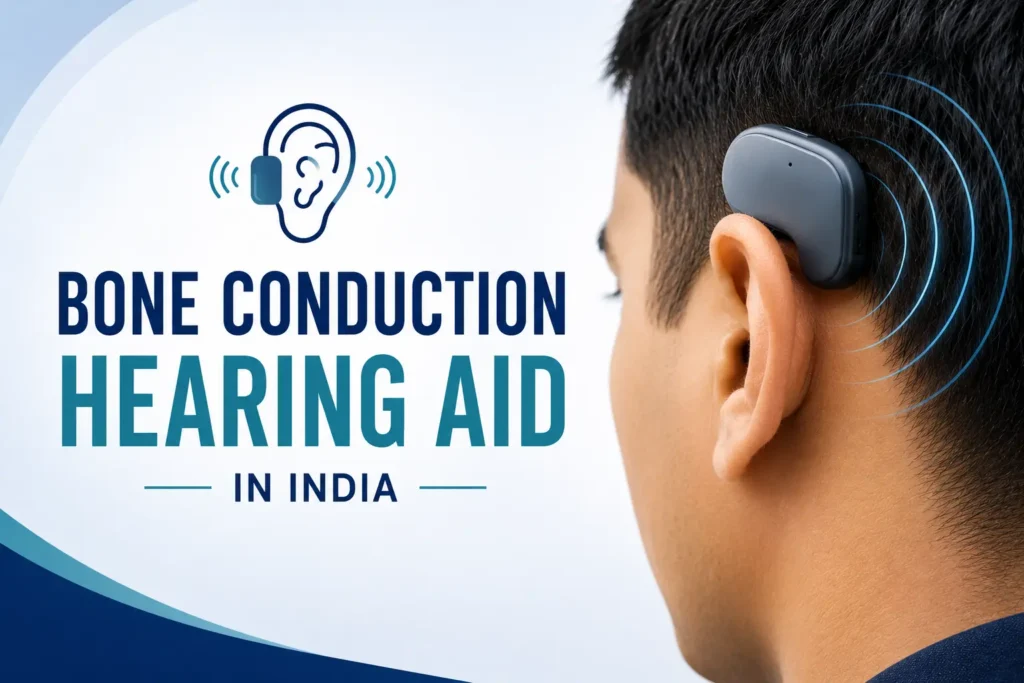
The impact of hearing impairment on individuals in communication and education is very profound. Although hearing aids have helped a lot of people with their hearing problems, not all patients can benefit from these hearing aids because they do not function in certain cases, such as when the patient has problems in the outer and middle ear.
In case the standard hearing aids cannot transmit sound into the inner ear owing to a problem in the outer and middle ear, then there is another means through which sound can be transmitted, and that is through bone conduction. Choosing a bone conduction hearing aid in India connects you with skilled audiologists, quality bone conduction devices, and dedicated hearing rehabilitation teams to help restore hearing function.
Get Free Consultation Now
What Is a Bone Conduction Hearing Aid?
This particular instrument serves as an alternative for the transmission of sound in cases where the conventional eardrum pathway fails to function. The skull is a natural conductor of sound vibrations, and in case of problems with the structure that blocks the conventional path for sound vibrations via the eardrum, it becomes possible to use the alternative path through the bones of the skull.
Conditions Treated with Bone Conduction Hearing Devices
An occluded or damaged middle ear does not heal itself and would need an alternate pathway to enable sounds to reach the brain. These instruments are used by audiologists and ENT doctors in the treatment of various types of hearing impairments to avoid any permanent complications that might hinder learning or working:
- Conductive hearing impairment occurs due to the inability of sounds to travel because of damage to the middle ear bones or fluid behind the eardrum.
- Mixed hearing loss occurs because of a combination of conductive and nerve-related hearing impairments.
- Microtia and atresia occur because of deformities in the outer ear or the ear canal at birth.
Understanding the type of hearing impairment through testing will help your healthcare professionals provide you with the correct device for your condition.
Tests and Hearing Evaluation Before Fitting
Before device fitting, an audiologist performs a comprehensive hearing test. Pure tone audiometry is performed to test hearing ability over various frequencies, speech discrimination testing to test language comprehension, and bone conduction testing to test nerve functioning inside the inner ear.
- Sound Transmission: It transmits sounds via the bones of the head in case regular transmission fails.
- Diseases/Treatments: Used by audiologists and ENT specialists to treat cases of conductive hearing loss, mixed hearing loss, and microtia/atresia.
- Pre-Fit Testing: Needs comprehensive hearing testing including pure tone audiometry, speech discrimination testing, and bone conduction testing.
- Device Availability: Available devices in India include non-invasive softband/headband devices, invasive percutaneous devices, and active bone conduction devices.
- Advantages: It provides clear hearing through transmission of sounds by bypassing damaged middle ear structures to the inner ear nerves.
This thorough evaluation ensures your bone conduction hearing aid in India is chosen based on accurate, individual hearing data.
Types of Bone Conduction Hearing Aids Available in India
- Non-surgical bone conduction devices: These external systems use adjustable softbands or headbands to hold the sound processor firmly against the skin over the skull bone.
- Surgically implanted bone conduction system: A titanium fixture is surgically anchored into the bone behind the ear, allowing vibrations to travel directly into the skull without passing through the skin.
- Active bone conduction implants: A fully internal system that transmits sound vibrations directly through the bone while keeping the outer skin intact. Choosing a bone conduction hearing aid in India means your surgical care is handled by experienced ENT teams who select the right device based on your individual anatomy.
Benefits of Bone Conduction Hearing Aids
Shifting sound delivery through the skull rather than the ear canal can meaningfully improve daily hearing. Potential advantages include:
- Improved hearing clarity: Delivering sound vibrations directly to the inner ear nerves, bypassing damaged middle ear structures.
- Better speech understanding: Helping the brain more easily distinguish speech from background noise.
- Comfortable alternative: Avoiding the discomfort, moisture buildup, or skin irritation that can come with wearing a standard hearing aid inside the ear canal.
For many individuals, adjusting well to their device means being able to participate more comfortably in conversations, meetings, and family gatherings.
Risks and Complications of Bone Conduction Hearing Aids
It is especially important for surgically inserted hearing aids to have an understanding of the risks associated with their usage. The most common risk factors are skin or soft tissue problems near the point of insertion, which could involve irritation, inflammation, or infection. These problems are very frequent for the hearing aids that penetrate through the skin and are considered to be the most common problems for percutaneous implants.
They can be easily treated with antibiotics or locally, but in some cases patients have to undergo minor surgeries. In other rare cases, the hearing aid might fail to integrate with the bone (osseointegration) or be damaged and lost in case of physical damage and require reinsertion. Softband non-surgical hearing aids do not carry such surgical risks but are not as discreet or as effective as surgically inserted ones.
Care and Maintenance of Hearing Devices
Keeping a bone conduction hearing device working well requires a consistent care routine. This includes wiping the sound processor with a dry microfiber cloth, protecting it from moisture, and storing it properly overnight, ideally in a dehumidifying case. Following these habits helps prevent corrosion and keeps the internal components functioning properly over time.
Bone Conduction Hearing Aid in India Cost
Bone Conduction Hearing Aid in India typically costs around $2,300 to $10,000 per side for international patients. The cost varies depending on whether a non-surgical or implantable bone-conduction system is required, the device and processor selected, surgeon and hospital charges, hearing assessment, surgery, programming, and follow-up care.
The exact cost depends on the patient’s hearing condition and treatment plan. Implantable systems such as bone-anchored hearing devices may involve the implant, sound processor, surgery, hospitalisation, and postoperative programming, while non-surgical bone-conduction devices generally cost less. These figures are general estimates, not fixed quotes. The final cost should be confirmed after an ENT specialist and audiologist assess the patient’s hearing requirements.
How Medicsaz Supports Your Bone Conduction Hearing Aid in India Journey
Medicsaz connects international patients with vetted partner hospitals and experienced ENT specialists and audiologists for Bone Conduction Hearing Aid in India. The team assists with medical record review, specialist and hospital matching, device and cost estimates, travel and visa support, accommodation, and coordination throughout the patient’s treatment journey in India.
For patients exploring Bone Conduction Hearing Aid in India, Medicsaz can help identify an appropriate hearing specialist and suitable bone-conduction solution based on the patient’s hearing condition, while providing guidance on expected costs and the overall treatment process.
Conclusion
Bone conduction hearing aids are for individuals who cannot make use of standard hearing aids because they conduct sound not through the ear canal but through vibrations to the inner ear via the bones.
If you have to use a bone conduction hearing aid in India, then you need to know that you must have expert audiologists and otolaryngologists, in addition to good-quality technology of the device. The importance of appropriate testing, selecting a suitable device, and learning about the risks associated with surgery is great.
Frequently Asked Questions
Is a bone conduction hearing aid surgery painful, and what's the recovery like?
The implant surgery is typically done under local or general anesthesia and is generally well tolerated. The bone needs time to fuse with the implant (osseointegration), which usually takes one to three months before the external sound processor can be attached.
What are the most common complications after getting a surgically implanted device?
Skin irritation, inflammation, or infection around the implant site are the most commonly reported issues. Most cases are manageable with local care or antibiotics, though some patients may eventually need a minor revision procedure.
Can I choose a non-surgical option instead of getting an implant?
Yes. Softband or headband bone conduction devices are available and avoid surgical risks entirely, though they may be slightly less effective at transmitting sound and less discreet than surgically implanted options.
Who is a good candidate for a bone conduction hearing aid?
It’s often recommended for people with conductive or mixed hearing loss, or conditions like microtia or atresia where the ear canal hasn’t fully formed, particularly when standard hearing aids aren’t effective or comfortable.
How long does a bone conduction hearing aid implant last?
With proper care, the titanium implant is designed to be long-lasting, though the external sound processor may need to be replaced or upgraded over time as technology advances or the device wears with daily use.
Will a bone conduction hearing aid work for all types of hearing loss?
No. It’s generally most effective for conductive or mixed hearing loss, where the issue lies in the outer or middle ear. It’s typically less suitable for pure sensorineural hearing loss, where the inner ear or hearing nerve itself is affected.
Medically Reviewed
This page on Bone Conduction Hearing Aid in India has been medically reviewed by Dr. Rashid Ali, MBBS, a Delhi Medical Council–registered practitioner (Registration No. DMC/R/36289), to ensure it reflects accurate, current, and evidence-based medical information.
At Medicsaz, every treatment page is checked by a licensed doctor before publication, not written by a marketing team alone. Dr. Rashid Ali review covers the accuracy of procedures, terminology, and claims described on this page, so patients researching Bone Conduction Hearing Aid in India can rely on what they read here to make informed decisions.
Last medically reviewed: 09/09/2026
You can independently verify Dr. Rashid Ali’s registration on the Delhi Medical Council’s official website using Registration No. DMC/R/36289, or read more about his role as Medicsaz’s medical reviewer on his reviewer profile page.