
Cholecystitis Surgery in India
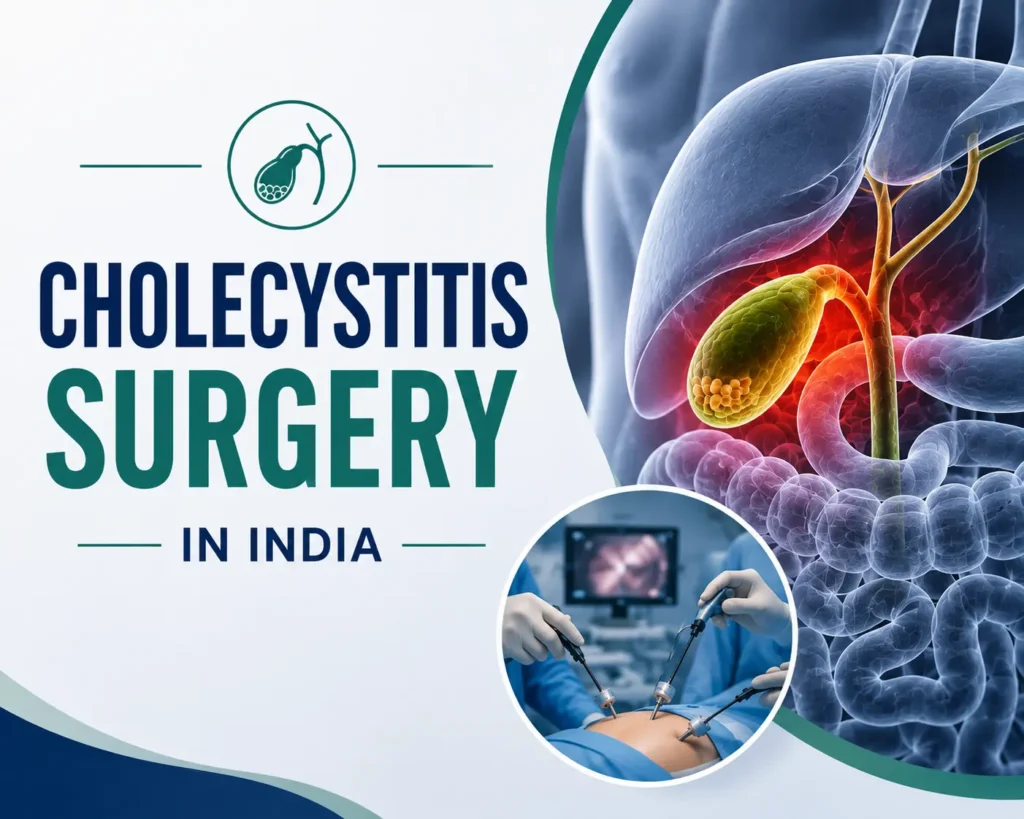
It feels terrible to experience a sharp, stabbing pain under the right side of your rib cage. This happens after having an indulgent, fatty meal and is located in your upper abdomen and may radiate towards the back and right shoulder blade. Although this pain can be confused with indigestion and food poisoning, cholecystitis is a physical problem that cannot be solved by any medication.
The name of this disease is cholecystitis. It arises when there is a blockage caused by a gallstone at the outlet of your gallbladder, leading to an infection. Ignoring this can result in a major problem. Taking treatment early on will help you, and finding Cholecystitis Surgery in India helps you get the surgery done laparoscopically.
Get Free Consultation Now
What Is Cholecystitis?
The gallbladder is a small organ beneath the liver that stores concentrated bile for fat digestion. When gallstones block the cystic duct, the organ is forced to contract against a blockage. This ongoing pressure causes the gallbladder walls to become swollen and irritated. What begins as manageable discomfort can escalate into a serious medical condition as the organ becomes acutely inflamed.
Early Signs and Symptoms
Knowledge of the symptoms and dangers of cholecystitis is important in order to know when urgent treatment is needed.
- Severe pain in the upper abdomen, often extending to the back or shoulder blades.
- Persistent nausea and vomiting.
- Low fever and chills.
- Sensitivity throughout the upper abdomen.
- Exacerbations of the pain following a high-fat meal.
- Dangers associated with ignoring the disease are perforation of the gallbladder, infections of the bile ducts, and recurrent bouts of pain.
Common Causes
The leading cause of Cholecystitis is blockage of the bile duct system by gallstones, making up to almost 95% of all cases. In rare instances, a severe inflammatory reaction can arise due to the presence of bacteria in the bile duct or due to bile sludge, both impeding normal flow. Determining the exact reason for Cholecystitis allows surgeons to perform Cholecystitis Surgery in India successfully.
When Does Surgery Become Required?
Dietary changes such as a low-fat diet on its own cannot solve a problem with acute Cholecystitis. If there are high white blood cell levels or signs of fluid accumulating around the walls of the gallbladder seen during ultrasound, surgery is usually recommended as soon as possible. It is considered that removal of the problematic area is the most reliable way to treat the problem.
Tests and Diagnosis Before Surgery
Before surgery, general surgeons rely on fast, reliable imaging.
- This typically starts with an abdominal ultrasound, which can quickly identify gallstones, wall thickening, and fluid collection.
- Blood tests are also done at the same time to assess liver function and check for signs of infection.
- If ultrasound results are unclear, a specialized HIDA scan may be used to evaluate bile flow, helping ensure your Cholecystitis Surgery in India is planned with precision.
Laparoscopic Cholecystitis Surgery Explained
The usual surgical method for patients with an infected gallbladder is a laparoscopic cholecystectomy, as there is no need to make any huge cut in the abdomen.
- Small Cuts: Small cuts will be made to gain access to operate on the organs.
- Use of Laparoscope: An instrument known as a laparoscope is inserted into the abdominal cavity, which contains a tiny camera that sends images of the internal environment to the screen.
- Making Workspace in Abdomen: For performing operations, medical-grade CO2 is used to make some extra space inside the abdomen.
- Gallbladder Removed: With special tools, the surgeon will take out the gallbladder along with the cystic duct and artery connected to it.
- Extraction: The gallbladder will be removed via small cuts made in the abdomen.
- Surgery Converted to Open Method: In case of any abnormal situation, such as scarring of organs, heavy blood flow, and unknown structures, the open surgery method may be adopted.
Risks and Complications
Complications and Risks:
- Minor bleeding: There will be minor cases of blood loss during or right after performing the surgery.
- Biliary leakage: There may be times when there will be leakage of bile into the stomach from the gallbladder.
- Infection: Mild infection may occur at the location of the minor incisions made on the abdomen during the period of recovery.
- Bile duct injury: Serious risk of getting your main bile duct damaged during the surgery process.
Diet and Lifestyle After Gallbladder Removal
Though production of bile from the liver continues after the surgery, since there is no gallbladder left to hold the bile, the body makes changes and adapts. Diarrhea can be a pretty common problem a week or two post-surgery and can happen in many people, but it generally resolves itself in several weeks to months, although sometimes it persists longer in certain individuals. It is advised that, in order to give your body some time to adjust to the changes, one eats small amounts of food at frequent intervals instead of large quantities.
Maintaining Long-Term Digestive Health
Following healthy habits after surgery supports long-term metabolic and digestive health. Doctors generally recommend maintaining a stable body weight and avoiding extremely rapid weight loss, since this can affect liver function. Regular low-impact exercise and a high-fiber diet can help support healthy cholesterol levels and reduce the risk of related digestive issues going forward.
Cholecystitis Surgery in India Cost
Cholecystitis Surgery in India typically costs around $600 to $2,500. The cost varies depending on the severity of cholecystitis, surgical technique, hospital, surgeon, anesthesia, diagnostic tests, hospital stay, medications, and any additional procedures required.
The exact cost depends on the patient’s condition and treatment plan, including ultrasound or other imaging, blood tests, surgical and hospital charges, anesthesia, medications, and postoperative care. Complicated or emergency cases may require additional treatment and can increase the overall cost. These figures are general estimates, not fixed quotes.
How Medicsaz Supports Your Cholecystitis Surgery in India Journey
Medicsaz connects international patients with vetted partner hospitals and experienced general surgeons for Cholecystitis Surgery in India. The team assists with medical record review, hospital and surgeon matching, treatment and cost estimates, travel and visa support, accommodation, and coordination throughout the patient’s treatment journey in India.
For patients exploring Cholecystitis Surgery in India, Medicsaz can help identify an appropriate surgeon and treatment approach based on the patient’s medical records, while providing guidance on expected costs and the overall treatment process.
Conclusion
Acute inflammation of the gallbladder is a serious condition, but timely surgery is generally highly effective at resolving it. By opting for Cholecystitis Surgery in India, you’re connecting with experienced general surgery teams using modern laparoscopic techniques and thorough follow-up care. With the right surgical team and some straightforward lifestyle adjustments, most patients recover well and see lasting relief from their symptoms.
Frequently Asked Questions
Is bile duct injury a common risk during gallbladder removal?
It’s uncommon, occurring in roughly 0.2 to 1.5% of laparoscopic cases, but it’s considered a serious complication when it happens. Choosing an experienced surgical team significantly reduces this risk, and any injury is managed with either endoscopic or surgical repair depending on its severity.
Will I have digestive problems after gallbladder removal?
Diarrhea is fairly common in the weeks following surgery, affecting a significant number of patients. It typically improves within a few weeks to months, though it’s worth mentioning to your doctor if it persists or is severe.
How soon can I eat normally after gallbladder removal?
Most people can gradually return to a normal diet within a few weeks, though it’s generally recommended to eat smaller meals and limit fatty or fried foods initially while the digestive system adjusts.
What are the signs that gallbladder surgery might need to be converted from laparoscopic to open surgery?
This is usually decided during the procedure if the surgeon encounters significant scarring, unclear anatomy, or bleeding that makes it safer to complete the surgery through a larger incision.
How urgent is surgery once cholecystitis is diagnosed?
It depends on severity. Signs like a high white blood cell count or fluid collecting around the gallbladder often indicate surgery is needed promptly to prevent complications like rupture.
Can gallstones come back after gallbladder removal?
No, since the gallbladder itself is removed, but stones can occasionally form or remain in the bile ducts. Maintaining a healthy weight and diet can help support overall digestive health long-term.
Medically Reviewed
This page on Cholecystitis Surgery in India has been medically reviewed by Dr. Rashid Ali, MBBS, a Delhi Medical Council–registered practitioner (Registration No. DMC/R/36289), to ensure it reflects accurate, current, and evidence-based medical information.
At Medicsaz, every treatment page is checked by a licensed doctor before publication, not written by a marketing team alone. Dr. Rashid Ali review covers the accuracy of procedures, terminology, and claims described on this page, so patients researching Cholecystitis Surgery in India can rely on what they read here to make informed decisions.
Last medically reviewed: 09/09/2026
You can independently verify Dr. Rashid Ali’s registration on the Delhi Medical Council’s official website using Registration No. DMC/R/36289, or read more about his role as Medicsaz’s medical reviewer on his reviewer profile page.