
Cervical Cancer Treatment in India
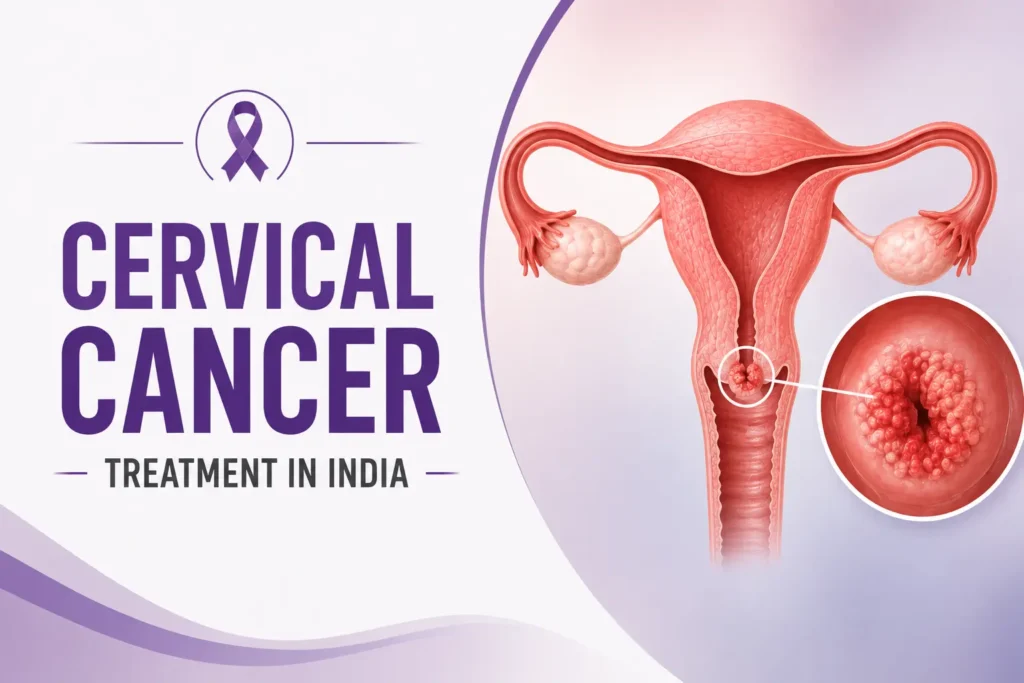
A lot of ladies find it difficult to cope with their diagnosis. Cervical cancer starts at the bottom section of the uterus, and it usually takes a lot of time before the disease starts to manifest itself. This is why the condition develops in such a subtle manner that it does not give rise to symptoms, and this is the reason why screening is crucial.
Cervical cancer treatment in India is now a viable option for regaining health in a consistent manner. Early detection of the disease through screening is the best way.
Get Free Consultation Now
What Is Cervical Cancer?
Cervical cancer is formed as a result of abnormal growth and transformation of cells in the cervix. This type of cancer is normally caused by an extended and persistent infection with the high-risk strains of HPV, causing cervical cells to transform into cancer cells slowly. Due to its location, symptoms of cervical cancer may not be noticed in its early stages, even when there are no symptoms.
Early Signs and Red Flags
The above-mentioned symptoms that may arise as a result of progressing disease include:
- Unusual bleeding: Sudden vaginal bleeding, even when not during a period or after menopause.
- Pelvic pain: Constant pain in the pelvis.
Unusual vaginal discharge: Change in vaginal discharge, different from what you have normally experienced before. - Discomfort during sex: Discomfort during sexual intercourse.
Such symptoms usually occur at the later stages of the disease – and this is why early detection through screening is the preferable method.
Causes and Risk Factors
Cervical carcinoma is due to a chronic infection with high-risk strains of Human Papillomavirus (HPV), mostly type 16 and HPV 18. HPV infection occurs via cutaneous-genital sexual intercourse; although self-limiting, persistent infections result in gradual alteration and transformation of cervical epithelial cells, leading to pre-malignancy and carcinoma. The socio-demographic and healthcare-associated risks for developing cervical carcinoma are:
- Premature Sexual Initiation: It leads to early exposure of cervical tissue to HPV infections, thus resulting in increased chances of chronic infection.
- Multiple Pregnancies: Cervical hormonal and mechanical damage lead to increased HPV infection persistence and cell transformation.
- Lack of Screening: Due to lack of screening and ignorance, the disease goes undiagnosed.
- Immunosuppression and Poor Hygiene: Poor immunity and hygiene conditions result in persistence of infection.
Prevention is possible via targeting these factors.
How Cervical Cancer Is Diagnosed
Cervical cancer is among the few cancers that have a good screening test, and thus it makes check-ups very important:
- Pap Smear Test: It is a simple test performed on women to screen out abnormalities in the cells of the cervix.
- HPV DNA Test: Screening for high-risk HPV strains.
- Colposcopy: If the screening tests show any abnormality, then it becomes necessary to examine the cervix in detail.
- Biopsy: In this test, a small sample of tissue from the cervix is removed and examined under a microscope.
Stages of Cervical Cancer Explained
The staging of cervical cancer depends upon whether the disease is localized or has spread. This means that there could be early-stage cervical cancer where there has been no spread beyond the cervix, locally advanced-stage cervical cancer where the disease has spread to nearby tissues or lymph nodes, or advanced/metastatic stage cervical cancer where there is a spread of the disease to distant parts of the body.
Planning for Cervical Cancer Treatment in India
Treatment depends on the stage of the cancer and the patient’s overall health. Doctors create a personalized treatment plan to ensure the best possible outcome. In India, multiple specialists work together as a team, ensuring every step is handled with precision.
Surgery for Cervical Cancer
In the initial stages of treatment, surgery is normally the first line of treatment, whereby the abnormal tissues are removed. In some instances, in young women who desire fertility preservation, there can be some fertility-sparing surgeries that can be performed depending on the stage of the disease. This is something that should be discussed with your gynecologic oncologist.
Radiation Therapy and Chemotherapy
For advanced cases of disease, radiation and chemotherapy may be applied either separately or in combination in order to fight cancer and make the tumor smaller. It is administered with great precision, utilizing modern methods that minimize the risk of affecting the normal tissues that surround the area of interest, but it can lead to side effects, including fatigue, irritation of the bowel or bladder, as well as fertility issues in young women and premature menopause. Chemotherapy can result in side effects such as fatigue and nausea.
HPV Vaccination and Prevention
Vaccination against HPV is one of the most effective ways to prevent cervical cancer before it starts, since it protects against the high-risk HPV types responsible for most cases. Regular screening even after vaccination, along with good general health habits, remains an essential part of long-term prevention.
Recovery and Follow-Up Care
Recovery varies depending on the treatment method used. Patients often need time to regain strength and adjust, especially after surgery or radiation. Regular follow-up visits, including HPV testing and imaging, are essential to monitor for recurrence in the years after treatment.
Life After Cervical Cancer Treatment in India
Following successful treatment, most women start to experience a restoration of their normal lives. Professional help will be given concerning how best to manage themselves for the rest of their lives, nutritionally and through follow-up medical checks. It may be psychologically challenging, but support, whether family or professional, really helps.
Cervical Cancer Treatment in India Cost
Cervical Cancer Treatment in India typically ranges from around $4,500 to $10,000. The cost varies depending on the stage of cancer, treatment approach, surgery, chemotherapy, radiation and brachytherapy requirements, hospital, specialist, diagnostic tests, hospital stay, medications, and follow-up care.
The exact cost depends on the patient’s diagnosis and treatment plan, including biopsy, imaging, surgery, chemotherapy, radiation therapy, brachytherapy, hospitalisation, medications, and follow-up care. These figures are general estimates, not fixed quotes. Medicsaz can provide a personalized cost estimate after a partner oncology team reviews the patient’s medical records and treatment requirements.
How Medicsaz Supports Your Cervical Cancer Treatment in India Journey
Medicsaz connects international patients with vetted partner hospitals and experienced gynecologic oncology specialists for Cervical Cancer Treatment in India. The team assists with medical record review, hospital and doctor matching, treatment and cost estimates, travel and visa support, accommodation, and coordination throughout the patient’s treatment journey in India.
For patients exploring Cervical Cancer Treatment in India, Medicsaz can help identify an appropriate oncology specialist and treatment approach based on the patient’s diagnosis and medical records, while providing guidance on expected costs and the overall treatment process.
Conclusion
Not paying attention to pelvic pain and other unusual symptoms or missing the screening can become risky, as it may lead to the progression of the condition to a more advanced stage of the illness that would be hard to treat. Cervical cancer treatment in India provides modern technology for diagnosis and therapy, which will help you achieve good health.
Frequently Asked Questions
How often should I get screened for cervical cancer?
Screening guidelines generally recommend starting around age 21 with regular Pap smears, and from age 30 onward, a combined Pap and HPV test every few years is common, though exact intervals vary by guideline and individual risk. Since early-stage cervical cancer often has no symptoms, sticking to a regular screening schedule — rather than waiting for symptoms — is the most reliable way to catch it early.
What's the difference between a Pap smear and an HPV test?
A Pap smear looks for abnormal or precancerous changes in cervical cells, while an HPV test checks specifically for the high-risk virus types that cause most cervical cancers. The two tests are often done together, especially for women over 30, since combining them improves detection.
Does an abnormal Pap smear mean I have cancer?
No — an abnormal Pap smear usually means some cervical cells look different, which is often due to HPV infection or minor changes that resolve on their own, not cancer. Further testing, like a colposcopy or biopsy, is used to figure out exactly what’s going on before any treatment decisions are made.
Will cervical cancer treatment affect my ability to have children?
It depends on the stage and the treatment needed — some early-stage cases can be treated with fertility-sparing surgery, while more extensive surgery or radiation can affect fertility or bring on early menopause. This is an important conversation to have with your gynecologic oncologist before treatment starts, especially if you’re hoping to have children in the future.
Is the HPV vaccine still useful if I'm already sexually active?
Yes — while the vaccine works best before HPV exposure, it can still protect against HPV types you haven’t yet been exposed to, so it remains valuable for many sexually active people. Your doctor can advise on whether vaccination makes sense for your specific situation.
What are the early warning signs of cervical cancer?
Early-stage cervical cancer often causes no symptoms at all, which is why screening matters even when you feel completely healthy. When symptoms do appear, they can include abnormal vaginal bleeding, unusual discharge, pelvic pain, or pain during intercourse — any of these should prompt a visit to your doctor.
Medically Reviewed
This page on Cervical Cancer Treatment in India has been medically reviewed by Dr. Rashid Ali, MBBS, a Delhi Medical Council–registered practitioner (Registration No. DMC/R/36289), to ensure it reflects accurate, current, and evidence-based medical information.
At Medicsaz, every treatment page is checked by a licensed doctor before publication, not written by a marketing team alone. Dr. Rashid Ali review covers the accuracy of procedures, terminology, and claims described on this page, so patients researching Cervical Cancer Treatment in India can rely on what they read here to make informed decisions.
Last medically reviewed: 09/09/2026
You can independently verify Dr. Rashid Ali’s registration on the Delhi Medical Council’s official website using Registration No. DMC/R/36289, or read more about his role as Medicsaz’s medical reviewer on his reviewer profile page.