
Salivary Gland Cancer Treatment in India
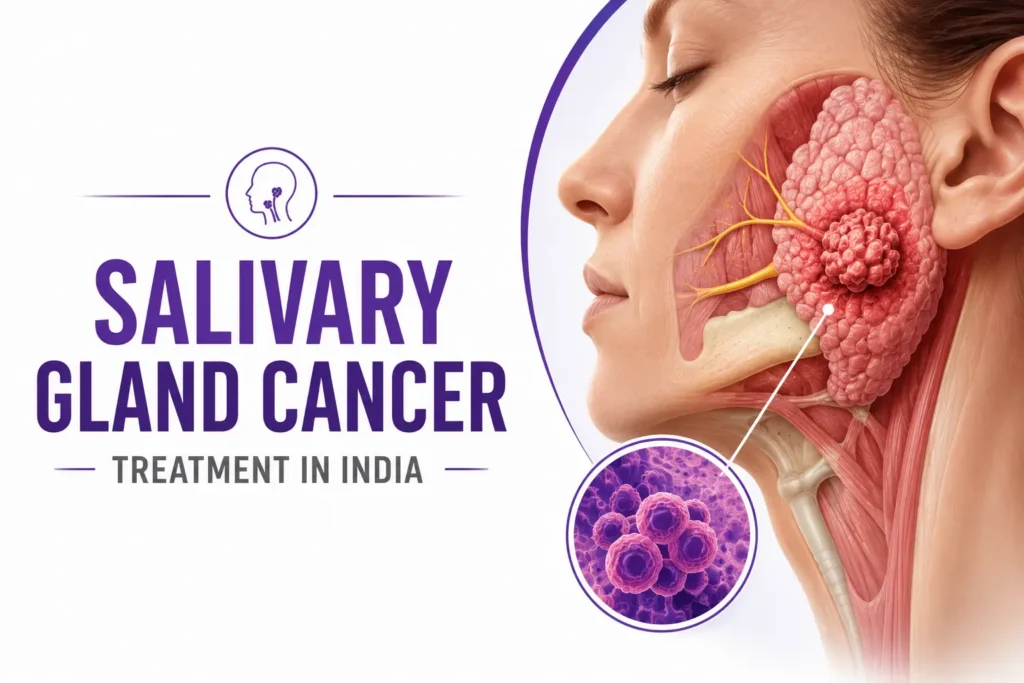
In the field of oncology for head and neck cancer, salivary gland cancer treatment in India has become an exacting clinical specialty for its victims. It is a form of cancer that affects the salivary glands, which are responsible for producing the saliva that facilitates digestion. The majority of cases of this kind of cancer develop slowly, beginning in the glands inside the jaw or cheek without forming a noticeable lump first.
This is a relatively rare form of cancer, so it is easily ignored until it has progressed, due to symptoms such as stiffness in the face. Early detection would be most beneficial for facial and nervous system functions.
Get Free Consultation Now
What Is Salivary Gland Cancer?
Cancer of the salivary glands results from abnormal growth and multiplication of cells that leads to the formation of a tumor within the gland. The major salivary glands include the parotid, submandibular, and sublingual glands. Saliva secreted from the glands facilitates digestion of food and keeps the mouth moist. The majority of the salivary gland tumors originate in the parotid gland.
Early Signs and Symptoms of Salivary Gland Cancer
The signs can be subtle, which is why they tend to be ignored. Here are some of the indicators specialists look out for:
- Persistent Lump or Swelling: On the jaw, cheek, or neck, most salivary gland tumors begin as a painless lump, and therefore not an indicator of cancer but one that should nevertheless be investigated.
- Facial Paralysis or Numbness: Facial muscle paralysis or numbness – this is an important symptom because it is associated with cancerous tumors rather than benign ones.
- Swallowing Problems: Difficulty swallowing or a constant sensation of having something stuck in the throat.
- Pain: Painful sensations in the face as the tumor develops. This is a rare symptom in cases of malignancies, but should be mentioned to your physician.
Causes and Risk Factors
Causes of salivary gland cancer are associated with genetic susceptibilities and environmental factors. The main risk factors are:
- Exposure to Radiation: Past radiotherapy procedures performed on the head, neck, or facial areas increase the chances of mutations within salivary gland tissue cells.
- Industrial Pollutants: Occupational hazards such as exposure to chemicals, radioactive materials, heavy metals, and industrial waste, including silica dust and certain rubber components, make one susceptible to the disease.
- Lifestyle Choices: Tobacco use and the presence of environmental irritants contribute heavily to causing head and neck cancer.
- Increased Age and History of Cancers: Aging increases the possibility of cell mutation, along with a history of cancer cases.
It is crucial to analyze the patients in terms of these risk factors for an accurate diagnosis and personalized treatment procedure.
How Salivary Gland Cancer Is Diagnosed
Doctors in India diagnose the disease by making use of images and samples of the tissues:
- Imaging: MRI and CT scans create a picture of the dimensions, location, and extent of the growth.
Fine Needle Aspiration - (FNA) Biopsy: A small needle is inserted in order to withdraw some cells from the growth and examine them under the microscope. It is the method that is usually done at the first stage of diagnosing the growth to distinguish between benign and malignant types.
Planning for Salivary Gland Cancer Treatment in India
Salivary Gland Cancer Treatment in India depends on the stage of the disease and the patient’s general condition. In the best hospitals in India, all specialists work as a team to develop an individually tailored treatment strategy. Such coordination helps ensure that everything is done properly to avoid damaging the fragile facial nerve.
Surgery for Salivary Gland Cancer
Almost always, the surgical approach is utilized to excise the affected part of the salivary gland. As part of the procedure, the surgeon removes the mass from the salivary gland by ensuring that the facial nerve is protected throughout the process since it runs through the parotid gland. Even though great care is taken, there is a risk of facial weakness due to parotid surgery. There is research that indicates that facial weakness is experienced by 1 in 10 patients temporarily and rarely permanently, particularly when the tumor is large or more invasive.
- Gland Removal: Excision of some or all of the parotid and submandibular gland in order to remove the tumor.
- Nerve Sparing: Ensuring that the facial nerve is protected wherever possible.
- Reconstruction: Reconstruction is an option for patients who have had to remove a lot of tissue.
Radiation Therapy and Chemotherapy
- Radiation Therapy: Radiation therapy, given after surgery, is commonly used for higher-grade or more advanced tumors to help destroy any remaining cancer cells in the area. It’s generally well-targeted to limit effects on surrounding tissue, though common side effects include dry mouth, taste changes, and skin irritation in the treated area.
- Chemotherapy: Chemotherapy has a more limited role in salivary gland cancer and is typically reserved for advanced or metastatic disease, or specific tumor types, and can cause side effects like fatigue and nausea.
Recovery and Follow-Up Care
Recovery depends on the degree of damage to tissues. Patients require healing time to give nerves a chance to recover and restore their normal functioning. Imaging and follow-ups are crucial for ongoing checks.
- Early Recovery: This refers to the initial period of recovery after the operation when swelling and nerve function start to normalize.
- Follow-up Scans: Ongoing imaging is arranged from time to time to check for any changes.
- Symptom Monitoring: Observe any additional symptoms, which may indicate a relapse.
Lifestyle and Care After Treatment
Following the treatment, the maintenance of good oral health is necessary due to the fact that the radiotherapy treatment may affect the formation of saliva and also the teeth. There are specialists who can assist with the management of dry mouth, hydration, and proper oral hygiene practices.
Salivary Gland Cancer Treatment in India Cost
Salivary Gland Cancer Treatment in India can cost around $2,500 to $8,500. The total cost varies depending on the type and stage of cancer, extent of surgery, need for neck dissection or reconstruction, radiation therapy, chemotherapy, hospital, specialist, diagnostic tests, and duration of treatment.
The exact cost depends on the patient’s diagnosis and treatment plan, including biopsy, imaging, surgery, radiation or systemic therapy when required, hospitalisation, medications, and follow-up care. These figures are general estimates, not fixed quotes. Medicsaz can provide a personalized cost estimate after a partner oncology team reviews the patient’s medical records and treatment requirements.
How Medicsaz Supports Your Salivary Gland Cancer Treatment in India Journey
Medicsaz connects international patients with vetted partner hospitals and experienced oncology and head-and-neck cancer specialists for Salivary Gland Cancer Treatment in India. The team assists with medical record review, hospital and doctor matching, treatment and cost estimates, travel and visa support, accommodation, and coordination throughout the patient’s treatment journey in India.
For patients exploring Salivary Gland Cancer Treatment in India, Medicsaz can help identify an appropriate specialist and treatment approach based on the patient’s diagnosis and medical records, while providing guidance on expected costs and the overall treatment process.
Conclusion
Ignoring a lump in the neck or a persistent change in facial movement is a risky move that can allow the disease to progress. Salivary gland cancer treatment in India offers advanced diagnostic and surgical tools that bring clarity to a rare diagnosis, alongside regular follow-up to support long-term health. Modern, coordinated care offers a clear and reliable path back to health and stability.
Frequently Asked Questions
Does a lump near the jaw or ear always mean cancer?
No — most lumps in the salivary glands turn out to be benign (non-cancerous) cysts or tumors rather than cancer. Still, any lump that doesn’t go away within a few weeks should be checked by a doctor, since imaging and a biopsy are the only reliable ways to tell benign from malignant.
How is salivary gland cancer diagnosed?
Doctors typically start with imaging (MRI or CT) to see the tumor’s size and location, followed by a fine needle aspiration (FNA) biopsy to examine the cells directly. This combination helps determine whether a lump is benign or malignant before deciding on a treatment plan.
Is facial nerve damage a risk of salivary gland surgery?
Yes — because the facial nerve runs through the parotid gland, there’s a real risk of temporary or, less commonly, permanent facial weakness after surgery, even with careful nerve-sparing technique. The risk depends on tumor size, location, and whether the nerve is already affected by the tumor itself.
What's the difference between benign and malignant salivary gland tumors?
Both often start as a painless lump, but symptoms like facial numbness, weakness, or persistent pain are more suggestive of a malignant tumor. A biopsy is needed to confirm which type is present, since imaging alone often can’t reliably distinguish between them.
Will I need radiation or chemotherapy in addition to surgery?
Radiation therapy is often recommended after surgery for higher-grade or more advanced tumors, while chemotherapy is used less often and mainly for advanced or metastatic cases. Your treatment team will base this decision on the specific tumor type and stage found during surgery and pathology review.
How long is recovery after salivary gland surgery?
Recovery time varies based on how much tissue was removed, but most patients need some weeks for swelling to go down and nerve function to stabilize. Regular follow-up visits and imaging continue afterward to monitor healing and check for any signs of recurrence.
Medically Reviewed
This page on Salivary Gland Cancer Treatment in India has been medically reviewed by Dr. Rashid Ali, MBBS, a Delhi Medical Council–registered practitioner (Registration No. DMC/R/36289), to ensure it reflects accurate, current, and evidence-based medical information.
At Medicsaz, every treatment page is checked by a licensed doctor before publication, not written by a marketing team alone. Dr. Rashid Ali review covers the accuracy of procedures, terminology, and claims described on this page, so patients researching Salivary Gland Cancer Treatment in India can rely on what they read here to make informed decisions.
Last medically reviewed: 09/09/2026
You can independently verify Dr. Rashid Ali’s registration on the Delhi Medical Council’s official website using Registration No. DMC/R/36289, or read more about his role as Medicsaz’s medical reviewer on his reviewer profile page.