Atrial Septal Defect (ASD) Closure in India
Not all heart conditions develop immediately. Many people go on living without exhibiting any symptoms. They may only come to know about their heart condition through an initial test at the clinic. In some cases, certain symptoms appear gradually in the form of fatigue or shortness of breath. Such symptoms usually indicate an existing congenital structural problem of the heart.
Atrial Septal Defect (ASD) involves a hole in the heart that influences the blood flow in a person’s body. Though it does not pose many threats initially, the absence of treatment leads to the stressing of the heart and lungs. The good news is that the Atrial Septal Defect (ASD) Closure in India is conducted in a very safe manner.
Get Free Consultation Now
What Is an Atrial Septal Defect (ASD)?
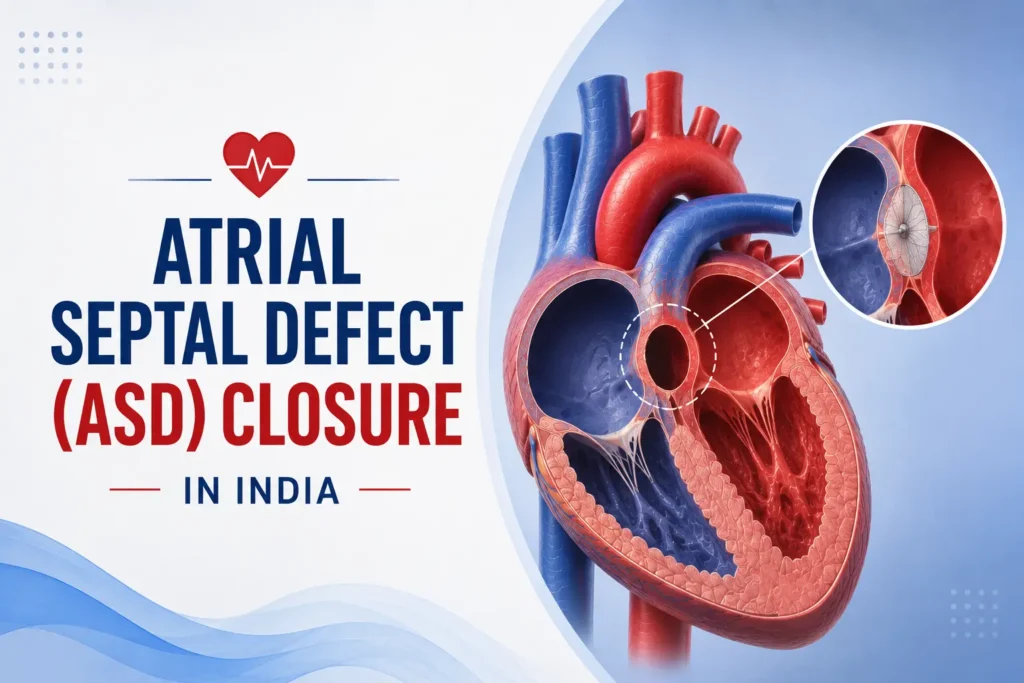
ASD is a condition present from birth where a hole exists in the wall, called the septum, that separates the two upper chambers of the heart. Because of this opening, oxygen-rich blood mixes with the other side of the heart instead of flowing efficiently to the rest of the body. This mixing increases pressure on the lungs and makes the heart work much harder than it should.
Symptoms of ASD in Children and Adults
One reason ASD is missed early is that symptoms can be very mild. In small defects, there may be no signs at all for years:
- Physical Fatigue: Children might get tired fast while playing or fail to gain weight normally
- Respiratory Issues: Frequent chest infections or shortness of breath are common signs
- Rhythm Changes: Adults may notice irregular heartbeats as the heart handles the extra pressure over time
- Visible Swelling: Swelling in the legs can show that the heart is struggling to keep up
Causes of Atrial Septal Defect
ASD happens when the baby’s heart is forming during the period that he or she is developing in the womb. Most of the time, it is not possible to point out an exact cause of the problem. Genetic factors are involved in the formation of ASD, for example, family background and some medical conditions such as Down syndrome. However, some conditions during the pregnancy period have been known to increase the chances of having ASD, for instance, alcohol consumption by the mother, smoking, certain drugs, and rubella.
How ASD Is Diagnosed in India
Doctors use imaging tools to see the size of the defect and plan the best treatment approach:
- Echocardiography: The main test used to get a clear picture of the hole and help plan closure
- ECG Monitoring: Checks the heart’s rhythm to see if there are irregular beats caused by the extra strain
- Chest X-ray: A simple scan that shows if the heart is enlarged or if there’s fluid in the lungs
- Detailed Imaging: Cardiac CT or MRI scans give a closer look at the heart’s structure for complex cases
Treatment Options for ASD Closure in India
The treatment path depends on how big the defect is and whether it causes symptoms. Small ASDs might only need regular monitoring if they don’t strain the heart. If the defect is large or causes fatigue, closing the hole is needed to prevent long-term damage.
Device Closure vs Open Surgery for ASD
Specialists choose between a minimally invasive or surgical approach based on the size and position of the defect:
- Device Closure: A small device is placed in the heart through a thin tube to close the hole
- Fast Recovery: Most device closure patients go home in a day or two and return to routine activities quickly
- Open Surgery: Used when the hole is too large or positioned in a way that isn’t suitable for a device
- Structural Repair: The surgeon closes the hole with stitches or a medical patch to fully seal the defect
ASD Closure Procedure Explained
In a device closure, a thin tube is guided through a leg vessel up to the heart. A closure device is placed over the hole, and heart tissue gradually grows over it to seal it permanently. In a surgical closure, the chest is opened so the surgeon can close the defect directly with stitches or a patch.
Recovery After ASD Closure in India
Recovery is usually smooth. Surgical repair takes a bit longer to recover from than the device method. After a device procedure, patients typically leave the hospital the next day and return to their routine quickly. Surgical patients stay in the hospital for a few days and rest at home afterward to heal fully.
Risks and Complications of ASD Closure
As with any heart procedure, there are some risks to be aware of:
- Localized Bleeding: A small risk at the site where the catheter or surgical incision was made
- Rhythm Changes: Some patients notice temporary shifts in heartbeat that settle down as the heart adjusts
- Device Shifting: It’s rare, but a device can occasionally shift, or a surgical patch may need correction
Long-Term Follow-Up After Atrial Septal Defect (ASD) Closure in India
Routine follow-up tests are important to check heart function and confirm the closure remains stable over time. Doctors monitor heart rhythm and overall function to catch any issues early. Most patients are able to safely return to sports and normal physical activity after their doctor confirms it’s appropriate.
Atrial Septal Defect (ASD) Closure in India Cost
Atrial Septal Defect (ASD) Closure in India typically ranges from around $4,200 to $7,000. The cost may vary depending on whether surgical or device closure is required, the size and location of the defect, the type of device used, hospital, cardiac specialist, diagnostic tests, hospital stay, and follow-up care.
The exact cost depends on the patient’s medical condition, treatment approach, pre-procedure cardiac evaluations, imaging, specialist and hospital charges, device costs, medications, and post-treatment care. These figures are general estimates, not fixed quotes. Medicsaz can provide a personalized cost estimate after a partner cardiac specialist reviews the patient’s medical records and treatment requirements.
How Medicsaz Supports Your Atrial Septal Defect (ASD) Closure in India Journey
Medicsaz connects international patients with vetted partner hospitals and experienced cardiac specialists for Atrial Septal Defect (ASD) Closure in India. The team assists with medical record review, hospital and doctor matching, treatment and cost estimates, travel and visa support, accommodation, and coordination throughout the patient’s treatment journey in India.
For patients exploring ASD Closure Treatment in India, Medicsaz can help identify an appropriate specialist and treatment approach based on the patient’s medical records, while providing guidance on expected costs and the overall treatment process.
Conclusion
Atrial Septal Defect may go undetected for years, but leaving it untreated can strain the heart over time. The condition can be effectively managed with timely treatment, and there are safe, well-established options available for Atrial Septal Defect (ASD) Closure in India.
Frequently Asked Questions
What causes an atrial septal defect?
Many cases have no clear identifiable cause, but genetic factors, family history, and certain maternal exposures during pregnancy, such as alcohol use, smoking, or infections like rubella, are recognized risk factors.
Does every ASD need to be closed?
No — small ASDs that aren’t causing symptoms or straining the heart may only need regular monitoring rather than active treatment.
What's the difference between device closure and surgical closure for ASD?
Device closure uses a catheter-based approach through a leg vessel with a much faster recovery, while surgical closure is used for larger or awkwardly positioned defects and involves a longer recovery.
Is ASD closure a permanent fix?
Yes — once closed, either by device or surgery, heart tissue grows over the area to permanently seal the defect, though regular follow-up is still recommended to confirm long-term stability.
Can adults be diagnosed with ASD, or is it only found in children?
Adults can absolutely be diagnosed with ASD, sometimes for the first time, especially if the defect was small enough to cause no symptoms during childhood.
How is ASD diagnosed?
Diagnosis typically involves an echocardiogram to visualize the defect, an ECG to check heart rhythm, and sometimes a chest X-ray or detailed cardiac imaging for more complex cases.
Medically Reviewed
This page on Atrial Septal Defect (ASD) Closure in India has been medically reviewed by Dr. Rashid Ali, MBBS, a Delhi Medical Council–registered practitioner (Registration No. DMC/R/36289), to ensure it reflects accurate, current, and evidence-based medical information.
At Medicsaz, every treatment page is checked by a licensed doctor before publication, not written by a marketing team alone. Dr. Rashid Ali review covers the accuracy of procedures, terminology, and claims described on this page, so patients researching Atrial Septal Defect (ASD) Closure in India can rely on what they read here to make informed decisions.
Last medically reviewed: 09/09/2026
You can independently verify Dr. Rashid Ali’s registration on the Delhi Medical Council’s official website using Registration No. DMC/R/36289, or read more about his role as Medicsaz’s medical reviewer on his reviewer profile page.