
Coarctation of the Aorta Treatment in India
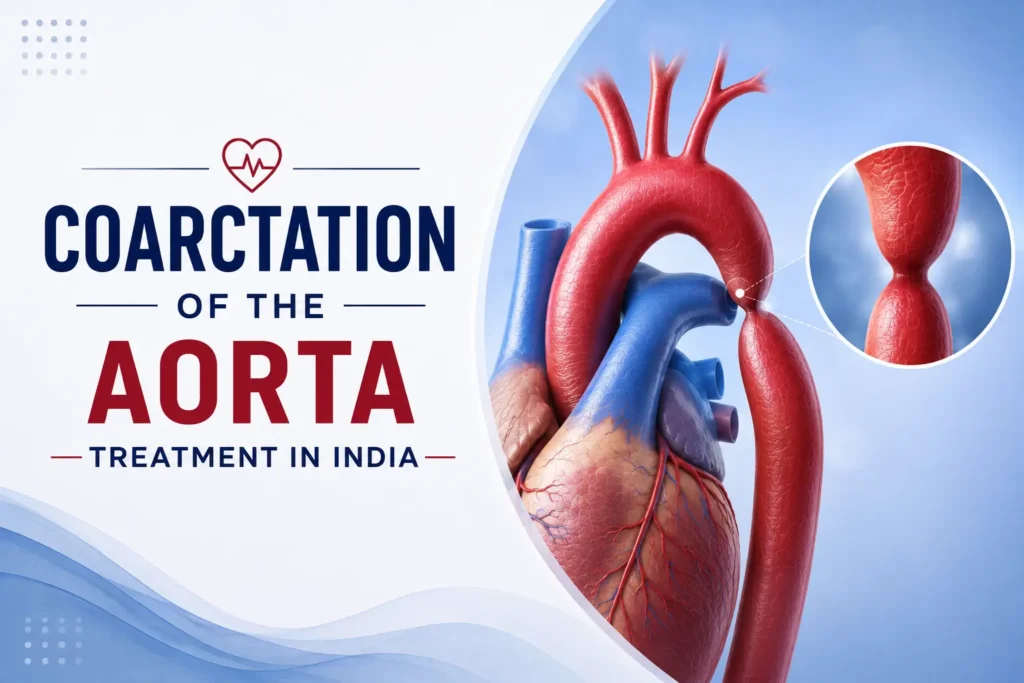
Some heart diseases develop at birth and remain hidden until many years later. One of them is coarctation of the aorta. It means that the major artery responsible for carrying blood from the heart to other parts of the body is narrower than it should be. This makes the heart exert more effort over the years, which may cause complications.
Coarctation of the Aorta Treatment in India is a highly efficient and sustainable treatment that will provide normal circulation of blood before the heart is stressed.
Get Free Consultation Now
What Is Coarctation of the Aorta?
The aorta is an artery through which oxygen-filled blood is pumped out of the heart into other parts of the body. Coarctation is the constriction that occurs in this artery; you may think of this constriction as a knot in the hose.
Due to such constriction, the blood fails to pass into the bottom half of the body with the required force. Consequently, this results in high blood pressure in the top part of the body (arms and head) and insufficient blood circulation in the legs.
Symptoms and Signs to Watch For
The signs of coarctation may go unnoticed. Symptoms include:
- Pressure Difference: High blood pressure in the arms but low in the legs
- Dizziness and Headaches: Triggered by high blood pressure in the head
- Poor Leg Pulse: Indicative that the legs are not receiving adequate blood flow
- Leg Cramps: Leg pain while carrying out activities of daily living
Causes and Risk Factors in India
The condition of coarctation of the aorta is a congenital condition, which means that it is already there when someone is born. Apart from genetics playing an important part, environmental and lifestyle factors can put additional stress on the heart in people who have this disease.
Identifying the condition early through a professional evaluation is the first step toward effective treatment and avoiding complications later in life.
How Doctors Diagnose the Condition
Doctors use a few key tests to confirm the diagnosis and understand exactly where and how severe the narrowing is:
- Echocardiography (Echo): An ultrasound that shows how the heart is functioning
- CT Scan or MRI: Detailed imaging that pinpoints the exact location and extent of the narrowing
Blood Pressure Comparison: Measuring and comparing blood pressure between the arms and legs to assess severity
Balloon Angioplasty and Stenting
For many patients, widening the artery doesn’t require open surgery. During balloon angioplasty, a thin, flexible tube is guided to the narrowed section of the aorta. A small balloon at the tip is then inflated to stretch the artery open.
In older patients, a stent, which is a small metal mesh support, may also be placed to help keep the artery open over the long term.
Surgical Repair for More Complex Cases
Where there is an extensive narrowing of the aorta, or if the patient is an extremely young baby, then surgery is a much better approach. In such cases, the surgical approach involves the removal of the part of the aorta that is narrowed, followed by suturing back the rest of the healthy aorta.
India has some highly skilled pediatric cardiologists who perform such surgeries even in babies with high efficiency.
Recovery and Long-Term Care
Recovery varies depending on what kind of treatment was received. If there was a balloon treatment, it takes a few days for patients to become stable. Following surgery, the child requires staying at the hospital for a week.
However, even after the treatment is a success, there is still a need for periodic imaging follow-ups. Monitoring of the aorta is required while the body continues growing because sometimes aortic narrowing can come back.
Coarctation of the Aorta Treatment in India Cost
Coarctation of the Aorta Treatment in India typically ranges from around $4,000 to $7,000. The cost can vary depending on the patient’s age and condition, severity and location of the narrowing, treatment approach, cardiac specialist, hospital, and whether balloon angioplasty, stenting, or surgical repair is required.
The exact cost depends on pre-treatment cardiac evaluations, imaging, the chosen procedure, ICU and hospital stay, medications, and follow-up care. These figures are general estimates, not fixed quotes. Medicsaz can help arrange a personalized cost estimate after a partner cardiac specialist reviews the patient’s medical records and treatment requirements.
How Medicsaz Supports Your Coarctation of the Aorta Treatment in India Journey
Medicsaz connects international patients with vetted partner hospitals and cardiac specialists experienced in congenital heart conditions, and coordinates everything around the process: cost estimates, medical records review, hospital and doctor matching, travel and visa support, accommodation, and a point of contact throughout your stay in India.
If you’re ready to explore Coarctation of the Aorta Treatment in India, reach out for a free consultation and cost estimate. Most inquiries get a response within 30 minutes.
Conclusion
Ignoring symptoms like unexplained high blood pressure or leg fatigue can lead to serious complications over time. Coarctation of the Aorta Treatment in India offers advanced, reliable options, from balloon angioplasty to surgical repair, backed by experienced cardiac teams. With timely diagnosis and consistent follow-up care, patients can look forward to a stable, active, and healthy life.
Frequently Asked Questions
Is coarctation of the aorta something a baby is born with?
Yes, it’s a congenital condition, meaning it’s present from birth, caused by a narrowing in the aorta that restricts blood flow to the lower body.
Can coarctation of the aorta come back after treatment?
Yes, narrowing can sometimes return after both balloon angioplasty and surgical repair, which is why regular follow-up imaging is recommended as the child grows.
What's the difference between balloon angioplasty and surgery for this condition?
Balloon angioplasty is a minimally invasive, catheter-based option often used in older children and adults, while surgery is typically needed for infants or when the narrowed section is too long to treat with a balloon alone.
What are the warning signs of coarctation of the aorta?
Common signs include high blood pressure in the arms with weaker pulses in the legs, leg cramps or fatigue during activity, and in infants, poor feeding or breathing difficulty.
How is coarctation of the aorta diagnosed?
Diagnosis typically involves an echocardiogram, along with CT or MRI imaging, and comparing blood pressure between the arms and legs to assess severity.
Is treatment for coarctation of the aorta safe for newborns?
Yes, pediatric cardiac teams specialize in treating this condition even in newborns, with strong success rates, though the specific approach depends on the infant’s size and the severity of the narrowing.
Medically Reviewed
This page on Coarctation of the Aorta Treatment in India has been medically reviewed by Dr. Rashid Ali, MBBS, a Delhi Medical Council–registered practitioner (Registration No. DMC/R/36289), to ensure it reflects accurate, current, and evidence-based medical information.
At Medicsaz, every treatment page is checked by a licensed doctor before publication, not written by a marketing team alone. Dr. Rashid Ali review covers the accuracy of procedures, terminology, and claims described on this page, so patients researching Coarctation of the Aorta Treatment in India can rely on what they read here to make informed decisions.
Last medically reviewed: 09/09/2026
You can independently verify Dr. Rashid Ali’s registration on the Delhi Medical Council’s official website using Registration No. DMC/R/36289, or read more about his role as Medicsaz’s medical reviewer on his reviewer profile page.