Thyroid Cancer Treatment in India
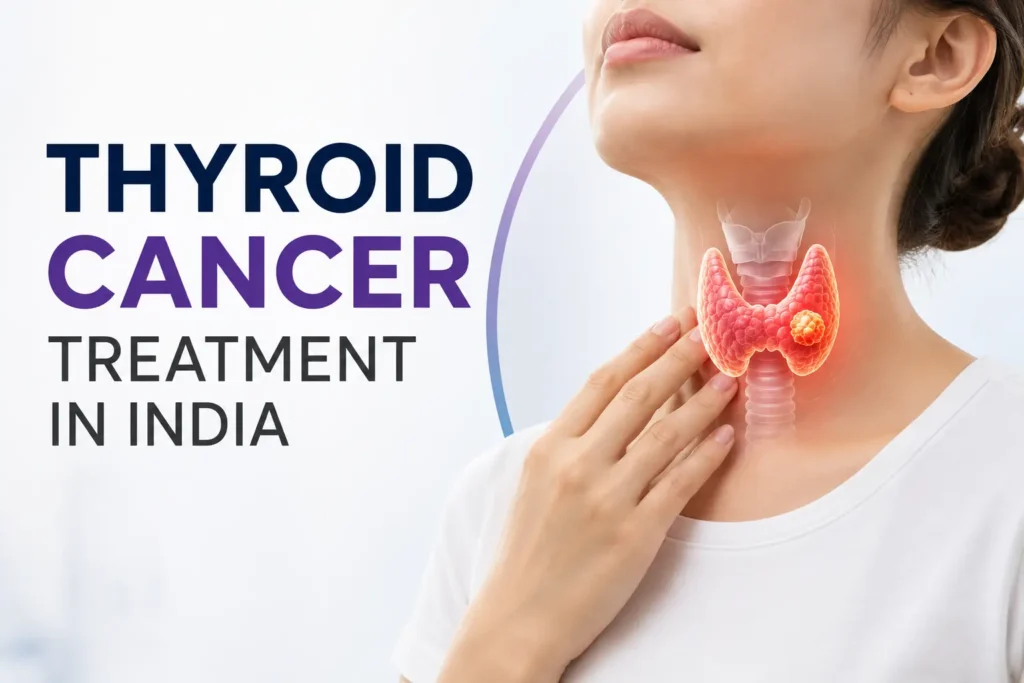
The presence of a swelling in the neck area is not an unusual phenomenon among many individuals; however, they ignore it. This is mostly true; however, a non-healing lump needs attention because, in some cases, it might turn out to be an indicator of thyroid cancer.
There is no need to worry about thyroid cancer because it is mostly discovered in its early stage and mostly proves to be responsive to the various forms of treatment. In the majority of cases, patients recover from it. Nowadays, Thyroid Cancer Treatment in India is performed with a major emphasis on early detection and regular follow-up along with surgery.
Get Free Consultation Now
What Is Thyroid Cancer?
Thyroid cancer occurs because the cells within the thyroid gland keep multiplying without control. This form of cancer usually grows slowly and will not cause any trouble during its initial stages, but the risk associated with this type of cancer is that it may metastasize to other parts of the body, including the lymph nodes.
There are different forms of thyroid cancer, and they do not affect patients similarly. Papillary and follicular cancers are the two most common types of thyroid cancer, and they make up 90-95% of all cases of thyroid cancer. These cancers have very good prognoses and chances of success if detected earlier. Medullary thyroid cancer is relatively uncommon compared to papillary and follicular cancers. Anaplastic thyroid cancer is relatively uncommon compared to other types of cancers, but it is more aggressive.
Why Thyroid Cancer Is Often Detected Early
There are a couple of reasons this specific cancer tends to be caught before it progresses too far:
- Visible Lump: Unlike many cancers, thyroid cancer is often noticed early because it causes a visible lump or swelling in the front of the neck.
- Routine Checks: People often spot these lumps during routine self-checks or health screenings, allowing for evaluation before things advance.
Common Symptoms of Thyroid Cancer
Specialists watch for these red flags:
- Neck Lump: A painless swelling in the front of the neck.
- Difficulty Swallowing: A persistent feeling of something stuck in the throat.
- Voice Changes: Hoarseness or a change in voice that doesn’t resolve.
- Radiating Pain: Discomfort in the neck that sometimes spreads toward the ears.
Who Is at Risk of Thyroid Cancer
A few factors are worth knowing, since they can help you decide when to get checked:
- Family History: A family history of thyroid cancer, especially medullary thyroid cancer, raises risk.
- Radiation Exposure: A history of radiation exposure to the head or neck, particularly during childhood.
- Chronic Thyroid Conditions: Long-term thyroid disorders, which can raise risk over time in some cases.
Tests and Diagnosis for Thyroid Cancer
The process that doctors go through to make a diagnosis usually involves:
- Ultrasound: This test helps to look at the gland to see if there are nodules or places that need to be tested.
- Fine Needle Aspiration (FNA) Biopsy: This procedure entails taking tissue from the lump using a needle; this is when the actual cancer is confirmed.
- Imaging Tests: These tests include CT or MRI to see if the disease has spread.
Options for Thyroid Cancer Treatment in India
What your doctor recommends depends on the specific type and stage of thyroid cancer, along with your overall health:
- Surgery: The primary treatment, removing part or all of the affected thyroid tissue.
Radioactive Iodine - Therapy: Used after surgery, mainly for papillary and follicular thyroid cancer — it doesn’t work for medullary thyroid cancer.
- Hormone Replacement Therapy: Needed to maintain the body’s hormone balance once the thyroid is removed.
Thyroid Surgery and Its Role in Treatment
Surgery is usually the first step, involving removal of part (lobectomy) or all (total thyroidectomy) of the thyroid gland, along with any affected lymph nodes if needed. The goal is to clear the cancer completely so it doesn’t spread further. This procedure remains a major pillar of Thyroid Cancer Treatment in India, and outcomes are generally very good for the most common thyroid cancer types.
Radioactive Iodine Therapy Explained
Radioactive iodine treatment can be administered after surgical removal to destroy any remaining thyroid cells, as they readily absorb iodine. While this treatment is safe, having a dry mouth, a change in taste sensation, and feeling tired may happen after treatment because the saliva-producing glands will also absorb some of the iodine. However, your healthcare provider will explain what to anticipate from this therapy. It is good to know that radioactive iodine treatment does not work for medullary and anaplastic cancers.
Hormone Therapy After Thyroid Cancer Treatment
With either the removal of part or all of the thyroid, the production of thyroid hormones will be insufficient, and thus the intake of synthetic hormone supplements (levothyroxine) will be necessary to maintain hormonal balance. At times, a somewhat increased dosage might be prescribed to suppress TSH and possibly reduce the chances of recurrence. The only means to maintain an appropriate dosage is regular blood testing, as both insufficient and excessive levels of hormones could lead to issues.
Long-Term Monitoring and Follow-Up
Post-treatment care is crucial in the management of thyroid cancer over time:
- Monitoring: This includes blood tests (thyroglobulin) and ultrasound to check on progress and to identify recurrence as soon as possible.
- Consistency: Being consistent with the follow-up appointments and hormone therapy is one of the most important things you can do.
Cost of Thyroid Cancer Treatment in India
Thyroid Cancer Treatment in India typically ranges from around $2,000 to $12,000. The cost can vary depending on the type and stage of thyroid cancer, treatment approach, hospital, specialist team, and whether the patient requires surgery, radioactive iodine therapy, hormone treatment, or additional therapies.
The exact cost also depends on diagnostic tests and imaging, the complexity of surgery, radioactive iodine sessions, medications, hospital stay, and follow-up monitoring. These figures are general estimates, not fixed quotes. Medicsaz can help arrange a personalized cost estimate after a partner specialist reviews the patient’s medical records and treatment requirements.
How Medicsaz Supports Your Journey of Thyroid Cancer Treatment in India
Medicsaz connects international patients with vetted partner hospitals and cancer specialists experienced in thyroid and endocrine cancer care, and coordinates everything around the process: cost estimates, medical records review, hospital and doctor matching, travel and visa support, accommodation, and a point of contact throughout your stay in India.
If you’re ready to explore Thyroid Cancer Treatment in India, reach out for a free consultation and cost estimate. Most inquiries get a response within 30 minutes.
Conclusion
Thyroid cancer, particularly papillary and follicular, has been classified as one of the more manageable types of cancer, mainly because a palpable lump in the neck can help in detecting it, and its treatment has proven to be successful in most cases. However, the less common forms of thyroid cancer, medullary and anaplastic, require more specialized and aggressive treatment. This is why it is important for you to know which kind of thyroid cancer you have. Thyroid Cancer Treatment in India provides reliable and highly effective ways of managing it.
Frequently Asked Questions
Are all types of thyroid cancer equally serious?
No — papillary and follicular thyroid cancer, which together make up the vast majority of cases, generally have an excellent prognosis, especially when caught early. Medullary thyroid cancer is less common and more aggressive, and anaplastic thyroid cancer, while rare, is significantly more aggressive and requires urgent, specialized treatment — so your specific type matters a great deal for prognosis.
Will I need to take medication for the rest of my life after thyroid surgery?
Yes, if all or most of your thyroid is removed, you’ll need to take a daily thyroid hormone tablet (levothyroxine) for life to replace the hormone your thyroid would normally produce. Regular blood tests help your doctor adjust the dose over time to keep your levels balanced.
Does radioactive iodine therapy have side effects?
It’s generally well-tolerated, but temporary side effects like dry mouth, taste changes, or fatigue can occur since salivary glands also absorb some of the iodine. Your care team will explain what to expect and how these effects are typically managed.
How is thyroid cancer actually diagnosed?
Diagnosis usually starts with an ultrasound to examine any nodules, followed by a fine needle aspiration (FNA) biopsy, where cells are examined under a microscope to confirm whether a nodule is cancerous. Imaging like CT or MRI may be used in more advanced cases to check whether the cancer has spread.
Can thyroid cancer come back after treatment?
Recurrence is possible but relatively uncommon for the most common types — for example, only about 2 in 10 papillary thyroid cancers recur. This is why regular follow-up blood tests and scans remain an important part of long-term care even after successful treatment.
What's the difference between a lobectomy and a total thyroidectomy?
A lobectomy removes only the affected half of the thyroid gland, while a total thyroidectomy removes the entire gland — the choice depends on factors like tumor size, type, and whether it has spread. Your surgeon will recommend the appropriate option based on your specific case and risk factors.
Medically Reviewed
This page on thyroid cancer treatment in India has been medically reviewed by Dr. Rashid Ali, MBBS, a Delhi Medical Council–registered practitioner (Registration No. DMC/R/36289), to ensure it reflects accurate, current, and evidence-based medical information.
At Medicsaz, every treatment page is checked by a licensed doctor before publication, not written by a marketing team alone. Dr. Rashid Ali review covers the accuracy of procedures, terminology, and claims described on this page, so patients researching thyroid cancer treatment in India can rely on what they read here to make informed decisions.
Last medically reviewed: 09/09/2026
You can independently verify Dr. Rashid Ali’s registration on the Delhi Medical Council’s official website using Registration No. DMC/R/36289, or read more about his role as Medicsaz’s medical reviewer on his reviewer profile page.