
Cornea Transplant Surgery in India
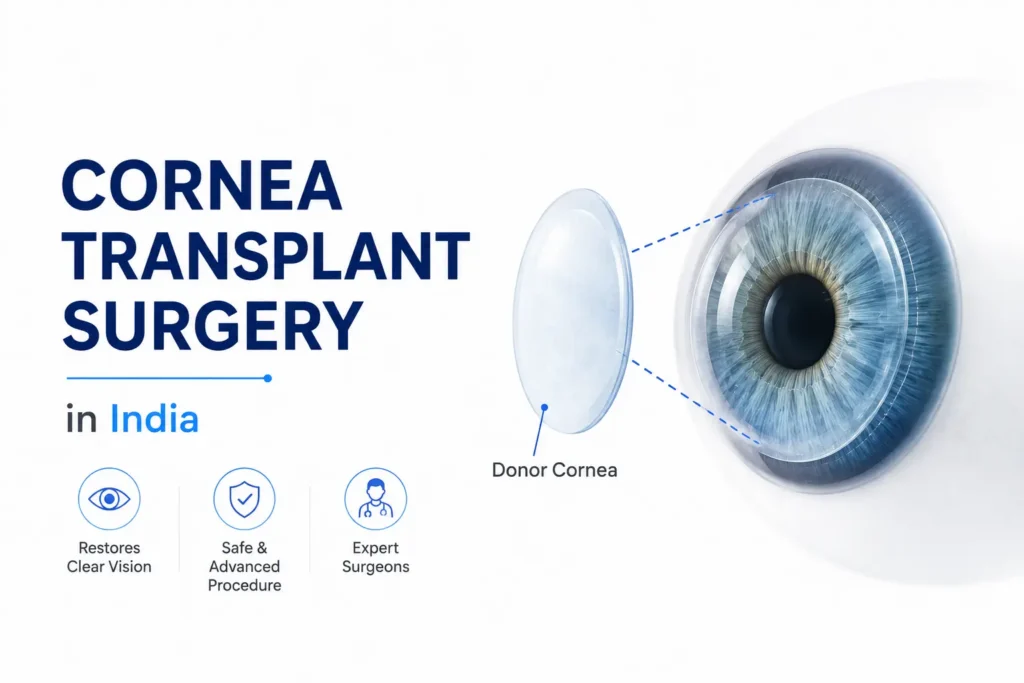
Losing your sight to corneal damage isn’t usually sudden. It develops gradually, often over years, and because the early “clouding” effect on the eye creeps in slowly and painlessly, many patients miss the early signs entirely.
The cornea is the eye’s clear front surface, acting as its primary lens. Once scarring or damage sets in here, it blocks light from properly reaching the retina. Cornea Transplant Surgery in India today focuses on catching these issues early and restoring as much of the damaged tissue as possible, with most clinics using microscopic surgical techniques to improve outcomes.
Get Free Consultation Now
What Is Cornea Transplant Surgery?
At its core, a cornea transplant is a group of specialized surgical procedures. The goal is to replace a diseased or scarred cornea with healthy donor tissue to restore vision, clearing the clouded area that’s been blocking light from reaching the retina.
Since the cornea plays such a central role in vision, surgery is often the most reliable way to prevent permanent vision loss once damage has occurred. The surgical plan is built around the specific type and extent of damage found during pre-op examination.
Common Eye Conditions Treated
India has become a major destination for treating complex corneal conditions. These are structural issues that medication alone typically cannot resolve:
- Keratoconus: the cornea thins and bulges into a cone shape, requiring tissue replacement.
- Fuchs’ dystrophy: a genetic condition where internal corneal cells fail, causing chronic swelling.
- Corneal scarring: residual damage from past infections, injuries, or previous surgeries.
- Bullous keratopathy: persistent swelling caused by damage to the inner corneal lining.
Types of Cornea Transplant Surgery in India
Surgeons choose from several techniques depending on how the eye was damaged. Penetrating keratoplasty (PK) replaces the entire thickness of the damaged cornea, and is typically used when the whole structure of the cornea has been compromised.
Lamellar keratoplasty is a more targeted approach that replaces only the specific layers that are diseased. This includes DALK for outer-layer damage, or DSEK/DMEK for issues affecting the inner corneal cells. These techniques allow for smaller incisions and generally faster recovery than a full-thickness transplant.
Cornea Transplant Surgery Procedure
Surgery is usually performed under local anesthesia with sedation, though general anesthesia may be used in more complex cases. Using specialized microscopic tools, the surgeon removes the diseased tissue and prepares the eye to receive the donor graft.
The donor tissue is then secured in place with sutures finer than a human hair, positioned carefully to align properly with the eye’s surface. Once the procedure is complete, the eye is covered with a protective patch for the first 24 hours.
Tests Before Cornea Transplant Surgery in India
An accurate diagnostic picture of the eye is essential for planning the surgery properly and avoiding surprises during the procedure. Common tests include:
- Corneal topography: creates a detailed map of the eye’s surface to pinpoint scarring.
- Pachymetry: measures the precise thickness of the cornea to guide surgical depth.
- Specular microscopy: checks donor tissue cell counts to confirm it’s healthy enough for transplant.
- Vision tests: establish a baseline to track improvement after healing.
Recovery After Cornea Transplant
Recovery requires consistency and discipline. Some redness is normal, but using medicated eye drops exactly as prescribed is essential; these drops help prevent the immune system from rejecting the new tissue.
Patients are advised not to rub their eyes or engage in heavy lifting that could disturb the graft. The sutures holding the donor tissue in place take several months to fully integrate. Most people can return to light desk work within a week, while strenuous activity needs to be avoided for longer.
Risks and Complications
As with any transplant procedure, risks include graft rejection (usually manageable with prompt treatment if caught early), astigmatism from the sutures, infection, and a temporary rise in eye pressure. Regular follow-up appointments are important for catching and managing these issues early.
Vision After Cornea Transplant
Vision recovery is gradual and happens over several months rather than all at once. With a full-thickness graft, it can take 12 to 18 months, sometimes longer, for vision to fully stabilize.
In most cases, the clouded vision clears and the structural integrity of the eye is restored. Sight typically improves in stages as the medical team gradually removes the sutures over time. Following the doctor’s recovery instructions closely gives patients the best chance at a good outcome.
Life After Surgery in India
Once initial healing is complete, most people return to normal daily life. A few habits help protect the new tissue long-term:
- Wear protective eyewear during sports or activities with any risk of eye impact.
- Avoid rubbing the eyes to prevent stress on the surgical site.
- Attend all scheduled check-ups so any issues are caught early.
- Use prescribed eye drops exactly as directed by the doctor.
Cornea Transplant Cost in India
Cornea transplant surgery in India typically ranges from $1,500 to $4,500, depending on the transplant technique used (full-thickness PK versus partial-thickness DALK or DSEK/DMEK), the hospital, and the complexity of the case.
The exact figure depends on the surgeon, the technique, and the patient’s specific condition. These are general figures, not fixed quotes. Medicsaz can put together a personalized cost estimate once a partner ophthalmologist has reviewed your case.
How Medicsaz Supports Your Cornea Transplant Journey in India
Medicsaz connects you with vetted partner hospitals and ophthalmologists experienced in corneal transplant surgery, and coordinates everything around the process: cost estimates, medical records review, hospital and doctor matching, travel and visa support, accommodation, and a point of contact throughout your stay in India.
Since early treatment gives patients the best outcomes, reach out as soon as possible for a free medical opinion and cost estimate. Most inquiries get a response within 30 minutes.
Conclusion
Cornea Transplant Surgery in India gives patients access to experienced surgeons and advanced diagnostic tools, often at a fraction of the cost found elsewhere. Acting quickly when symptoms first appear, and following recovery instructions closely, gives patients the best chance at protecting their vision for years to come.
Frequently Asked Questions
What conditions typically require a cornea transplant?
Common reasons include keratoconus, where the cornea thins and bulges; Fuchs’ dystrophy, which causes chronic corneal swelling; scarring from past infections or injuries; and bullous keratopathy from damage to the inner corneal lining.
Is donor cornea tissue safe to receive?
Yes. Donor corneas come from regulated eye banks that screen tissue thoroughly for infections and disease before it’s approved for transplant.
What's the difference between a full-thickness and partial-thickness cornea transplant?
A full-thickness transplant (PK) replaces the entire cornea for extensive damage, while partial-thickness techniques like DALK or DSEK/DMEK replace only the diseased layer, usually with faster recovery.
How long does it take to recover from a cornea transplant?
Recovery varies by technique. Partial-thickness transplants often stabilize within months, while full-thickness transplants can take 12 to 18 months or longer for vision to fully stabilize.
Is graft rejection a common risk after cornea transplant surgery?
Rejection risk varies by technique but can run around 10% or so for some transplant types. It’s usually manageable with prompt medication if caught early, which is why follow-up visits matter.
How much does a cornea transplant cost in India?
Cornea transplant surgery in India typically costs between $1,500 and $4,500 for international patients, depending on the transplant technique, hospital, and complexity of the case.
When can I resume driving and normal activities after a cornea transplant?
This depends on vision meeting standard driving requirements and the surgeon’s clearance, but most patients take about a week off work and avoid strenuous activity for longer while the graft stabilizes.
Medically Reviewed
This page on Cornea Transplant Surgery in India has been medically reviewed by Dr. Rashid Ali, MBBS, a Delhi Medical Council–registered practitioner (Registration No. DMC/R/36289), to ensure it reflects accurate, current, and evidence-based medical information.
At Medicsaz, every treatment page is checked by a licensed doctor before publication, not written by a marketing team alone. Dr. Rashid Ali review covers the accuracy of procedures, terminology, and claims described on this page, so patients researching Cornea Transplant Surgery in India can rely on what they read here to make informed decisions.
Last medically reviewed: 09/09/2026
You can independently verify Dr. Rashid Ali’s registration on the Delhi Medical Council’s official website using Registration No. DMC/R/36289, or read more about his role as Medicsaz’s medical reviewer on his reviewer profile page.