
Cataract Surgery in India
Losing vision is rarely a sudden or dramatic event, as it usually creeps up on people in a slow, shifty crawl that spans several years. At first, a patient might simply assume they need a stronger prescription, squinting at road signs or blaming the “terrible” lighting. Many people dismiss these changes as a completely normal, annoying part of aging, often cleaning their glasses because things look smudged.
When persistent blurriness ruins favorite hobbies, the problem must be addressed. A doctor will likely diagnose cataracts, which, though intimidating, are highly treatable. Cataract surgery in India is a streamlined, routine procedure that can restore vibrant eyesight almost overnight.
Get Free Consultation Now
What Is Cataract Surgery?
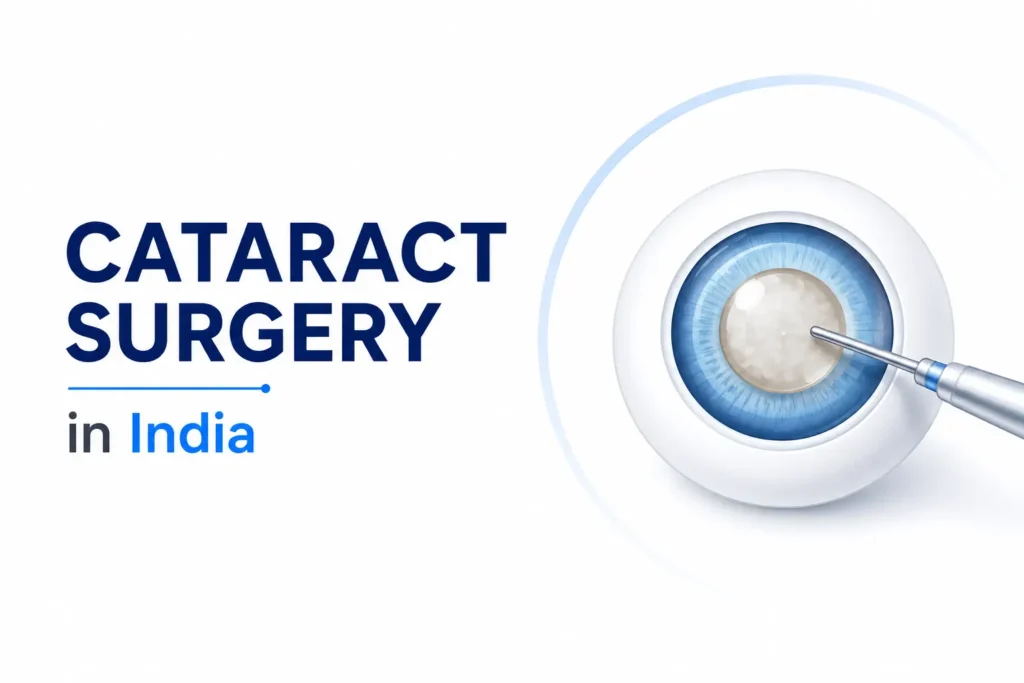
The human eye’s lens functions like a camera lens, clear in youth but deteriorating with age. Proteins clump over time, clouding the lens, much like frosted glass. Cataract surgery corrects this by removing the damaged natural lens.
Once the obstruction is cleared, the surgeon immediately replaces it with a small, clear artificial lens known as an IOL. The process is fast, often allowing patients to be in and out of the surgical center quickly. Many patients are home again before the day is even half over.
Common Symptoms of Cataract
The condition advances gradually. Initially, patients report a muted, indistinct haze and reduced vision, often accompanied by dimmed or slightly yellowed color perception.
The most significant issue is glare from lights, especially when driving at night, which creates halos and is often the reason people seek medical attention.
Tests Before Cataract Surgery in India
A surgeon can’t simply guess what size lens to use, precise measurements come first. An eye examination shows exactly how thick and cloudy the natural lens has become, letting the medical team map out the surgical plan before the patient enters the operating room.
- Biometry test: measures the physical length and curve of the eye to determine the correct artificial lens power.
- Eye pressure test: checks for conditions like glaucoma that could complicate healing.
- General health check: confirms blood pressure and blood sugar are stable enough for the procedure.
Recovery After Cataract Surgery in India
Most people notice real improvement almost immediately, though the first couple of days can feel a little uncomfortable. The eye may feel scratchy, almost like an eyelash is stuck in there, completely normal, and it usually fades quickly as the microscopic incision heals.
The part that requires the most discipline is the eye drop schedule, medicated drops several times a day, which matter for preventing inflammation and infection. Doctors will also advise against bending over, lifting anything heavy, or rubbing the eye for about a week.
Lens Options for Cataract Surgery in India
Choosing a lens is a bit like choosing a permanent pair of glasses or contacts for life.
- Standard Vision Fix (Monofocal): provides excellent distance vision, though reading glasses are usually still needed for close-up tasks like menus or books.
- All-in-One Vision Fix (Multifocal): a premium option with built-in focusing rings that handle both near and far vision, often enough that glasses aren’t needed at all.
- Astigmatism Fix (Toric): designed specifically for an irregularly shaped eye (astigmatism), correcting that alongside the cataract itself.
Risks and Complications of Cataract Surgery
Cataract surgery is widely regarded as one of the safest and most commonly performed procedures in modern medicine, though like any surgery, minor risks exist. Infection is the main concern, which is exactly why post-operative antibiotic drops are non-negotiable. Some swelling is normal; excessive inflammation is something the clinical team monitors closely and treats promptly.
It’s also normal if things look a little wavy or blurry on day one, the brain often needs a moment to adjust to the new lens and the sudden increase in light. Follow-up monitoring is routine specifically to catch anything unusual early.
Life After Cataract Surgery
Waking up the next morning and looking out the window is often a genuine shock, patients frequently describe how bright and colorful everything looks once that cloudy filter is finally gone. Depending on the lens chosen, some reading glasses might still be needed for close-up work like a phone screen.
Night driving, recognizing faces from a distance, the everyday stuff, these tend to become effortless again for most people. With basic eye hygiene and regular check-ups, results generally last a lifetime. The original cataract itself can’t return, since the natural lens is gone for good. Some patients do experience the lens capsule clouding over months or years later, a common, easily treatable condition sometimes called a “secondary cataract,” resolved with a brief, painless laser procedure.
Cataract Surgery Cost in India
Cataract surgery in India typically costs between $1,500 and $2,000 per eye, which generally covers premium lens options (multifocal or toric) alongside the surgery itself, pre-operative testing, and standard post-operative care. Simpler monofocal-lens cases can sometimes cost less, while more complex cases or advanced laser-assisted techniques can push toward the higher end.
What actually drives the number: the type of lens chosen, the surgical technique (standard phacoemulsification vs. laser-assisted), and the hospital. This is a general range, not a fixed quote. Medicsaz can put together a personalized estimate once a partner ophthalmologist has reviewed your case.
How Medicsaz Supports Your Cataract Surgery Journey in India
Medicsaz connects you with vetted partner hospitals and ophthalmologists experienced in cataract surgery in India, and coordinates everything around the procedure, cost estimates, medical records review, hospital and doctor matching, travel and visa support, accommodation, and a point of contact throughout your time in India. Since cataract surgery is often done one eye at a time with a short gap between, Medicsaz can also help plan a trip schedule that works for both procedures if needed.
If you’re ready to explore this, reach out for a free medical opinion and cost estimate. Most inquiries get a response within 30 minutes.
Conclusion
Bodies wear down over time, and a cloudy cataract is simply a standard part of the aging process for most people. But nobody has to just accept losing their vision when modern technology offers such a reliable fix.
Today, cataract surgery in India pairs highly experienced surgeons with advanced laser and lens technology to deliver reliable, well-established results. Most patients just need to stay consistent with the eye drops, trust the process, and get ready to see the world clearly again.
Frequently Asked Questions
How do I know if I need cataract surgery?
If blurry vision, glare, or halos around lights, especially while driving at night, start interfering with daily activities like reading or recognizing faces, it’s time to get evaluated by an eye doctor.
What is an IOL, and how is it different from my natural lens?
An IOL (intraocular lens) is a clear artificial lens implant that permanently replaces your eye’s clouded natural lens during cataract surgery, restoring clear vision.
Can a cataract come back after surgery?
The original cataract can’t return since the natural lens is removed, but some patients develop a common, unrelated condition called posterior capsule opacification, which causes similar blurry vision and is easily treated with a quick laser procedure.
Will I still need glasses after cataract surgery?
It depends on the lens you choose, monofocal lenses typically still require reading glasses, while premium multifocal lenses may reduce or eliminate the need for glasses altogether.
What tests are done before cataract surgery?
Doctors typically perform a biometry test to measure the eye for lens power, an eye pressure test to rule out glaucoma, and a general health check to ensure you’re fit for the procedure.
Is cataract surgery safe for older adults with other health conditions?
Yes, it’s one of the safest and most commonly performed surgeries worldwide, and a general health check beforehand ensures conditions like blood pressure and blood sugar are stable for the procedure.
What happens if cataracts are left untreated?
Untreated cataracts can progressively worsen vision and, in advanced cases, lead to significant vision loss, which is why doctors recommend timely evaluation once symptoms interfere with daily life.
Medically Reviewed
This page on Cataract Surgery in India has been medically reviewed by Dr. Rashid Ali, MBBS, a Delhi Medical Council–registered practitioner (Registration No. DMC/R/36289), to ensure it reflects accurate, current, and evidence-based medical information.
At Medicsaz, every treatment page is checked by a licensed doctor before publication, not written by a marketing team alone. Dr. Rashid Ali review covers the accuracy of procedures, terminology, and claims described on this page, so patients researching Cataract Surgery in India can rely on what they read here to make informed decisions.
Last medically reviewed: 09/09/2026
You can independently verify Dr. Rashid Ali’s registration on the Delhi Medical Council’s official website using Registration No. DMC/R/36289, or read more about his role as Medicsaz’s medical reviewer on his reviewer profile page.