
Urethral Surgery in India
It’s easy to dismiss early urinary issues like a weak flow or burning. We often assume minor infections will clear up with hydration or OTC meds. But when does persistent discomfort become a significant problem affecting daily life?
That is when you know a deeper structural issue is probably at play. When standard pills completely stop working, urologists suggest surgery to physically clear the blockage. Today, Urethral Surgery in India has evolved massively; they use highly precise, tissue-sparing techniques. This helps patients regain normal function and feel comfortable again.
Get Free Consultation Now
What Is Urethral Surgery?
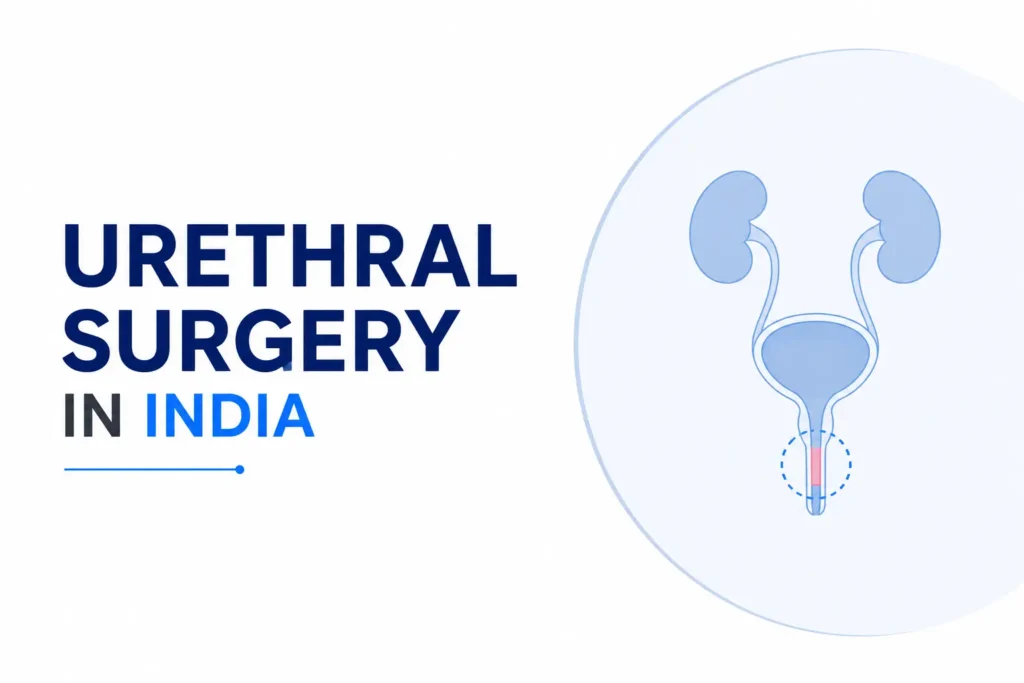
Think of the urethra as your body’s essential plumbing. It is the tube responsible for carrying urine from the bladder out of the body. But sometimes, that passageway gets compromised. It might become excessively narrow, affected by scar tissue, or damaged from a physical injury. Severe restriction of urine flow causes real discomfort, the surgery’s main goal is to repair, widen, or rebuild the damaged section so urine can pass through normally again.
Who Needs Urethral Surgery
Doctors don’t jump straight to surgery for a mild UTI. They typically recommend it only when conservative treatments haven’t worked.
- Severe urinary blockage: when the tube has narrowed too much for urine to pass easily.
- Recurrent infections: dealing with repeated UTIs because a structural issue is trapping bacteria inside the system.
- Injury to the urethra: trauma to the pelvic area from an accident or a difficult catheter insertion.
- Poor response to other treatments: when medication and minor stretching therapies aren’t keeping the pathway open for any meaningful length of time.
Common Conditions Treated with Urethral Surgery
Urologists use these targeted surgeries to address specific anatomical issues affecting quality of life.
- Urethral stricture: narrowing of the urethra due to scarring, leading to weak urine flow.
- Urethral injury: damage caused by trauma or accidents affecting the urinary passage.
- Congenital abnormalities: structural issues present since birth.
- Chronic urinary blockage: long-term obstruction causing discomfort and complications.
Proper diagnosis helps identify the exact condition before deciding on treatment.
Types of Urethral Surgery in India
Every patient has a unique blockage, so surgeons have a few different approaches depending on severity.
- Urethrotomy: a minimally invasive procedure. The surgeon uses a small laser or blade through a scope to cut away scar tissue from the inside.
- Urethroplasty: a more extensive open surgery. The scarred section is removed and rebuilt, often using a small graft of tissue taken from inside the cheek.
- Dilation procedure: a less permanent option that involves mechanically stretching the tight urethra using specialized instruments.
- Reconstructive surgery: complex, multi-stage operations reserved for significant pelvic trauma or cases needing the urinary channel rebuilt more extensively.
Urethral Surgery Procedure Explained
These procedures are done under general or regional anesthesia, so nothing is felt during the surgery itself. For a minimally invasive urethrotomy, the doctor guides a slender scope directly into the tip of the urethra, using small tools to clear the blockage without any external cuts. For more complex cases like a urethroplasty, the surgeon makes an incision in the perineum to reach the damaged section, removes the scar tissue, and stitches the healthy ends back together to restore a clear pathway.
Tests Before Urethral Surgery in India
Surgeons need a clear picture of the stricture before any procedure.
- Urine tests: checking for infection before surgery begins.
- Ultrasound: a non-invasive look at the bladder and kidneys to check for fluid backup.
- Urethrogram: a specialized X-ray using contrast dye to show the exact length, location, and thickness of the blockage.
- Blood tests: standard pre-op screening to confirm overall health and normal clotting.
Recovery After Urethral Surgery
Recovery time depends on whether it was a quick scope procedure or a more extensive open reconstruction. Regardless of the procedure, expect to wake up with a temporary urinary catheter in place. It acts as an internal support, letting the repaired urethra heal properly for a few days to a few weeks. Mild swelling and discomfort at home are normal. Doctors typically recommend rest and keeping the area clean to avoid infection. Most patients return to their normal routine within a few weeks.
Risks and Complications of Urethral Surgery
Modern urology is advanced, but any surgery carries some risk.
- Infection: bacteria can enter the urinary tract or incision site, which is why preventive antibiotics are typically given.
- Bleeding: minor spotting or slight blood in the urine is normal at first; heavy bleeding is rare.
- Recurrence of stricture: the most frustrating risk, sometimes new scar tissue narrows the tube again over time.
- Urinary discomfort: a temporary burning sensation or urgency is common as the tissue heals.
Urethral Surgery Cost in India
Cost depends heavily on which procedure is needed. Urethrotomy or dilation, the minimally invasive option, typically costs $420 to $840 for international patients. Standard single-stage urethroplasty typically costs $1,450 to $2,650, while complex or multi-stage urethroplasty, needed for longer or more severe strictures, typically costs $3,000 to $4,800.
The exact figure depends on the stricture’s length, severity, and location, along with the hospital and surgical approach. These are general figures, not fixed quotes. Medicsaz can put together a personalized cost estimate once a partner urologist has reviewed your case.
How Medicsaz Supports Your Urethral Surgery Journey in India
Medicsaz connects you with vetted partner hospitals and urologists experienced in urethral surgery, and coordinates everything around the procedure, cost estimates, medical records review, hospital and doctor matching, travel and visa support, accommodation, and a point of contact throughout your stay in India.
If you’re ready to explore this, reach out for a free medical opinion and cost estimate. Most inquiries get a response within 30 minutes.
Life After Urethral Surgery
Having the temporary catheter removed is a real relief for most patients, and many notice a meaningful improvement in urine flow once healing is underway.
To support long-term results, patients should stay well hydrated, maintain good hygiene, and contact their doctor promptly if a bladder infection is suspected. Follow-up visits matter too, doctors check flow over time to catch any narrowing early, before it becomes a bigger issue again.
Conclusion
Ignoring a urinary blockage is risky, since the back-pressure it creates can lead to lasting bladder and kidney damage. Early diagnosis and treatment help prevent that. Today, urethral surgery in India offers effective, tissue-sparing options, with urethroplasty in particular known for offering more durable results for patients who need a longer-term fix. With modern reconstructive techniques and experienced urologists, most patients recover well and see real improvement in their day-to-day urinary symptoms.
Frequently Asked Questions
What's the difference between urethrotomy and urethroplasty?
Urethrotomy is a quick, minimally invasive procedure that cuts away scar tissue through a scope, while urethroplasty is open surgery that removes the damaged section and rebuilds it, often using a tissue graft, offering more durable long-term results.
Does urethral surgery guarantee the stricture won't come back?
Not always, urethrotomy has a meaningful chance of recurrence over time, while urethroplasty tends to offer more lasting results, which is why doctors often recommend it for longer or repeat strictures.
What happens if I ignore urethral blockage symptoms?
Long-term untreated blockage can cause back-pressure that leads to irreversible bladder and kidney damage, which is why early diagnosis matters.
Can urethral strictures come back after successful surgery?
Yes, particularly after urethrotomy, which is why regular follow-up visits and flow monitoring are important even after you feel fully recovered.
Is urethroplasty a bigger surgery than urethrotomy?
Yes, urethroplasty is open surgery involving an incision and often a tissue graft, while urethrotomy is done entirely through a scope without external cuts.
How soon can I return to normal activities after urethral surgery?
Most patients resume daily routines within a few weeks, though this depends heavily on whether they had a minor scope procedure or a more extensive reconstruction.
What tissue is used for urethroplasty grafts?
Surgeons commonly use a graft taken from the inside of the patient’s own cheek (buccal mucosa), since it handles a wet environment well and has strong long-term outcomes.
Medically Reviewed
This page on Urethral Surgery in India has been medically reviewed by Dr. Rashid Ali, MBBS, a Delhi Medical Council–registered practitioner (Registration No. DMC/R/36289), to ensure it reflects accurate, current, and evidence-based medical information.
At Medicsaz, every treatment page is checked by a licensed doctor before publication, not written by a marketing team alone. Dr. Rashid Ali review covers the accuracy of procedures, terminology, and claims described on this page, so patients researching Urethral Surgery in India can rely on what they read here to make informed decisions.
Last medically reviewed: 09/09/2026
You can independently verify Dr. Rashid Ali’s registration on the Delhi Medical Council’s official website using Registration No. DMC/R/36289, or read more about his role as Medicsaz’s medical reviewer on his reviewer profile page.