
Bladder Stone Removal Treatment in India
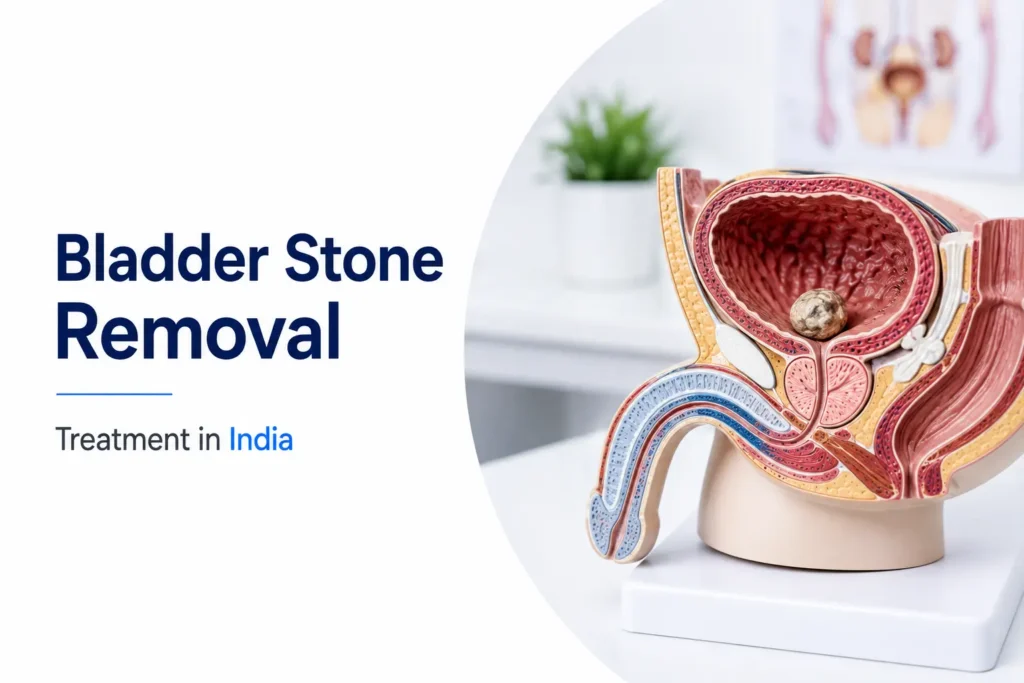
Bathroom struggles are incredibly difficult to discuss. People frequently notice a sudden, sharp pain in their lower pelvis or a frustrating hesitation when emptying the bladder. Initially, individuals write it off as a passing infection. They drink cranberry juice and simply hope the problem fades away.
Eventually, that hopeful waiting stops working entirely. The daily routine becomes dictated by frequent, uncomfortable trips to the bathroom. When antibiotics fail, a structural blockage is usually the culprit. Today, Bladder Stone Removal Treatment in India provides advanced medical solutions to clear blockages without large incisions.
Get Free Consultation Now
What Are Bladder Stones?
The human bladder operates essentially as a flexible storage organ. It is designed to hold liquid waste and then empty it out completely. However, sometimes that system fails, leaving stagnant urine trapped inside. When fluid sits for too long, the concentrated minerals begin to crystallize.
Over months or years, these microscopic crystals can grow into hard deposits inside the organ. Some remain as small as a grain of sand. Others grow large enough to block the natural exit.
Causes of Bladder Stones in India
These masses rarely form without an underlying medical trigger. An enlarged prostate is the most common cause in older men, as it squeezes the urethra. Neurogenic bladder is another major factor, where nerve damage stops the brain from properly signaling the bladder muscles.
Sometimes, a kidney stone forms higher in the urinary tract and gets trapped after dropping into the pelvic cavity. Chronic pelvic radiation or internal infections can also trigger crystallization. Not drinking enough water, especially in hot climates, is another contributing factor.
When Is Bladder Stone Removal Needed?
Medical professionals don’t rush patients to the operating room for microscopic crystals. Tiny stones can often be flushed out with increased hydration. Surgical intervention becomes necessary when stones grow too large to pass naturally.
If a patient is unable to empty their bladder, the medical team will intervene promptly. Leaving large stones trapped inside can eventually damage the muscular walls of the organ. Recurring infections or bleeding also make surgery necessary.
Types of Bladder Stone Removal Procedures in India
Urologists use various extraction methods. Transurethral Cystolitholapaxy, the standard approach, uses a small camera and laser to break up the stone. For patients with very large prostates, Percutaneous Suprapubic Cystolitholapaxy involves a small puncture through the lower abdomen.
Open Cystolithotomy is a more traditional open surgery, reserved for unusually large or hard stones that can’t be broken down with modern lasers.
Bladder Stone Removal Procedure Explained
Patient comfort is always the priority. Because the pelvic region is sensitive, these operations happen under regional or general anesthesia.
The surgeon inserts a thin, camera-equipped scope directly up the urethra without external cuts. Once the bladder stones are located, a laser is used to break the mass into smaller fragments. The surgical team then flushes the organ with sterile water to wash the fragments out of the body.
Tests Before Bladder Stone Removal Treatment in India
Guessing the size or location of a blockage isn’t an option. Urologists need clear data before anyone enters an operating room. Doctors usually start with an ultrasound to detect the presence of stones.
A CT scan is the standard for detailed urological imaging, providing a clear map of the stones. Specialists might also perform a cystoscopy to visually inspect the stones. Urinalysis screening is done to rule out active bacterial infections.
Recovery After Bladder Stone Removal
The post-operative timeline depends on the surgical method used. Following a minimally invasive laser procedure, most patients go home the same afternoon. Most patients leave with a temporary urinary catheter in place for a day or two.
This catheter allows the irritated tissue to rest while draining any residual stone fragments. Patients may experience mild, localized cramping at home. Most return to normal daily routines within a few days.
Bladder Stone Removal Cost in India
Cost depends heavily on which procedure is needed. Transurethral Cystolitholapaxy, the standard and most common approach, typically costs $300 to $1,200 for international patients. Open Cystolithotomy, reserved for unusually large or hard stones that can’t be broken down with lasers, typically costs more, generally $1,550 to $2,300, since it involves more extensive surgery.
Percutaneous Suprapubic Cystolitholapaxy, used for patients with very large prostates, generally falls somewhere between these two in cost, though a specific documented range isn’t as readily available. The exact figure depends on the procedure needed, the hospital, and case complexity. Medicsaz can put together a personalized cost estimate once a partner urologist has reviewed your case and determined which approach applies.
How Medicsaz Supports Your Bladder Stone Removal Journey in India
Medicsaz connects you with vetted partner hospitals and urologists experienced in bladder stone removal, and coordinates everything around the procedure, cost estimates, medical records review, hospital and doctor matching, travel and visa support, accommodation, and a point of contact throughout your stay in India.
If you’re ready to explore bladder stone removal in India, reach out for a free medical opinion and cost estimate. Most inquiries get a response within 30 minutes.
Prevention of Bladder Stones
Preventing new stones requires some lifestyle and medical changes. Regular hydration with plenty of water is the primary defense. Treating the root cause matters too. Doctors commonly advise:
- Taking medication to manage an enlarged prostate, if that’s the underlying cause.
- Practicing double-voiding to help ensure complete bladder emptying.
- Maintaining a balanced, low-sodium diet.
Life After Bladder Stone Treatment
Clearing the blockage typically brings real physical relief. The pelvic pressure eases. Frequent, urgent bathroom trips generally stop, allowing more normal sleep to resume.
Maintaining that relief takes some ongoing attention. Regular follow-up ultrasounds help monitor the bladder’s emptying capacity, allowing doctors to catch any new stones early.
Conclusion
Ignoring severe pelvic pain and urinary issues from bladder stones risks lasting bladder damage. Prompt, accurate diagnosis and the right procedure, including the tissue sparing options available for Bladder Stone Removal in India, can relieve symptoms and support a safe recovery, with many patients returning to daily life free from pelvic discomfort.
Frequently Asked Questions
What causes bladder stones to form?
The most common cause is an enlarged prostate, which blocks urine flow and prevents the bladder from fully emptying. Neurogenic bladder, trapped kidney stones, chronic infections, and low fluid intake are other common contributors.
Do all bladder stones need surgery?
No, small stones can often be flushed out with increased hydration. Surgery becomes necessary when stones grow too large to pass naturally or cause significant symptoms.
What's the difference between the bladder stone removal procedures available?
Transurethral cystolitholapaxy uses a scope and laser through the urethra for most cases; percutaneous suprapubic cystolitholapaxy is used for complex cases like very large prostates, and open surgery is reserved for extremely large or hard stones.
How can I prevent bladder stones from forming again?
Staying well hydrated, treating conditions like an enlarged prostate, practicing double-voiding to fully empty the bladder, and maintaining a low sodium diet all help reduce recurrence risk.
What happens if bladder stones are left untreated?
Yes, most patients leave with a temporary catheter for a day or two to help drain any remaining stone fragments and let the bladder tissue rest.
Can bone tumors come back after treatment?
Untreated stones can lead to permanent bladder damage, recurring infections, or complete inability to urinate, making early treatment important.
Are bladder stones the same as kidney stones?
Not exactly, while a kidney stone can sometimes travel down and become a bladder stone, bladder stones often form independently due to issues like incomplete bladder emptying.
Medically Reviewed
This page on Bladder Stone Removal Treatment in India has been medically reviewed by Dr. Rashid Ali, MBBS, a Delhi Medical Council–registered practitioner (Registration No. DMC/R/36289), to ensure it reflects accurate, current, and evidence-based medical information.
At Medicsaz, every treatment page is checked by a licensed doctor before publication, not written by a marketing team alone. Dr. Rashid Ali review covers the accuracy of procedures, terminology, and claims described on this page, so patients researching Bladder Stone Removal Treatment in India can rely on what they read here to make informed decisions.
Last medically reviewed: 09/09/2026
You can independently verify Dr. Rashid Ali’s registration on the Delhi Medical Council’s official website using Registration No. DMC/R/36289, or read more about his role as Medicsaz’s medical reviewer on his reviewer profile page.