
Fertility & IVF Treatment in India
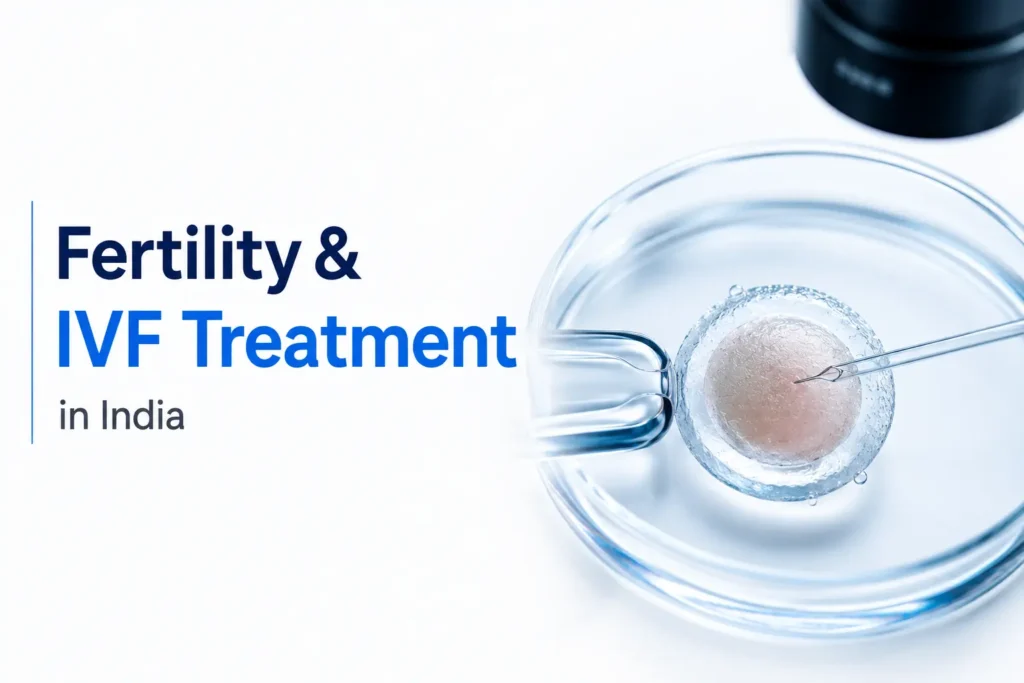
Planning a family does not always occur as expected. For many couples, the journey involves months or years of uncertainty that feels like an invisible weight. While some try for years without success, the underlying cause of infertility often remains hidden without a detailed clinical look.
Fertility & IVF Treatment in India offers a path forward by moving part of the fertilization process into a controlled lab setting. This bypasses natural blockages and supports the reproductive system where it’s struggling. Today, these sophisticated medical strategies help protect a patient’s reproductive health through advanced, closely monitored fertility care in India.
Get Free Consultation Now
What Is Fertility Treatment and IVF?
Fertility treatment involves medical procedures to aid conception. IVF (In Vitro Fertilization) is a high-tech procedure where eggs and sperm are combined in a lab, used when natural conception hasn’t been successful, often requiring more than one cycle to succeed. Fertility treatment in India has grown into a well established specialty, with dedicated clinics handling both straightforward and complex cases.
Once fertilization is complete in the lab, the resulting embryo is placed back into the uterus to continue developing naturally. This method is used when the natural path of conception is blocked or damaged. Every treatment plan is customized to the specific findings from fertility exams to give the embryo the best chance of a successful pregnancy.
Who Needs IVF Treatment in India
Fertility issues in India are often a mix of genetic factors and modern lifestyle factors that affect reproductive health over time. For many people, these underlying issues build gradually and can make natural conception difficult or impossible. Common clinical triggers for IVF include:
- Blocked Fallopian Tubes: a physical blockage that prevents the egg and sperm from meeting.
- Male Infertility: low sperm count or poor motility that prevents successful fertilization.
- Endometriosis or PCOS: underlying conditions that disrupt the ovulation cycle.
Common Causes of Infertility in India
The onset of infertility is often a gradual process that begins with irregular cycles or unexplained hormonal shifts. While some might notice a slight change in their physical health, these changes are often dismissed as simple stress until conception becomes genuinely difficult. This can be emotionally difficult to navigate without professional support.
If a patient experiences repeated treatment failure or significant emotional stress, seeking a clinical evaluation is an important step. Since ovarian reserve naturally declines with age, earlier evaluation generally means more treatment options, it’s worth not delaying a consultation if you’re concerned. Reaching a fertility specialist in India is an important step toward improving the chances of a successful pregnancy.
IVF Treatment Process in India, Step by Step
- Ovarian stimulation: medication stimulates the ovaries to produce multiple eggs over roughly 10 to 14 days.
- Egg retrieval: the eggs are collected through a brief, minor surgical procedure.
- Fertilization: the eggs are fertilized with sperm in a lab to form embryos.
- Embryo development: the embryos are monitored for a few days as they grow.
- Embryo transfer: the strongest embryo is selected and transferred into the uterus, a critical step in determining how the cycle progresses.
Tests Before IVF Treatment in India
A successful outcome relies on a thorough evaluation and a review of the general health of both partners. Standard diagnostic evaluations include:
- Hormone Screening: checking the endocrine system to plan the right medication dosage.
- Ultrasound Scan: providing a detailed look at the ovaries and uterus to identify any structural issues.
- Semen Analysis: measuring sperm count, motility, and quality to assess fertilization potential.
Advanced Options in Fertility & IVF Treatment in India
Specialists in India utilize sophisticated methods to support a stable path toward parenthood. The right option depends entirely on the couple’s specific fertility challenges.
- ICSI: injecting a single sperm directly into the egg to address male infertility factors that prevent natural fertilization.
- Egg or Sperm Donation: an option for those unable to use their own eggs or sperm.
- Embryo Freezing: preserving embryos for future cycles.
- Surrogacy: an alternative route for those needing it to achieve their family goals.
These advanced IVF and fertility treatment options in India are typically discussed during the first consultation, once initial test results are available.
Care After IVF Treatment in India
Recovery from embryo transfer requires patience during the “two week wait,” as minor bloating or mood changes occur while the body adjusts. This is a delicate phase for the pregnancy to take root.
Most patients resume light daily activities immediately, avoiding heavy strain or high stress environments. This short downtime appeals to working professionals traveling for IVF treatment in India. Strict adherence to the recovery protocol is essential for giving the cycle its best chance.
Risks and Side Effects of IVF Treatment in India
As with any clinical intervention, patients might deal with temporary hormonal shifts or localized discomfort. Mild cases usually resolve on their own within about a week, though more severe reactions are possible and require medical attention. Common side effects include:
- Ovarian Hyperstimulation Syndrome (OHSS): a reaction to fertility medication that causes ovarian swelling. Mild cases typically resolve within about a week, while more severe cases may need closer medical monitoring.
- Multiple Pregnancy: a small risk if more than one embryo is transferred during the cycle.
- Emotional Sensitivity: hormonal changes may cause mood fluctuations while awaiting results.
Fertility & IVF Treatment Cost in India
For international patients, a single standard IVF cycle in India typically costs between $2,500 and $5,000, covering ovarian stimulation, egg retrieval, lab fertilization, and embryo transfer. Add-ons change the total: ICSI, donor eggs or sperm, embryo freezing, and genetic testing (PGT) each add to the base cost, and surrogacy, where applicable, is priced separately and substantially higher.
It’s also worth planning for the possibility of more than one cycle, since IVF doesn’t succeed for every patient on the first attempt. These are general figures, not fixed quotes. Medicsaz can put together a personalized cost estimate once a partner fertility specialist has reviewed both partners’ evaluations.
How Medicsaz Supports Your Fertility & IVF Treatment Journey in India
Medicsaz connects you with vetted partner fertility clinics and specialists experienced in IVF and related treatments, and coordinates everything around the process, cost estimates, medical records review, clinic and doctor matching, travel and visa support, accommodation, and a point of contact throughout your stay in India.
If you’re ready to explore this, reach out for a free medical opinion and cost estimate. Most inquiries get a response within 30 minutes.
Conclusion
Fertility & IVF Treatment in India provides a strong opportunity to address reproductive struggles through advanced technology. With the right diagnosis and treatment plan, couples can move forward with clarity that reflects their commitment to starting a family. For those navigating infertility, consulting a fertility specialist in India remains the most effective path forward.
Frequently Asked Questions
Is IVF a guaranteed way to get pregnant?
No, IVF significantly improves the chances of conception for many couples, but success isn’t guaranteed in a single cycle, and some patients need more than one attempt.
What's the difference between IVF and IUI?
IVF combines eggs and sperm outside the body in a lab before transferring the embryo into the uterus, while IUI (intrauterine insemination) places sperm directly into the uterus during ovulation without fertilizing eggs externally.
What is ICSI, and when is it used?
ICSI involves injecting a single sperm directly into an egg, and it’s typically used when male infertility factors, like low sperm count or poor motility, are the main obstacle to fertilization.
How long does one IVF cycle take?
A full cycle, from ovarian stimulation through embryo transfer, typically spans a few weeks, followed by a two week wait before a pregnancy test confirms the outcome.
What tests are done before starting IVF treatment?
Before IVF, both partners typically undergo hormone screening, an ultrasound scan to assess the ovaries and uterus, and a semen analysis to evaluate sperm health.
What is Ovarian Hyperstimulation Syndrome (OHSS)?
OHSS is a reaction to fertility medications that causes the ovaries to swell. Mild cases usually resolve within about a week, but more severe cases can require closer medical monitoring.
Does IVF increase the chance of having twins or multiples?
It can, particularly if more than one embryo is transferred during the cycle, this is a known and discussed risk before treatment begins.
When should a couple see a fertility specialist?
Generally, after about a year of trying to conceive without success (or sooner if there are known conditions like PCOS, endometriosis, or irregular cycles), it’s worth seeking an evaluation.
Medically Reviewed
This page on Fertility & IVF Treatment in India has been medically reviewed by Dr. Rashid Ali, MBBS, a Delhi Medical Council–registered practitioner (Registration No. DMC/R/36289), to ensure it reflects accurate, current, and evidence-based medical information.
At Medicsaz, every treatment page is checked by a licensed doctor before publication, not written by a marketing team alone. Dr. Rashid Ali review covers the accuracy of procedures, terminology, and claims described on this page, so patients researching Fertility & IVF Treatment in India can rely on what they read here to make informed decisions.
Last medically reviewed: 09/09/2026
You can independently verify Dr. Rashid Ali’s registration on the Delhi Medical Council’s official website using Registration No. DMC/R/36289, or read more about his role as Medicsaz’s medical reviewer on his reviewer profile page.