
Assisted Hatching in India
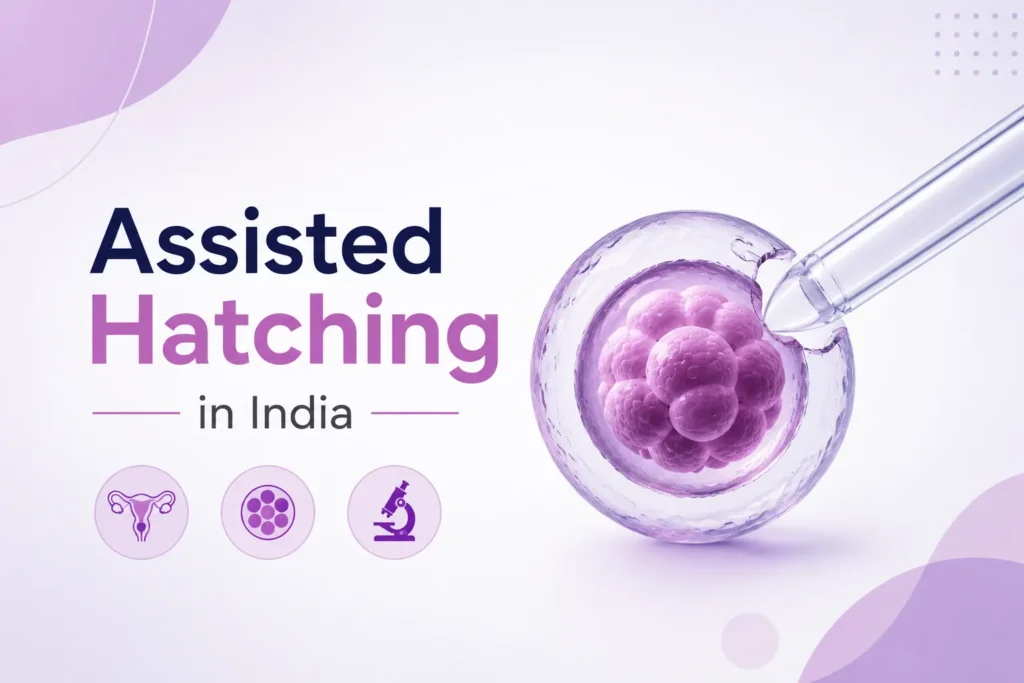
IVF has been responsible for bringing countless babies into the world, but ensuring that an embryo implants successfully is incredibly difficult. The best quality embryos cannot result in a successful pregnancy if the embryo does not actually make it outside its protective layer. These layers can be so difficult to penetrate that the cells become trapped and have no chance at all to implant.
You do not have to just hope for the best if your embryos are struggling to break free on their own. An advanced laboratory method can give your cells a helpful push by creating a tiny escape door before the transfer step. Today, looking into assisted hatching in India connects you with wonderful fertility clinics and embryologists who use high-tech tools to boost your implantation odds.
Get Free Consultation Now
What Is Assisted Hatching?
Think of this process as a delicate micro-laboratory step that thins out the outer shell of an embryo before it goes back into your body. This outer gelatin jacket is called the zona pellucida, and it naturally acts like an eggshell that has to crack open at the right moment. In this procedure, an expert laboratory scientist uses a specialized tool to make a microscopic puncture in that shell, making it infinitely easier for the cells to burst out and stick to your womb.
Who Can Benefit from Assisted Hatching?
Your fertility specialist will usually suggest this extra laboratory boost if your past cycles show that your embryos are having a hard time nesting. Your care team will look at your reproductive history to see if a small shell-thinning step is the right move for your cycle:
- Women of advanced maternal age: Navigating natural age shifts that can cause the outer shell of your eggs to become uncommonly tough.
- Previous failed IVF cycles: Experiencing multiple unsuccessful embryo transfers where healthy cells inexplicably failed to implant.
- Embryos with thick outer shells: Finding out during lab evaluations that your embryos have unusually dense outer jackets.
- Frozen embryo transfers: Managing thawed cells because the freezing process can sometimes accidentally harden the outer protective layer.
- Unexplained infertility cases: Dealing with confusing fertility blocks where doctors suggest an extra laboratory test to be safe.
Choosing a specialized assisted hatching in India ensures your embryos get the best possible technical support before they enter the womb.
How Assisted Hatching Improves IVF Success Rates
The main goal of this microscopic lab step is to clear away any physical blocks that stop your embryo from bonding with your uterine lining. By making the outer jacket much weaker, the expanding cells can easily break out and make direct contact with your natural tissue floor. This simple help is incredibly effective for frozen cycles where the thawing process might have made the outer eggshell too stiff to crack on its own.
When Is Assisted Hatching Recommended During IVF?
You do not automatically need this extra laboratory step if your embryos are already hatching beautifully on their own during monitoring. But your doctor will definitely add it to your plan if you are older, using frozen cells, or dealing with repeated failed transfers. The embryologist will look at the cells under a high-powered lens on day three or day five to make the final call.
Tests and Evaluation Before Assisted Hatching
Before touching your cells, the laboratory team runs deep checks on your embryo development records to see if this method is truly necessary. Specialists look closely at your maternal age charts, past nesting failures, and the exact physical thickness of the outer egg coat under a lens. This thorough screening process ensures that planning your assisted hatching in India is backed by highly accurate physical measurement data.
Assisted Hatching Procedure Explained Step by Step
The entire process happens completely inside a highly sterile embryology lab, just an hour or two before your scheduled transfer. The specialist uses incredible microscopic tools to handle your cells with absolute safety and care:
- Microscope placement track: The embryologist carefully takes the growing embryo out of the incubator and places it under a heavy lens.
- Shell thickness analysis: Looking closely at the outer circular jacket to find the absolute best spot for a minor breakthrough.
- Laser thinning step: Using an ultra-precise, cold laser beam to dissolve a microscopic dot on the outer edge of the shell.
- Stability monitoring watch: Checking the cell cluster under the scanner to make sure it remains completely steady and undisturbed.
- Transfer preparation finish: Loading the pre-hatched embryo into a soft delivery tube so your doctor can place it into your womb.
Risks and Limitations of Assisted Hatching
Now we will turn our attention to some harsh truths. Although this assistance at the microscopic level is extremely effective and quite common, there is still a basic laboratory fact of interfering with an embryo. It entails some small risk of accidental harm to the cells due to misalignment of the laser. However, choosing a professional center with qualified embryologists reduces such risks to a minimum. Moreover, you should take into consideration the fact that this procedure assists in the hatching process only.
Assisted Hatching and Embryo Implantation Success
Getting a positive pregnancy test requires a lot of different body systems to align perfectly, all at the same time. While thinning the outer shell fixes the physical escape issue, the cells still need a thick, healthy womb lining and balanced hormone levels to grow. This laboratory method works wonders, but it delivers the best results when it is combined with a complete, personalized reproductive care plan.
Conclusion
Assisted hatching is by far the most intelligent approach adopted in the laboratory to help your embryos escape from their protective coating in order to establish themselves within your uterus. With the decision to opt for assisted hatching in India, you gain the benefit of world-class embryology laboratories, cutting-edge laser technology, and leading infertility specialists at surprisingly inexpensive rates. With this option, you can easily overcome implantation problems right away and follow all the guidelines suggested by your doctor.
Medically Reviewed
This page on Assisted Hatching in India has been medically reviewed by Dr. Rashid Ali, MBBS, a Delhi Medical Council–registered practitioner (Registration No. DMC/R/36289), to ensure it reflects accurate, current, and evidence-based medical information.
At Medicsaz, every treatment page is checked by a licensed doctor before publication, not written by a marketing team alone. Dr. Rashid Ali review covers the accuracy of procedures, terminology, and claims described on this page, so patients researching Assisted Hatching in India can rely on what they read here to make informed decisions.
Last medically reviewed: 09/09/2026
You can independently verify Dr. Rashid Ali’s registration on the Delhi Medical Council’s official website using Registration No. DMC/R/36289, or read more about his role as Medicsaz’s medical reviewer on his reviewer profile page.