
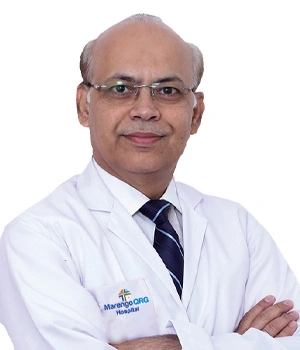
Dr. Rakesh Rai Sapra
Experience: Over 25 years
Marengo Asia Hospital
Faridabad, India
Introduction
Dr. Rakesh Rai Sapra is a senior interventional cardiologist who has gained a reputation for dealing with routine as well as complex cardiovascular problems. He has handled a large number of cardiovascular procedures over the years, often being called upon to deal with patients who require careful planning for their treatment.
About Dr. Rakesh Rai Sapra
Dr. Sapra has been associated with Marengo Asia Hospitals as Program Clinical Director – Cardiology since 2014. He has also worked as the head of the cardiology department at Fortis Escorts Hospital, Faridabad, and Artemis Hospital, Gurugram. He has considerable experience, which helps him treat heart conditions at various stages, from the beginning to the end.
Dr. Sapra also tries to educate the patient regarding the treatment options available, which helps them make the right decision regarding the treatment. He also tries to intervene at the right time, which helps the patient.
Qualifications
- MBBS – Gandhi Medical College, Bhopal.
- MD (Internal Medicine) – PGIMER, Chandigarh.
- DM (Cardiology) – AIIMS, New Delhi.
- Training in Electrophysiology & Radiofrequency Ablation – Mt. Sinai School of Medicine, New York, and Brigham and Women’s Hospital, Boston.
Awards & Recognition
- Best Case Award at the AICT Conference, New Delhi (2006).
- Program Clinical Director at Marengo Asia Hospitals.
- Life Member of the Cardiological Society of India.
- Recognized for performing over 15,000 vascular interventions.
- Published research in numerous national and international journals.
Specialities & Expertise
- Coronary angioplasty and stent placement
- Balloon valvotomy procedures
- Peripheral angioplasty, including renal and carotid arteries
- Congenital heart interventions (PDA & ASD closure)
- Electrophysiology studies and radiofrequency ablation
- Complex arrhythmia management
Patient Experience & Approach
Patients often say Dr. Sapra listens patiently and explains reports in simple language. He avoids rushing into procedures and prefers evaluating all options first. This helps patients feel more confident about their treatment and follow-up care.
Frequently Asked Questions
How do I book an appointment with Doctor?
You can book a consultation with the doctor through Medicsaz by contacting our team via WhatsApp or the “Book an Appointment” button on this page. We’ll coordinate the appointment directly with the hospital and assist with scheduling based on your treatment needs.
Is the doctor experienced in treating international patients?
Yes, the doctor has treated patients from various countries, with experience managing cross-border care, language coordination, and treatment planning for patients traveling to India.
Can I get a free medical opinion before travelling to India?
Yes. Medicsaz facilitates free preliminary medical opinions; you can share your medical reports with our team, and we’ll coordinate a review with the concerned specialist or hospital before you finalize your travel plans.
Does Medicsaz arrange travel, visa, and accommodation for treatment with Doctor?
Yes. Medicsaz provides end-to-end support, including medical visa assistance, travel coordination, accommodation, and local support throughout your treatment journey.
What languages does the doctor communicate in?
The doctors generally communicate in languages such as English and Hindi, and Medicsaz additionally provides translator support for patients who need assistance in other languages.
Content Verification
This doctor profile has been compiled and written by the Medicsaz editorial team based on publicly available hospital records, credentials, and professional experience. It has been medically reviewed by Dr. Rashid Ali, MBBS (Delhi Medical Council Reg. No. DMC/R/36289) for accuracy of medical qualifications, specializations, and terminology. Medicsaz does not employ this doctor directly; we facilitate access to verified specialists at partner hospitals in India. For the most current information on this doctor’s practice, please consult the hospital directly or contact our team.