
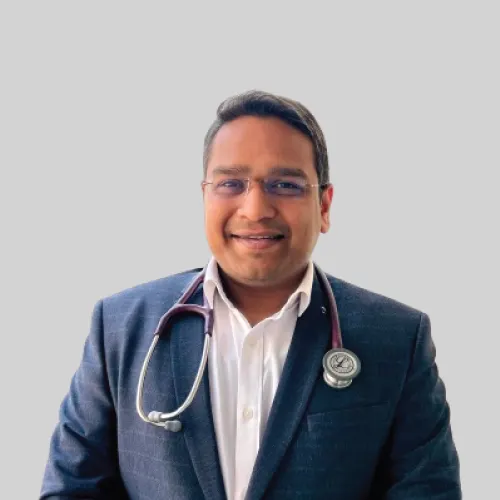
Dr. Anshul Gupta
Experience: Over 15 years
Indraprastha Apollo Hospitals, Sarita Vihar, New Delhi (Also at Apollo Hospitals, Noida)
New Delhi, India
Introduction
Dr. Anshul Gupta does medical oncology at Indraprastha Apollo. Patients show up when biopsy-confirmed cancer and treatment planning needs to start, or someone just wants a second opinion before committing to a treatment plan that will define the next year of their life.
About Dr. Anshul Gupta
Dr. Anshul Gupta has fifteen years of experience in deciding which drugs go into which cancer patient and in what sequence. ESMO certified, which means his clinical practice meets international European standards, not just domestic ones.
Did an international preceptorship in lung cancer from Australia’s only public hospital, entirely dedicated to cancer. Also holds a palliative medicine certification from the Indian Association of Palliative Care. That detail often gets skimmed over on paper, but it matters enormously in real life. He got trained and served as a senior resident in oncology at both AIIMS and Safdarjung.
Qualifications
- MBBS — Maulana Azad Medical College, Delhi.
- MD (Internal Medicine) — UCMS, Delhi.
- DM (Medical Oncology) — AIIMS, New Delhi.
- ESMO Certified Medical Oncologist.
- Lung Cancer Preceptorship — Peter MacCallum Cancer Centre, Melbourne.
- Palliative Medicine — IAPC Certified.
Awards & Recognition
- DM Medical Oncology from AIIMS.
- ESMO certified.
- Trained at Peter MacCallum, Melbourne.
- Co-principal investigator of international immunotherapy trials.
- Previously at AIIMS and Safdarjung.
- Member of ASCO, ESMO, ISMPO, and ISL.
Specialities & Expertise
- Breast and lung cancer treatment
- Genitourinary cancer management
- GI cancer and sarcoma treatment
- Immunotherapy
- Targeted therapy
- Leukemia, lymphoma, and myeloma care
- Palliative medicine
- Pain management
- Clinical trial participation
Patient Experience & Approach
Patients say the first consultation doesn’t rush toward treatment. Full molecular profiling gets discussed before any drug gets ordered because two breast cancers or two lung cancers can behave completely differently based on their genetic mutations, and treating them identically makes no sense. Cancer patients who also needed palliative support say pain and symptom management ran alongside active treatment rather than being treated as giving up.
Frequently Asked Questions
How do I book an appointment with Doctor?
You can book a consultation with the doctor through Medicsaz by contacting our team via WhatsApp or the “Book an Appointment” button on this page. We’ll coordinate the appointment directly with the hospital and assist with scheduling based on your treatment needs.
Is the doctor experienced in treating international patients?
Yes, the doctor has treated patients from various countries, with experience managing cross-border care, language coordination, and treatment planning for patients traveling to India.
Can I get a free medical opinion before travelling to India?
Yes. Medicsaz facilitates free preliminary medical opinions; you can share your medical reports with our team, and we’ll coordinate a review with the concerned specialist or hospital before you finalize your travel plans.
Does Medicsaz arrange travel, visa, and accommodation for treatment with Doctor?
Yes. Medicsaz provides end-to-end support, including medical visa assistance, travel coordination, accommodation, and local support throughout your treatment journey.
What languages does the doctor communicate in?
The doctors generally communicate in languages such as English and Hindi, and Medicsaz additionally provides translator support for patients who need assistance in other languages.
Content Verification
This doctor profile has been compiled and written by the Medicsaz editorial team based on publicly available hospital records, credentials, and professional experience. It has been medically reviewed by Dr. Rashid Ali, MBBS (Delhi Medical Council Reg. No. DMC/R/36289) for accuracy of medical qualifications, specializations, and terminology. Medicsaz does not employ this doctor directly; we facilitate access to verified specialists at partner hospitals in India. For the most current information on this doctor’s practice, please consult the hospital directly or contact our team.