
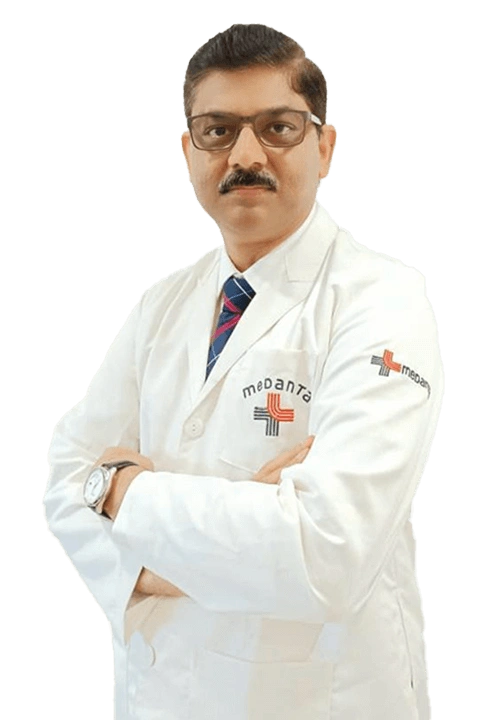
Dr. Amit Kumar Malik
Experience: Over 34 years
Medanta Hospital
Noida, India
Introduction
Dr. Amit Kumar Malik, Director of Interventional Cardiology & Electrophysiology at Medanta Noida, treats heart diseases with a special focus on rhythm problems and advanced cardiac care. People come to him for palpitations, irregular heartbeat, chest pain, heart failure, or conditions where a device like a pacemaker becomes necessary.
About Dr. Amit Kumar Malik
Dr. Amit Kumar Malik has been working on hearts for over thirty-three years now. Some patients arrive with blocked arteries or a weakened heart, while others have abnormal rhythms that affect daily life or turn life-threatening. He works on routine heart conditions to really complicated cases needing specialised procedures and long-term care.
Dr. Amit was among the first Indian cardiologists to get advanced electrophysiology training at the National Heart Centre in Singapore, which not many had done at the time. Before joining Medanta Noida as Director, he held senior roles at Max, BLK, and Apollo.
Qualifications
- MBBS — Lala Lajpat Rai Memorial Medical College, Meerut
- MD in Internal Medicine — Ganesh Shankar Vidyarthi Memorial Medical College, Kanpur
- DM Cardiology — Ganesh Shankar Vidyarthi Memorial Medical College, Kanpur
Awards & Recognition
- Director of Interventional Cardiology & Electrophysiology at Medanta Noida.
- First Indian cardiologist to complete EP fellowship at National Heart Centre, Singapore.
- Expert in robotic-guided ablation and 3D mapping techniques.
- Leadership experience at Max, BLK, and Apollo hospitals.
- Recognised for advanced device implantation and arrhythmia care.
Specialities & Expertise
- Electrophysiology studies
- Radiofrequency ablation
- Pacemaker implantation
- AICD and CRT device implantation
- Treatment of heart rhythm disorders
- Heart failure management
Patient Experience & Approach
Patients say Dr. Malik doesn’t push for ablation or a device the moment he sees a rhythm problem on the report. Sits with the case properly, checks what medicines have already been tried, and only moves to a procedure when there’s no real option left. The way he explains why a device is needed without making it sound alarming is something families specifically mention.
Frequently Asked Questions
How do I book an appointment with Doctor?
You can book a consultation with the doctor through Medicsaz by contacting our team via WhatsApp or the “Book an Appointment” button on this page. We’ll coordinate the appointment directly with the hospital and assist with scheduling based on your treatment needs.
Is the doctor experienced in treating international patients?
Yes, the doctor has treated patients from various countries, with experience managing cross-border care, language coordination, and treatment planning for patients traveling to India.
Can I get a free medical opinion before travelling to India?
Yes. Medicsaz facilitates free preliminary medical opinions; you can share your medical reports with our team, and we’ll coordinate a review with the concerned specialist or hospital before you finalize your travel plans.
Does Medicsaz arrange travel, visa, and accommodation for treatment with Doctor?
Yes. Medicsaz provides end-to-end support, including medical visa assistance, travel coordination, accommodation, and local support throughout your treatment journey.
What languages does the doctor communicate in?
The doctors generally communicate in languages such as English and Hindi, and Medicsaz additionally provides translator support for patients who need assistance in other languages.
Content Verification
This doctor profile has been compiled and written by the Medicsaz editorial team based on publicly available hospital records, credentials, and professional experience. It has been medically reviewed by Dr. Rashid Ali, MBBS (Delhi Medical Council Reg. No. DMC/R/36289) for accuracy of medical qualifications, specializations, and terminology. Medicsaz does not employ this doctor directly; we facilitate access to verified specialists at partner hospitals in India. For the most current information on this doctor’s practice, please consult the hospital directly or contact our team.