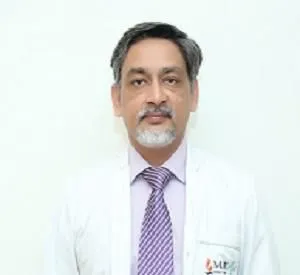
Dr. Amitabh Goel
Experience: Over 36 years
Max Super Speciality Hospital, Patparganj
New Delhi, India
Introduction
Dr. Amitabh Goel does neurosurgery for brain and spine problems. People see him for chronic back pain, pinched nerves, brain tumours, or trouble with movement and balance. Some show up after trying other treatments that didn’t work. Others show up when surgery becomes the only option left.
About Dr. Amitabh Goel
After completing neurosurgery training at SGPGI, Lucknow, he has worked at various major hospitals in the NCR. He has dedicated himself to neuroendoscopy and minimal spine surgeries. This is because small incisions mean less pain and a quicker recovery than traditional open surgeries, which leave larger scars.
He has been practising neuroendoscopy since the late 1990s and has stuck to it. He was one of the first neurosurgeons in North India to demonstrate endoscopic pituitary tumour removal at an international conference. He has also taught many other neurosurgeons in the field of neuroendoscopy through lectures and workshops. He believes in techniques that involve less damage to the body. When the body is already suffering from nerve pain and brain problems, a large cut can prolong the healing process.
Qualifications
- MBBS – Lala Lajpat Rai Memorial Medical College, Meerut
- MS (General Surgery) – LLRM Medical College, Meerut
- MCh (Neurosurgery) – SGPGI, Lucknow
Awards & Recognition
- National Award for Best CME (Continuing Medical Education) by the Indian Medical Association (IMA) Headquarters
- Pioneered Endoscopic Pituitary Tumour removal in North India (first presentation at the 1999 Asia Oceania Skull Base Conference)
- Founding Member of the Ghaziabad Noida Neurosciences Association (GNNA)
- Recognised expert in Neuroendoscopy and Minimally Invasive Spine Surgery (MISS)
Specialities & Expertise
- Neuroendoscopic procedures
- Minimally invasive spine surgery
- Brain tumour surgery
- Craniovertebral junction disorders
- Microsurgical neurosurgery
Patient Experience & Approach
He listens when you describe pain, weakness, numbness, or whatever’s going on. Knowing how it affects your daily life helps him figure out treatment. He explains scans and reports without burying you in medical terms so families can actually follow what’s being said.
He also gives importance to follow-ups and rehab after surgery. Brain and spine recovery doesn’t happen fast. It needs regular check-ins and physio to get you working right again.
Frequently Asked Questions
How do I book an appointment with Doctor?
You can book a consultation with the doctor through Medicsaz by contacting our team via WhatsApp or the “Book an Appointment” button on this page. We’ll coordinate the appointment directly with the hospital and assist with scheduling based on your treatment needs.
Is the doctor experienced in treating international patients?
Yes, the doctor has treated patients from various countries, with experience managing cross-border care, language coordination, and treatment planning for patients traveling to India.
Can I get a free medical opinion before travelling to India?
Yes. Medicsaz facilitates free preliminary medical opinions; you can share your medical reports with our team, and we’ll coordinate a review with the concerned specialist or hospital before you finalize your travel plans.
Does Medicsaz arrange travel, visa, and accommodation for treatment with Doctor?
Yes. Medicsaz provides end-to-end support, including medical visa assistance, travel coordination, accommodation, and local support throughout your treatment journey.
What languages does the doctor communicate in?
The doctors generally communicate in languages such as English and Hindi, and Medicsaz additionally provides translator support for patients who need assistance in other languages.
Content Verification
This doctor profile has been compiled and written by the Medicsaz editorial team based on publicly available hospital records, credentials, and professional experience. It has been medically reviewed by Dr. Rashid Ali, MBBS (Delhi Medical Council Reg. No. DMC/R/36289) for accuracy of medical qualifications, specializations, and terminology. Medicsaz does not employ this doctor directly; we facilitate access to verified specialists at partner hospitals in India. For the most current information on this doctor’s practice, please consult the hospital directly or contact our team.