
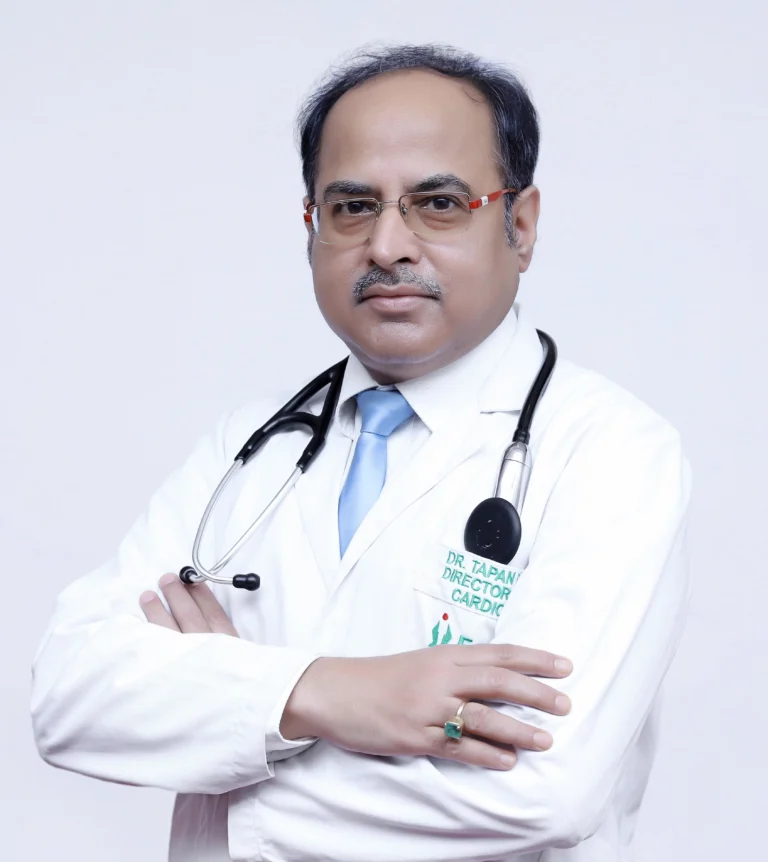
Dr. Tapan Ghose
Experience: Over 32 years
Fortis Hospital, Vasant Kunj, New Delhi
New Delhi, India
Introduction
Dr. Tapan Ghose has been working in heart care for a long time, and many patients in Delhi already know his name. People usually come to him with symptoms like chest tightness, breathlessness, or sudden fatigue. Some arrive worried after a test report, while others come for routine heart check-ups. Over the years, he has treated both minor heart concerns and serious blockages that needed timely procedures.
About Dr. Tapan Ghose
He likes to break things down step by step. Rather than leaping into treatment, he analyzes the reports and asks questions about lifestyle, stress, and previous health problems. This way, he can see the whole picture before recommending medications or procedures.
Patients have reported feeling more at ease after the visit. When a doctor can explain things in simple terms, it takes away a lot of the fear. It gives families some relief to know what may be coming next, especially when it comes to heart problems.
Qualifications
- MBBS – Silchar Medical College
- MD (Medicine) – Assam Medical College
- DNB (Medicine)
- DNB (Cardiology)
- Fellowship in Interventional Cardiology
- Fellow – American College of Cardiology
- Fellow – Cardiological Society of India
Awards & Recognition
- Distinguished Service Award (2020): Conferred by the Rotary Club of Delhi Vasant Valley.
- Legend in Cardiology (2019): Awarded by The Times Group.
- Cardiologist of the Year (2014): Received at the India Healthcare Summit and Awards
Specialities & Expertise
- Angiography and angioplasty procedures
- Transradial approach for quicker recovery
- Heart rhythm disorder evaluation
- Pacemaker and cardiac device care
- Preventive heart risk assessment
- Long-term management of hypertension
Patient Experience & Approach
People also claim that he is always calm when attending to patients. This means that he gives the patients a chance to finish talking before he proceeds to explain the next course of action in simple terms. This way, the patient feels he has been heard, rather than being rushed.
He also talks about follow-up, which most people tend to ignore. One should know that healing does not stop after surgery. One has to make small changes in daily activities, medication, etc., to keep the heart in a stable state.
Frequently Asked Questions
How do I book an appointment with Doctor?
You can book a consultation with the doctor through Medicsaz by contacting our team via WhatsApp or the “Book an Appointment” button on this page. We’ll coordinate the appointment directly with the hospital and assist with scheduling based on your treatment needs.
Is the doctor experienced in treating international patients?
Yes, the doctor has treated patients from various countries, with experience managing cross-border care, language coordination, and treatment planning for patients traveling to India.
Can I get a free medical opinion before travelling to India?
Yes. Medicsaz facilitates free preliminary medical opinions; you can share your medical reports with our team, and we’ll coordinate a review with the concerned specialist or hospital before you finalize your travel plans.
Does Medicsaz arrange travel, visa, and accommodation for treatment with Doctor?
Yes. Medicsaz provides end-to-end support, including medical visa assistance, travel coordination, accommodation, and local support throughout your treatment journey.
What languages does the doctor communicate in?
The doctors generally communicate in languages such as English and Hindi, and Medicsaz additionally provides translator support for patients who need assistance in other languages.
Content Verification
This doctor profile has been compiled and written by the Medicsaz editorial team based on publicly available hospital records, credentials, and professional experience. It has been medically reviewed by Dr. Rashid Ali, MBBS (Delhi Medical Council Reg. No. DMC/R/36289) for accuracy of medical qualifications, specializations, and terminology. Medicsaz does not employ this doctor directly; we facilitate access to verified specialists at partner hospitals in India. For the most current information on this doctor’s practice, please consult the hospital directly or contact our team.