
Liver Transplant in India
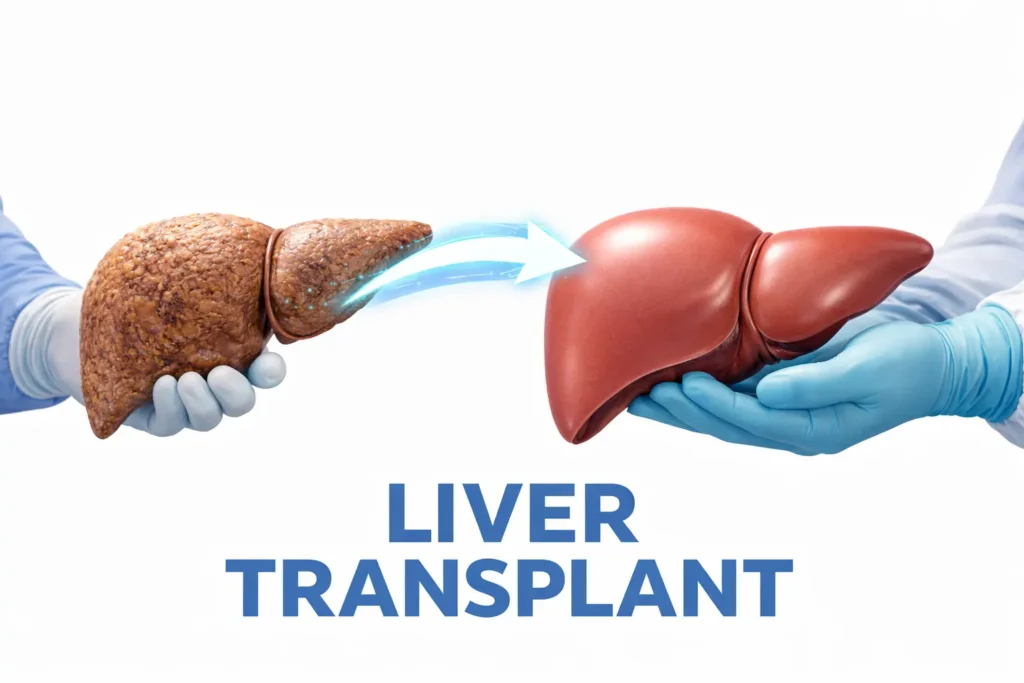
Typically, we do not spare a second thought for our liver until it begins to misbehave. It actually is our body’s heavy lifter, being its biggest internal organ that performs more than 500 jobs at once, including processing toxins in the blood and aiding in digestion. However, the state of liver health in India is going downhill seriously. Contrary to popular notion, it is no longer just an alcohol-related disease. It is no longer just that.
Get Free Consultation Now
What is Angiography?
Just exactly what is a transplant? In other words, at what point is the liver simply too far gone? In other words, this is known as end-stage liver disease. In this situation, anything given to the body orally will not work.
The process involves replacing the old liver with a healthy one. The most intriguing fact is that the liver is the only organ that has the ability to regenerate. Based on this ability, a living individual is able to donate a portion of their liver to the recipient. Within a short period of weeks, the portion and the liver regenerate to their former size.
Who Needs a Liver Transplant?
Doctors state that not all individuals are candidates for surgery. Some people have shown liver dysfunction for years (cirrhosis), in which their liver has hardened due to scarring, and such people are diagnosed with chronic liver failure.
- Acute Liver Failure: It occurs when the liver suddenly fails, often within days, as a result of an infectious disease or an overdose.
- Liver Cancer: A transplant can potentially treat liver cancer (HCC) in the event the cancer hasn’t progressed to the rest of the body.
- Genetic Problems: The fact is that the only way to cure a disease such as Wilson’s disease, which some people are born with, for example, it can be cured by undergoing surgery.
Types of Liver Transplants
In most cases, the doctor will have a number of choices, and these choices will depend on the condition of the patient as well as the source of the organs. Here are the possible choices:
- Living Donor Transplant (Most Common): A healthy relative from your family (blood-related person) will donate a piece of their liver to you. It’s the most common in private health organizations in Delhi since the waiting period is shorter.
- Deceased Donor Transplant: In this, the liver is taken from a patient whom the doctors have already termed brain-dead in the ICU. The waiting list is long for this transplant in India.
- Split Liver Transplant: The liver of one cadaver is divided by doctors to save two lives, one adult and one pediatric.
- Robotic Donor Surgery: Top hospitals in Delhi use robotic surgery to extract the liver of the donor. It is outstanding because it leaves a very small scar on the donor and recovers quickly.
The Procedure Step-by-Step
- Pre-Operation: The patient undergoes an extensive evaluation before undergoing any surgical procedures. This involves blood tests, heart exams(Echo/ECG), and psychological counseling. The doctors make sure that the patient has enough strength to survive the operation.
- The Surgery: The surgery is very complicated, taking some 8 to 12 hours. Two teams of surgeons perform the surgery concurrently. They operate on the donor to harvest the liver part, while the other team harvests the recipient in preparation for implantation.
- Post-Operation: The patient is then transferred to a Transplant ICU immediately after the transplant. They normally stay there for a period of 5 to 7 days to avoid any form of rejection or infections.
Advantages of Liver Transplant
Here are some os the advantages of liver transplantation:
- Extended Lifespan: It is the only definitive treatment for end-stage liver failure. Without it, survival would be difficult.
- Improved Quality of Life: The patient regains their strength, and their appetite is restored, and conditions like jaundice clear.
- Return to Work: A patient can easily return to the office or school within 3-6 months.
- High Success Rate: The present success rate in India’s leading hospitals is above 90%, which is far better than Western countries.
Risks or Safety
- Organ Rejection: It is possible that the body’s immune system may recognize the transplanted liver as an enemy object.
- Infection Risk: Since patients are taking medications to reduce immunity, infection by viruses and bacteria becomes very easy.
- Biliary Complications: It can occur that the bile duct leaks or is obstructed, often needing a small repair.
- Donor Risks: Though highly safe, the donor too is prone to the usual surgical risks, like hemorrhage or infection.
Why Choose India for Liver Transplant?
Delhi is the medical capital of India. Hospitals such as the Apollo Hospital, Max Saket, and Fortis have “Liver Teams” exclusively assigned to them. These “Liver Teams” have conducted thousands of successful operations. They are accredited by “JCI” (Joint Commission International), maintaining international safety standards.
The cost is also a major factor. The cost of a liver transplant in India is 60% to 80% less than in Western countries. This includes the cost of the operation, stay in the hospital, as well as the initial medication.
Recovery & Aftercare
It is a slow recovery process. The total period in the hospital can take about 2 to 3 weeks. Upon going home, the patient would have to stay in a clean and isolated room for the first three months while keeping away from dust and germs.
Medication is for a lifetime. The patient has to take immunosuppressants daily without missing a single day. The diet, too, has to be very strict-only freshly cooked home food, no raw salads, and absolutely no alcohol ever again.
Conclusion
Finally, conclude by saying a liver transplant may sound complex, but in reality, the liver transplant is a “gift of life”. Since the sophisticated facilities are available in India, patients can hope to have a second chance at a “healthy” life. If any symptoms occur, do not delay and seek the advice of a “specialist” at once.
Frequently Asked Questions
Is liver transplant a major surgery?
Yes, liver transplant is a complex and major surgery. However, it is routinely performed in advanced transplant centers with experienced surgical teams.
Will I need medications after a liver transplant?
Yes. Patients must take immunosuppressive medications for life to prevent organ rejection.
What is the success rate of liver transplant?
Liver transplant has a high success rate in specialized centers, with many patients living healthy lives for years after the procedure.
Can children undergo liver transplant?
Yes, pediatric liver transplants are commonly performed for children with congenital or severe liver conditions.
Who needs a liver transplant?
A liver transplant may be required for patients with:
- End-stage liver disease
- Liver cirrhosis
- Acute liver failure
- Certain liver cancers
- Chronic hepatitis-related liver damage