
Angioplasty (Stent) in India
These days, heart issues are very common. Some people experience pain or heaviness in the chest, while others experience shortness of breath while performing minor tasks. Most people do not pay heed to this and assume it is due to stress or weakness. In most cases, this is because the blood vessels in the heart get narrowed or blocked. Reduced blood flow can be a serious issue and may even lead to a heart attack. To overcome this, angioplasty is recommended, which is a very common and safe procedure.
Get Free Consultation Now
What is Angioplasty (Stent)?
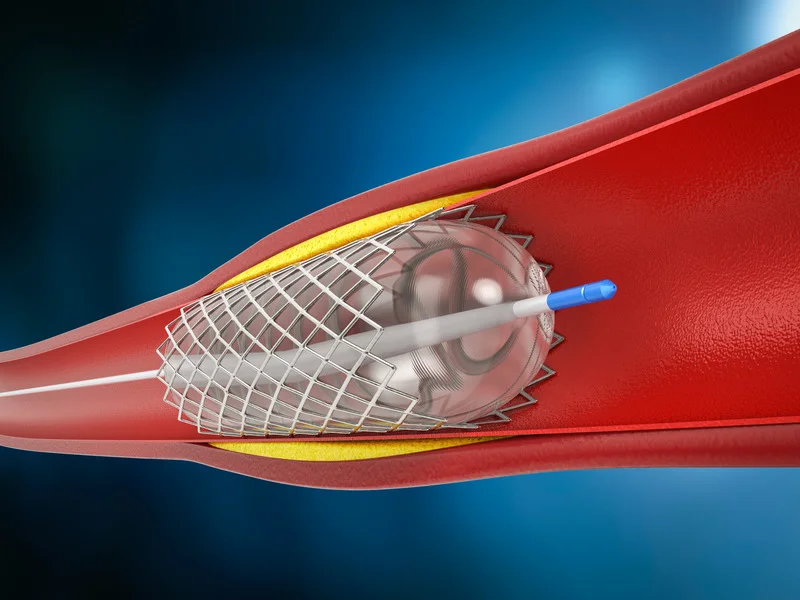
Angioplasty helps to open blocked heart arteries. A small balloon and a stent is use in this treatment by doctors. A small metal tube that is stent and it stays inside the artery so it doesn’t close again.
During the procedure, a thin tube is passed through a blood vessel, mostly from the wrist. In some cases, it is done from the leg also. The balloon is taken to the blocked part and slowly filled with air. This opens the artery. After that, the stent is placed so the artery doesn’t close again. Angioplasty is not an open surgery. It is mainly done to improve blood flow to the heart and reduce chest pain.
Who Needs Angioplasty?
Angioplasty is not needed for every heart patient. Doctors first try medicines, food changes, and lifestyle improvement. Angioplasty is suggested only when the blockage is serious or symptoms are not improving.
- Angioplasty may be needed if a person has:
- Chest pain that comes again and again, even after medicines
- Breathing problem while doing small work or walking slowly
- Angiography report showing blockage in the heart arteries
- History of heart attack or risk of heart attack
- Feeling heavy or tight in the chest
- Medicines not giving enough relief
The doctor checks the reports carefully and then decides.
Types of Angioplasty (Stent)
There are different types of angioplasty and stents. Every patient does not get the same one. It mostly depends on the blockage condition, test reports, and the patient’s condition at that time. Then the doctor decides what will be better.
- Balloon angioplasty: A small balloon is used to open the artery. If the blockage is small, a stent is not needed.
- Stent angioplasty: This is the most common procedure. First, the artery is opened with a balloon. Then a stent is placed so that the artery will remain open and the blood will flow normally.
- Drug-eluting stent: This stent releases medicine slowly inside the artery. The medicine helps in reducing the chance of the blockage coming again.
- Bare metal stent: This is a simple metal stent. It does not release any medicine. In some cases, doctors prefer this type depending on the patient’s situation.
Before the procedure, the doctor explains everything in simple words and tells which stent will be used and why.
Procedure Explanation
Before angioplasty, doctors do a few basic tests, such as a blood test, an ECG, an echo, and an angiography. These tests are done just to understand where the blockage is and if the patient is ready for the procedure or not.
On the day of angioplasty, the patient is taken to the cath lab. Patient is awake only, but local medicine is given, so there is no pain. A thin tube is slowly passed through a blood vessel. The balloon is then opened at the blocked area, and then the stent is placed there. This entire procedure takes about 30 min to 1 hour. After that, the patient is kept under observation for some time. The doctors and nurses keep checking to see that everything is alright.
Benefits of Angioplasty
Angioplasty helps a lot when done at the right time. It improves heart function and daily life. Many patients feel relief within a few days. Some benefits are:
- Chest pain has reduced a lot
- Blood flow to the heart improves
- The risk of a heart attack becomes less
- The patient can walk and work better
- Breathing becomes easier
- Quality of life improves slowly
Risks or Safety
There are also some risks involved in angioplasty. However, with the modern equipment and qualified doctors, the possibilities of complications are very low. Some patients may suffer from bleeding or pain where the tube was inserted. Doctors monitor patients closely. If any problem arises, it is handled quickly. With proper medicines and follow-up, angioplasty is quite safe.
Why Choose India for Angioplasty?
Many people choose India for angioplasty because hospitals here have good facilities and skilled heart doctors. Hospitals use modern machines and follow proper medical rules. Another big reason is cost. Angioplasty in India costs much less compared to many other countries. International patients also get good care and support from hospital staff.
Recovery & Aftercare
Recovery after angioplasty is usually fast. Many patients go home in 1–2 days. With proper care, patients return to normal life quickly. Doctors usually advise:
- Take all medicines regularly, especially blood thinners
- Avoid heavy work for a few days
- Eat healthy food and reduce oily items
- Stop smoking and alcohol
- Do light walking daily
- Visit a doctor for regular follow-up
Conclusion
Angioplasty works really well to open blocked heart arteries. Feeling scared before it is totally normal; almost everyone feels that way. But these days, angioplasty is done very commonly and is quite safe. With good doctors and proper hospital care, most patients start feeling better after the procedure. Chest pain comes down, breathing feels easier, and slowly life starts feeling normal again.
Frequently Asked Questions
Is angioplasty a major surgery?
No, angioplasty is not open-heart surgery. It is a catheter-based procedure performed through a small puncture in the wrist or groin.
Can angioplasty prevent future heart attacks?
Angioplasty restores blood flow and reduces symptoms, but long-term prevention depends on lifestyle changes, medications, and regular follow-up care.
How long does angioplasty take?
The procedure typically takes 30 minutes to 1.5 hours, depending on the number and complexity of blockages.
Will I need medication after stent placement?
Yes. Patients are usually prescribed blood-thinning medications (antiplatelets) to prevent clot formation inside the stent.
How long does a heart stent last?
Stents are designed to be permanent. With proper medication and lifestyle management, they can function effectively for many years.
Medically Reviewed
This page on Angioplasty (Stent) in India has been medically reviewed by Dr. Rashid Ali, MBBS, a Delhi Medical Council–registered practitioner (Registration No. DMC/R/36289), to ensure it reflects accurate, current, and evidence-based medical information.
At Medicsaz, every treatment page is checked by a licensed doctor before publication, not written by a marketing team alone. Dr. Rashid Ali review covers the accuracy of procedures, terminology, and claims described on this page, so patients researching Angioplasty (Stent) in India can rely on what they read here to make informed decisions.
Last medically reviewed: 09/09/2026
You can independently verify Dr. Rashid Ali’s registration on the Delhi Medical Council’s official website using Registration No. DMC/R/36289, or read more about his role as Medicsaz’s medical reviewer on his reviewer profile page.